

Switzerland: a long-term partner for reform in Bosnia and Herzegovina
In September 2026, Switzerland and Bosnia and Herzegovina are celebrating 30 years of bilateral diplomatic relations and international cooperation. Switzerland has been supporting Bosnia and Herzegovina in its reform efforts for three decades. Celebrations in Sarajevo are paying tribute to this long-standing partnership under the theme ‘time, trust, innovation’ – as reported by Gabriele Derighetti, the Swiss ambassador to Bosnia and Herzegovina based in Sarajevo.
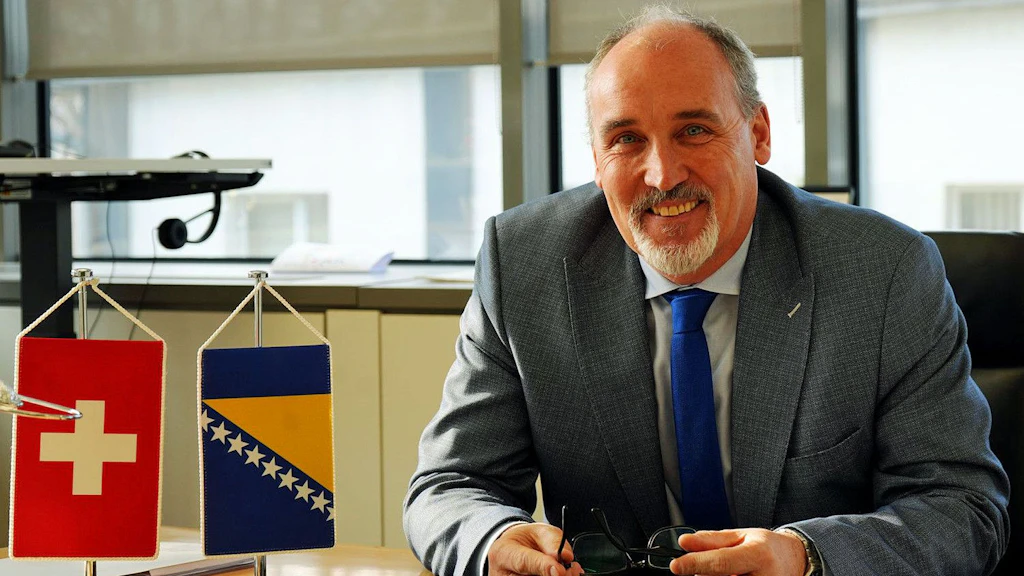
Switzerland and Bosnia and Herzegovina have enjoyed 30 years of bilateral ties. What has had the greatest impact on relations between the two countries during this time?
Trust, respect, shared interests and close ties between people – especially through the diaspora – have been the most defining factors. At the same time, our partnership has evolved significantly over this period: in the early days, following the war, Swiss involvement centred on humanitarian aid and reconstruction; today, Switzerland is a long-term partner for Bosnia and Herzegovina in its reform process.
Switzerland is actively involved on the ground in the areas of good governance and local democracy, as well as vocational education and training, economic development, healthcare and migration management. This involves more than simply supporting individual projects; it is about supporting Bosnia and Herzegovina in its European integration process, in achieving sustainable solutions and in state-building. Added to this is Switzerland’s military presence within EUFOR, which is an important stabilising factor for Bosnia and Herzegovina.
With the political will to implement reforms, Bosnia and Herzegovina has considerable potential for European integration as well as economic and social development.
Since cooperation began in 1996, Switzerland has committed around CHF 614 million to Bosnia and Herzegovina; most of this was used in the 1990s to rebuild the country after it was left in ruins by the war. Switzerland showed its solidarity in practical ways, for example through mine clearance and tracing missing persons. Over the past 20 years, Switzerland has supported projects that have contributed to key reforms and state-building: people in Bosnia and Herzegovina now have access to better education and employment opportunities, businesses have been strengthened, new jobs have been created and state institutions have been given support in implementing important reforms.
For me, it is the blend of long-term commitment, tangible results and close personal relationships that makes our partnership so special.
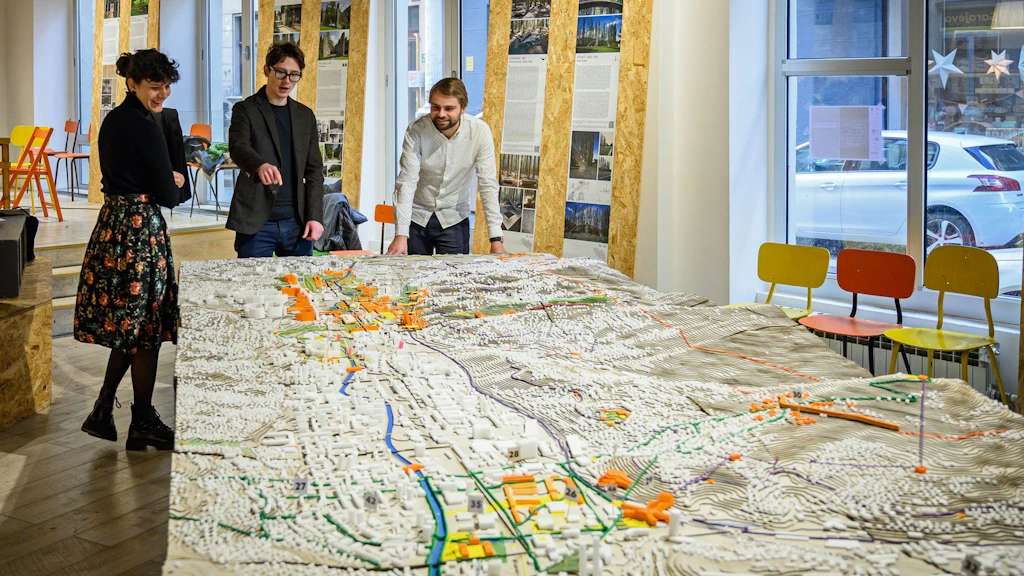
The theme of the 30th-anniversary celebrations is ‘time, trust, innovation’. Can you expand on what that means?
These three words really capture the journey of our partnership. Genuine and sustainable change takes time. Switzerland is known for its long-term commitment and is prepared to support its partners until promising ideas mature into sustainable solutions. Over the years, this approach has built trust between our countries, institutions, specialists and people in general. Trust enables innovation, allowing people to question the status quo, adapt to new challenges and seek new forms of cooperation.
Our partnership has grown from post-war reconstruction to systemic reforms and now increasingly encompasses economic cooperation, trade, investment and knowledge exchange. A good example of this is the economic forum recently held in Sarajevo, which brought together over 100 representatives from Swiss and Bosnian companies, institutions and the diaspora. During the forum, a new Swiss–Bosnian Chamber of Commerce was also established. In our ‘Svica.ba’ podcast this year, we are showcasing the people and stories behind this three-decade partnership from a different perspective.
Looking ahead, what are the biggest challenges facing Bosnia and Herzegovina?
To continue developing as a stable, functioning and competitive state, and to translate the necessary reforms for European integration into tangible results for people's everyday lives. First and foremost, this means strengthening the rule of law and institutions, improving public services, and creating a better environment for business, investment and the younger generations.
Switzerland will continue to share its experiences in the areas of local democracy, vocational education and training, economic development and public services. But there is no model that can simply be transferred from one country to another. Bosnia and Herzegovina will have to find solutions that are suited to its own context.
What will be of crucial importance is whether diversity can be harnessed as a strength and whether, in the face of political differences, solutions can be forged through dialogue, a spirit of compromise and due regard for the institutions. With the political will to implement reforms, Bosnia and Herzegovina has considerable potential for European integration as well as economic and social development.
Ferdinand Hodler – a unique link between Switzerland and Sarajevo
To mark the 30th anniversary of Switzerland and Bosnia and Herzegovina's partnership, the Swiss embassy in Sarajevo is organising a programme of celebrations in mid-September 2026, bringing together Swiss and Bosnian artists, institutions, partner organisations and the general public.
The centrepiece of the celebrations will be a reimagining of several Ferdinand Hodler paintings by contemporary Swiss artist Simon Berger, drawing on Hodler's extraordinary visual technique. Several of Hodler’s works, which were saved during the war, are housed in Sarajevo. Switzerland helped rebuild the art gallery where these works are now displayed.
Contact
General Secretariat GS-FDFA
Federal Palace West
3003 Bern