

“The potential for danger remains high in the response area”
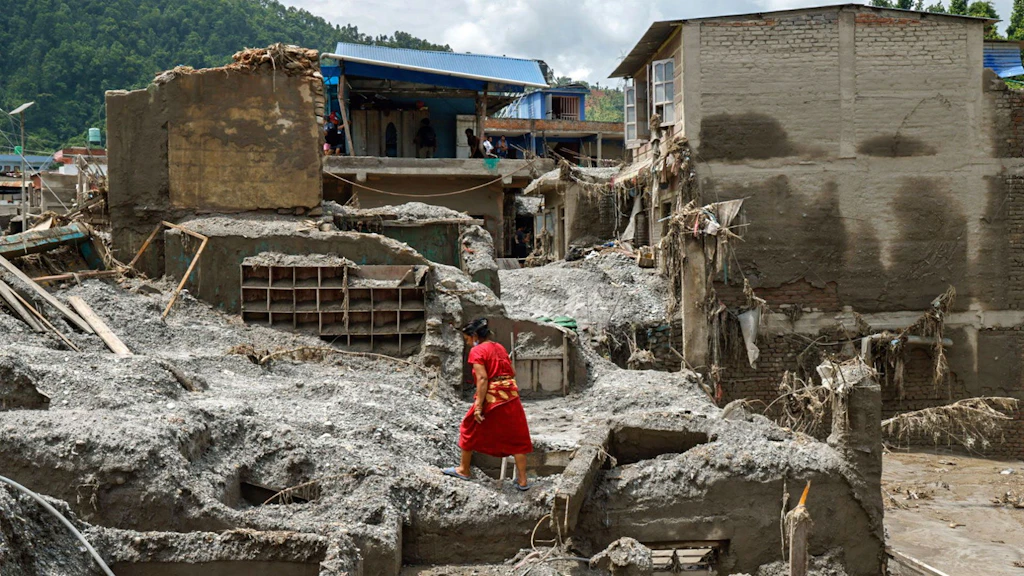
Following the devastating flash floods in Nepal, the Humanitarian Aid of the Swiss Confederation is sending experts to Kathmandu to provide support in dealing with the aftermath of the natural disaster and preparing for reconstruction. One of the experts is Eric Bardou. As a member of the Swiss Humanitarian Aid Unit (SHA), he will focus in particular on assessing the risks of further natural hazards in Nepal, in order to improve the safety of humanitarian workers and the local population.
Mr Bardou, you are travelling to Nepal as a ‘Geohazard Coordination Expert’. What exactly will you be doing there?
The aim of my mission is to support the Nepalese government and the UN in taking environmental risks into account, particularly immediate natural hazards. This is to protect those involved in the humanitarian response. In practical terms, this will involve assessing geological risks such as landslides and sediment movement, as well as the risk of secondary flooding, which can hamper the humanitarian response or even endanger the lives of the population already devastated by the crisis. The potential for danger remains high in the initial response area.
How important is geohazard coordination in managing the consequences of flash floods?
The environmental impact of such a disaster can have a wide range of short- and long-term consequences. Consider river systems that host hydroelectric power generation facilities, or ecosystems that have been destroyed. Other examples include the paths on either side of the river that provide access to fields or schools. In addition to the risks mentioned above, we must also take into account the risks to essential infrastructure such as roads, bridges and residential areas. As the floodwaters swept everything away in their path, toxic or hazardous substances may have spread over large areas. Analysing all these hazards will enable the right decisions to be made not only during the emergency phase but also during the reconstruction of the devastated areas. The Himalayan landscape, characterised by a wide variety of hazards, makes this situation particularly complex. Hence the importance of this coordination, which brings together numerous fields of expertise.
You are a member of the Swiss Humanitarian Aid Unit (SHA). Who will you be working with in Nepal?
I am going to join a team of international specialists mobilised at the request of the UN Office for the Coordination of Humanitarian Affairs (OCHA). To be more precise, this is a United Nations Disaster Assessment and Coordination (UNDAC) team. It will work under the auspices of the Nepalese authorities and their national risk management framework. The SDC has often made members of the SHA specialising in this field available to the UN for this type of disaster.
What expertise do you bring with you from Switzerland – and how easy is it to put it to use abroad?
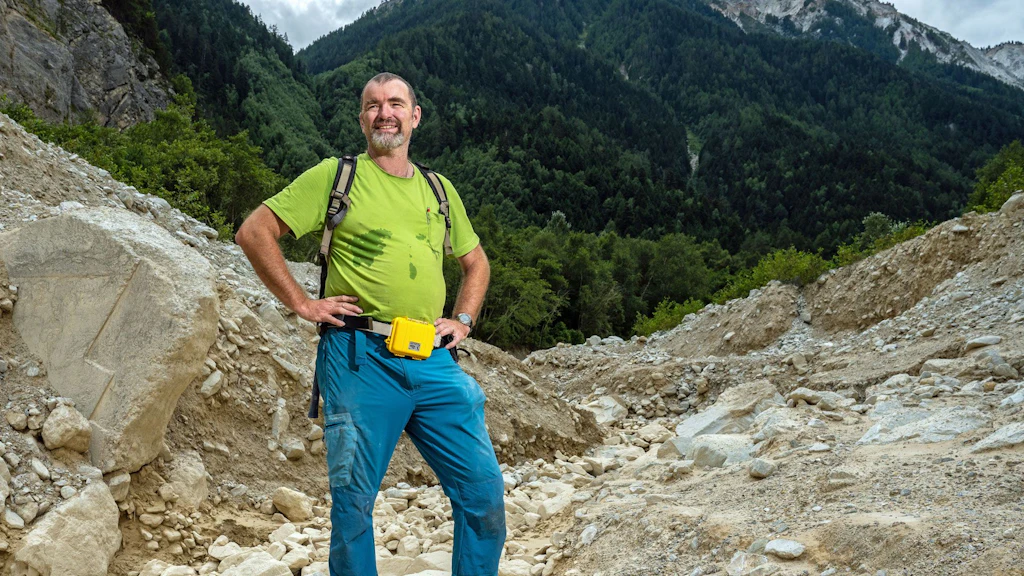
I have been working in Valais for many years and specialise in the assessment of mountain hazards. At present, I work mainly for the Swiss Confederation on dam safety. If we take the Rhône as an example, its tributaries have caused major flooding in the past. There is a wealth of expertise regarding an integrated approach to flood protection, the safety monitoring of major infrastructure such as dams, and monitoring and early-warning systems, all of which can benefit the SDC’s activities abroad. Conversely, the international missions I have undertaken with the SHA have allowed me to gain experience in a wide variety of situations: from rockfalls in the heart of the Sahel to the slopes of the Soufrière volcano on the island of Saint Vincent in the Caribbean, as well as mountain hazards in the Pamir and Himalayan ranges. In the field of disaster risk reduction, it is very important to encounter as wide a variety of situations as possible.
If such a call-out is necessary, you don’t have much time to prepare. As an SHA member, do you therefore always keep a packed suitcase at home? And does your employer always have to expect that you might be absent at short notice due to an emergency call-out?
Yes, that is the very essence of a reserve force such as the SHA. You can receive a call from SDC headquarters at any time, then pack your bags, put your work and family commitments on hold, and finally board a flight to another part of the world. I am fortunate to have a flexible manager who allowed me to leave at short notice.
Links
Press release: Switzerland boosts support for Nepal following flash flood devastation, 04.09.2026
Contact
General Secretariat GS-FDFA
Federal Palace West
3003 Bern