
Business and human rights
The Federal Council expects businesses operating in Switzerland and abroad to respect human rights. It has adopted a dedicated action plan and set up an information platform to help companies put the UN's Guiding Principles on Business and Human Rights and other international guidelines into practice.
National Action Plan on Business and Human Rights
In the National Action Plan on Business and Human Rights, the Federal Council has set out its vision for a responsible approach to human rights by businesses. The Federal Council also aims to raise awareness and improve cooperation with the private sector on this issue. The NAP is structured around the three pillars defined in the UN Guiding Principles and sets out measures and targets under each pillar.
In certain circumstances, Swiss law permits victims of human rights abuses to bring an action or seek redress. Whether the Swiss courts have jurisdiction and the applicable law must be assessed on a case-by-case basis.
UN Guiding Principles on Business and Human Rights
In 2011, for the first time, the UN Human Rights Council adopted international guiding principles addressing government and corporate responsibility and human rights due diligence.
Governments have a duty to protect human rights and ensure that businesses respect human rights through effective policies, regulatory frameworks and judicial mechanisms.
Businesses have a duty of care and the primary responsibility for ensuring respect for human rights. They must provide appropriate and effective remedies when obligations are breached.
Governments must ensure that victims of human rights abuses have access to judicial and non-judicial grievance mechanisms so that businesses can be held to account.
Commodities and human rights
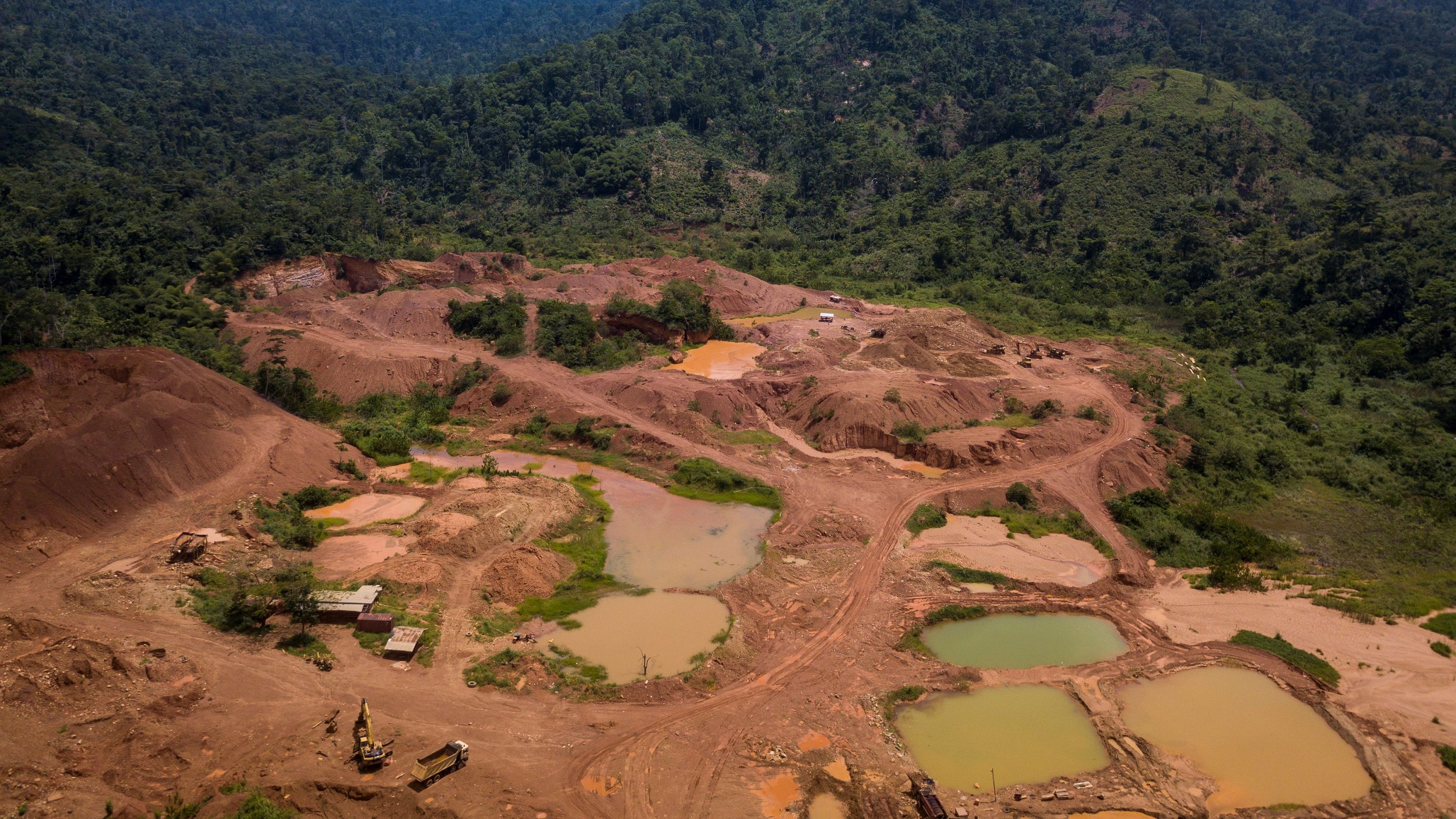
The commodity trading sector, which involves the extraction of raw materials such as coal, gold, silver, cobalt and tungsten, carries a risk of human rights abuses and environmental degradation, particularly in fragile contexts.
On behalf of the Federal Council, the FDFA and SECO therefore issued The Commodity Trading Sector: Guidance on Implementing the UNGPs, which also draws on relevant OECD guidance and the Voluntary Principles on Security and Human Rights. This guidance was produced in consultation with a wide range of businesses and NGOs, as well as the Canton of Geneva, where many of the companies are based.
Switzerland and the gold sector
In November 2018, the Federal Council presented its report on the gold trade and human rights, which assesses the gold sector in Switzerland and recommends measures to be implemented by the Federal Administration. The report concludes that action is needed with respect to transparency and supply chains. Traceability is essential to prevent gold that has been mined in breach of human rights from being imported into Switzerland. The Federal Council also recommends strengthening multi-stakeholder dialogue and expanding development cooperation in the area of responsible gold production.
Voluntary Principles on Security and Human Rights
The Voluntary Principles on Security and Human Rights provide guidance to oil, gas and mining companies on taking action to ensure the safety and security of their operations. They help companies identify risks and fulfil their duty of care by taking measures to prevent human rights abuses and avoid exacerbating any conflicts.
Switzerland joined the Voluntary Principles Initiative in 2011 and served as chair from 2013 to 2014 and from 2019 to 2020. It works to ensure that as many governments as possible join the Voluntary Principles and promotes dialogue among public authorities, the private sector and civil society. It is also committed to implementing the Voluntary Principles on the ground, particularly in the Democratic Republic of the Congo and Mozambique.
Code of conduct for private security companies
The International Code of Conduct for Private Security Service Providers (ICoC), which was finalised in 2010, requires private security companies to respect human rights and international humanitarian law and helps prevent abuses. Switzerland played a key role in developing the ICoC and chairs its Board of Directors. It promotes dialogue between private security companies, governments and NGOs.
Sport and human rights
Switzerland has been working to ensure that human rights are respected in sport at all levels and that the UN Guiding Principles on Business and Human Rights are implemented at major sporting events.
Since 2015, it has developed standards and guidelines together with international sports federations, such as the International Olympic Committee (IOC) and FIFA, as well as with athletes, states, sponsors, NGOs and international organisations.
New technologies and human rights
Emerging technologies, such as artificial intelligence (AI), have the potential to boost economic growth and create jobs, but they also pose a risk to human rights. Switzerland participates in multilateral processes to ensure that standards are amended and human rights protected in the digital space. The federal government supports the publication of guidelines for businesses and governments on implementing the UN Guiding Principles in the digital sphere and in relation to new and emerging technologies.
Sustainable development and human rights
Human rights abuses are among the root causes of poverty and lack of prospects. They represent a major barrier to sustainable development and jeopardise the results of international cooperation. Switzerland is therefore actively committed to promoting human rights as the basis for sustainable development. It systematically adopts a human rights based approach to implementing development programmes by ensuring that relevant human rights standards are mainstreamed into the work. The 2030 Agenda includes sustainable development goals based on human rights standards, e.g. the right to food, high-quality education, and access to clean water and sanitation, which help to achieve human rights aims. In implementing the 2030 Agenda, Switzerland ensures that human rights are properly addressed.
The environment and human rights
Climate change, pollution and loss of biodiversity pose enormous challenges to current and future generations. Switzerland works multilaterally to promote coherent environmental and human rights policies in line with its constitutional mandate to respect human rights and preserve natural resources. Switzerland co-sponsored UN Human Rights Council and General Assembly resolutions recognising the human right to a clean, healthy and sustainable environment. In adopting these resolutions, the international community confirmed that human rights and a healthy environment are interrelated. A healthy environment is critical to the full enjoyment of human rights, including the right to life, health, food and water. A human rights based approach to climate policy can also contribute to a fairer and more sustainable energy transition, for example by addressing workers' rights and the risk of companies using child labour to extract raw materials needed for the production of batteries.
Contact
State Secretariat STS-FDFA
Peace and Human Rights Division
Effingerstrasse 27
3003 Bern