
Darling, we need to talk (about food)
The world's population is growing and has to be ‹fed›, which is a major challenge with the resources currently available. For people to have affordable access to healthy food in the future, sustainable food systems have to be put in place – this is one of the key elements needed to achieve the goals of the 2030 Agenda. The 2021 UN Food Systems Summit will aim to provide answers.
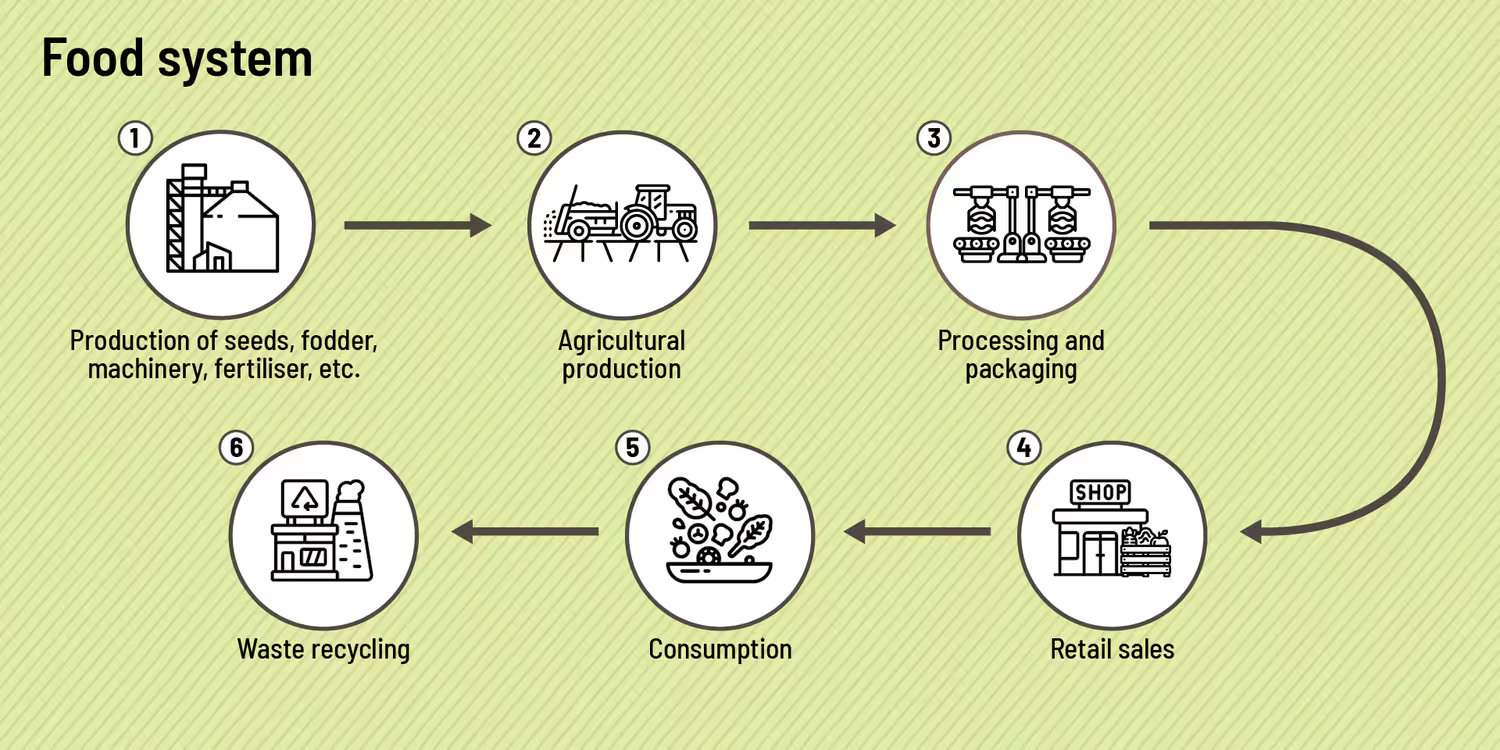
I am sitting down for my dinner: a juicy steak, French fries and some broccoli. The only reason any of this made it onto my plate is because of food systems. But what exactly is a food system and how does it work? A food system refers to all the elements of a society that are involved in the food supply chain. Let us take broccoli as an example: it starts with input products, such as fertilisers or pesticides, then goes on to include cultivation and harvesting, processing and packaging, transport and marketing, right through to the final preparation and consumption of the broccoli itself. In particular, it also includes the waste produced throughout this process as well as the energy and water consumed.
The world's population is growing continuously. Alongside air and water, food is necessary to sustain its life. It must be accessible, high quality, affordable and healthy. But is this possible? Current challenges faced include hunger and malnutrition in developing countries, but also obesity and food waste in industrialised nations – all of these are directly linked to our food.
‹Decade of Action›
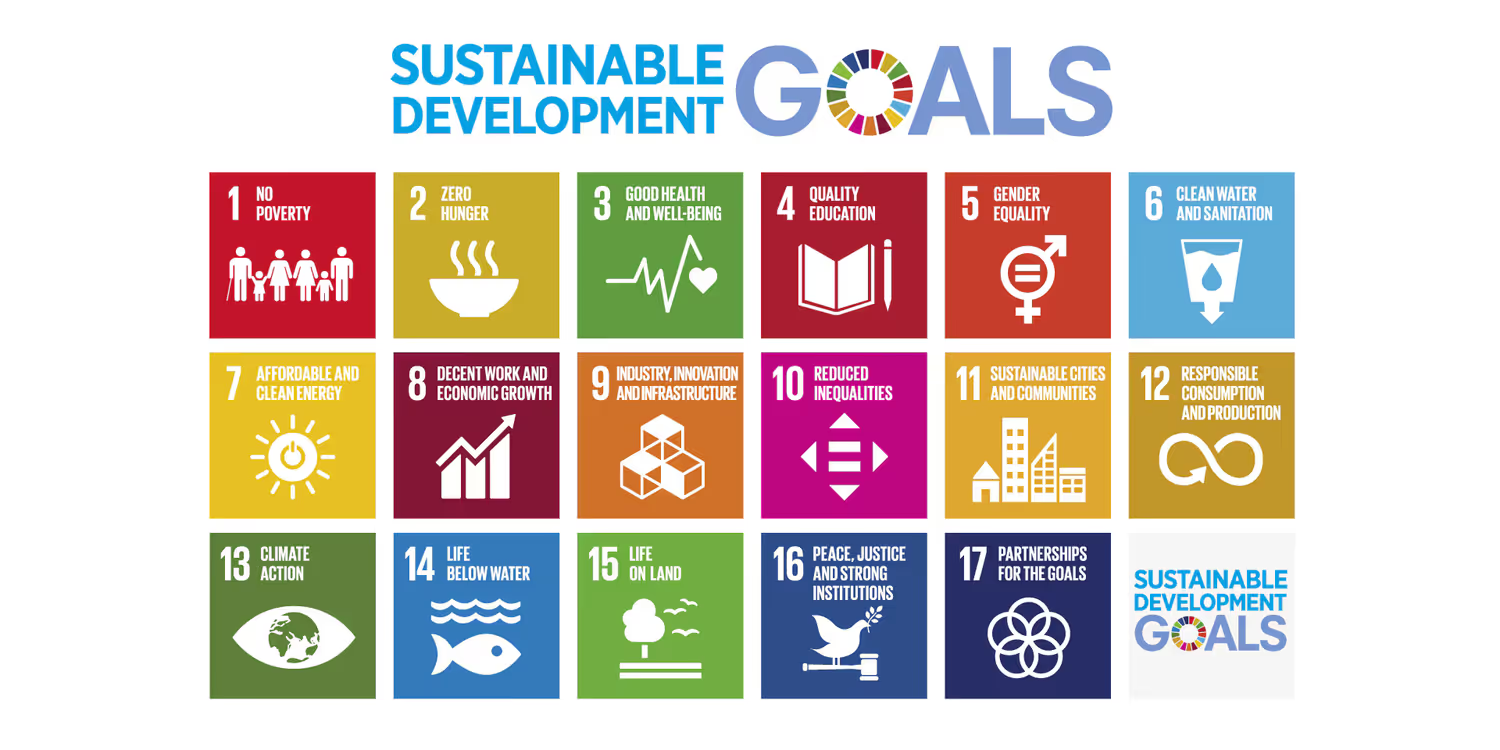
For future generations to be able to live on this planet, we need food systems that are sustainable. UN Secretary-General António Guterres believes these systems to be a real game changer in this respect. In 2019, he noted that the world had taken a step back in certain areas covered by the 2030 Agenda, for example in the fight against climate change and its consequences. Guterres consequently called for a ‹Decade of Action› with the aim of nevertheless achieving the 17 Sustainable Development Goals set out in the 2030 Agenda. As such, the UN has to do more if these goals are to be met by 2030, and food systems will play a key role in this regard.
Each and every one of the 17 Sustainable Development Goals are linked to food systems, which we have to transform if we are to successfully implement the 2030 Agenda.
.avif?auto=format)
Jacques Ducrest, Federal Council Delegate for the 2030 Agenda, explains the relationship: «Each and every one of the 17 sustainable development goals are linked to food systems, which we have to transform if we are to successfully implement the 2030 Agenda.» It is only by putting sustainable food systems in place that it will in future be possible to provide the world's population with enough healthy food over the long term, while also protecting the environment and biodiversity and building prosperity.
Three dimensions of sustainable development
Sustainability means more than protecting the environment. It also involves ensuring access to food as well as food security in the here and now, without depriving future generations of the ability to feed themselves and enjoy food security. There are three interdependent dimensions to be considered here:
- Economic
- Social
- Environmental
A specific example of this would be if I were standing in the coffee aisle of the supermarket, spoilt for choice. Do I opt for arabica or robusta? Fair trade or a cheaper option? If I choose the fair trade product, I know that the production chain will have considered all three of the dimensions above. The coffee farmer will have received a fixed minimum price for their beans and be working under a fair contract with their buyer (economic dimension). Fair trade products are not manufactured using child labour, but under humane working conditions (social dimension). I can also be sure that the beans were cultivated in such a way that environmental resources were preserved (environmental dimension). All three dimensions are interconnected and mutually impact each other.
Local dialogues to develop sustainable food systems around the world
It comes as no surprise that food systems are a priority of the UN. A Food Systems Summit will be convened in September 2021 as part of the UN General Assembly. To prepare for the summit, the UN has invited its member states to enter into national dialogues on food systems. The dialogue in Switzerland is well underway. Various interested parties have been invited to contribute to the UN summit by examining their roles in food systems.
Participants are addressing the issue of how we can change the way we go about producing, buying and consuming food in Switzerland. The aim is to identify ways of reducing the ecological footprint left behind by food systems so as to curb climate change and its consequences. In addition, due consideration must be given to all economic actors involved in the food chain so that they may enjoy decent living and working conditions. The dialogue must also address the health of end consumers, for example by discussing the use of dangerous pesticides in the food production process. The first national dialogue took place on 23 March 2021. Regional dialogues, organised by Helvetas on behalf of the Federal Office for Agriculture, are taking place on 6 May 2021 in Geneva, 18 May in Bellinzona and 20 May in Basel.
At the same time, the Swiss Agency for Development and Cooperation (SDC) is holding an independent dialogue with a number of partner organisations. The aim here is for the SDC to be able to deploy a network of countries and organisations outside of Switzerland to in one way or another focus on food systems or elements of these.
«I am merely leasing the land that belongs to my children»
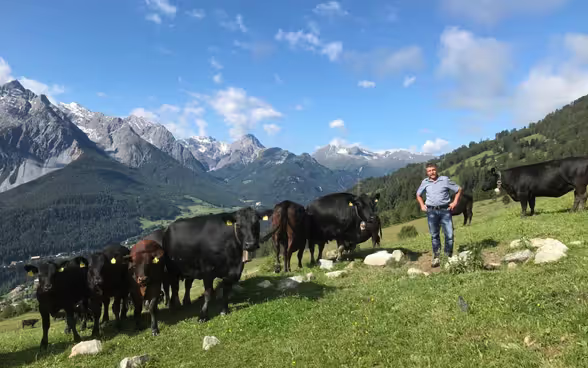
Farmer Jon Paul Thom, from the Lower Engadine region of Switzerland, is at the start of the chain leading all the way to the UN Food Systems Summit in New York. He has run his farming business for 40 years, the last 35 of which he has been an organic farmer. In an interview, Thom, who specialises in suckling cows, spoke about his motivation for operating a sustainable farm as well as the current challenges faced by the Swiss farming sector.
Sustainability a priority of Swiss foreign policy
The results of the Swiss dialogues as well as the independent dialogues of the SDC are being compiled and prepared in advance of the UN summit. This is where Swiss foreign policy comes into play. As part of its International Cooperation Strategy, the Federal Department of Foreign Affairs (FDFA) is especially committed at local and multilateral levels (for example at the UN) to the issue of food security, as hunger and malnutrition pose a significant threat to countries' development. This commitment is reflected in Switzerland's Foreign Policy Strategy (FPS) 2020–23. Sustainability is one of the four thematic focus areas of the strategy. Implementation of the 2030 Agenda and global climate and environmental protection will be key. By promoting sustainable food systems, the FDFA is also demonstrating its commitment to implementing the goals of the 2030 Agenda. The dialogue process is a prime example of how regional knowledge can be transferred into an international context and is very much in keeping with Federal Councillor Ignazio Cassis's maxim ‹foreign policy is domestic policy›.
Contact
General Secretariat GS-FDFA
Federal Palace West
3003 Bern