
Published on 20 August 2026
Development cooperation and humanitarian aid
Learn more about the general requirements for admission, application process and profiles that are currently in much demand by the Swiss Humanitarian Aid Unit (SHA).
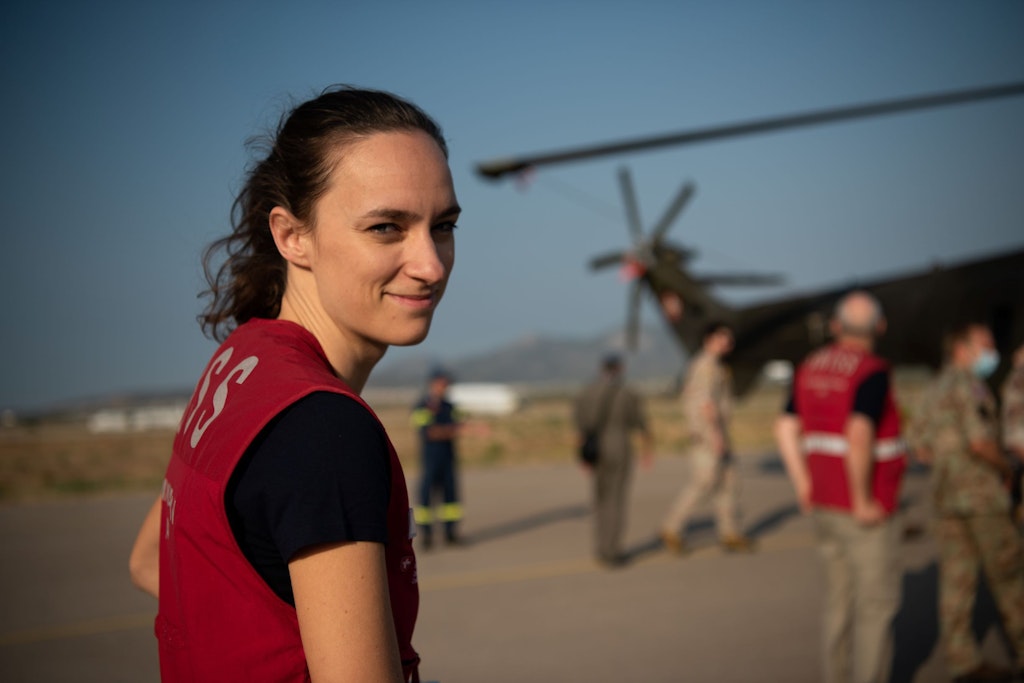
Admission to the Swiss Humanitarian Aid Unit (SHA): requirements profile
- SHA members must be Swiss citizens or holders of a permanent residence permit C.
- They must have a degree or certification or have undergone specialized training of equal value.
- They must be able to demonstrate at least five years of relevant professional experience, including at least two years in international cooperation (if possible in humanitarian aid) abroad.
- They are reliable, proactive, flexible and able to work independently and efficiently.
- They must have a strong aptitude for interpersonal relations, as well as a high level of intercultural sensitivity.
- They must have very good knowledge of two Swiss official languages and, if possible, a basic understanding of a third one.
- Fluency in English is essential. They must be healthy and physically fit.
- They must be between the ages of 25 and 55. They have a category B driving licence.
- They must be available for missions abroad with a minmum duration of six months.
SHA actively promotes diversity and strives to increase the proportion of women, members of linguistic minorities and people from different cultural backgrounds. Applications from these groups that meet the general requirements are given special consideration in the recruitment process. For particularly sought-after profiles, the SDC's Humanitarian Aid Division also offers accompanied initial assignments abroad for newcomers to humanitarian aid.
What is the SHA and her expert groups
Humanitarian Aid newcomers
The Swiss Humanitarian Aid Unit does not offer internships.
Experienced professionals with little or no international and/or humanitarian experience who meet the other requirements for admission can undertake a first mission under supervision. This gives candidates the opportunity to acquire initial international experience in the humanitarian field together with an SHA member who already has field experience.
These missions are available in the following areas: water, sanitation and hygiene; coordination & administration; protection (protection of civilian populations); construction; disaster risk reduction, environment and climate
This option does not exist for short-term or rapid response missions.
Recruitment process
If you wish to undertake assignments abroad for the SHA, please, as a first step, submit your application with a completed SHA CV (see below), a personal CV (optional), and a motivation letter (all in one document please) indicating which skills you can contribute to which SHA specialist group via the Federal Jobs Portal. Please upload all documents in a single file.
SDC – Humanitarian Aid Department and SHA
SHA Personnel Division
Mrs Selina Lüthi
Eichenweg 5
3003 Berne
Tel. +41 58 462 35 46If your profile matches current needs, you will be invited to an initial online interview. Interested candidates will be informed about the SDC, the SHA, the recruitment process, and possible deployment options.
Application documents (personal data form, recruitment profile, self-assessment form relating to recruitment profile, criminal record extract, information materials) are normally provided at the initial interview or information meeting. These application documents should be filled out and sent to the address above by the deadline indicated.
Suitable candidates are invited to a recruitment day in Zollikofen following the initial interview. The recruitment day is conducted as a group assessment and aims, among other things, to assess candidates’ mission-relevant competencies prior to the admission decision. The assessment consists of a further interview and various in-depth modules.
For candidates who have successfully completed the recruitment day, reference checks are carried out and, if the outcome is positive, a medical fitness assessment is arranged.
Upon recruitment and prior to their first mission, new SHA members will take part in a one-week introductory course.
Selection of SHA members for individual field missions is handled by the SHA Personnel Division on the basis of concrete job specifications as well as the SHA member’s skills and availability. The individual contractual provisions (duration of assignment, remuneration, insurance, etc.) are agreed on a case-by-case basis between Field Resources Section H and the SHA member and are set out in a written employment contract.
Open positions
For specific positions for which recruitment is also conducted outside the SHA, vacancies are additionally published on cinfoPoste, the job portal of the Swiss Centre of Competence for International Cooperation.
Expert profiles that are currently in high demand
The general requirements for admission to the Swiss Humanitarian Aid Unit (SHA) apply.
Tasks
As a specialist in CVA or social protection, you may be deployed to a partner organisation (e.g. WFP, UNICEF, ICRC, IFRC) or be attached to an SDC cooperation office abroad. Your mission will include the following tasks:
- Developing and implementing CVA programmes, possibly in connection with the social protection system in your country of deployment;
- Carrying out feasibility studies, including market analyses, risk analyses, and the evaluation and selection of partner organisations and financial service providers;
- Supporting open and constructive communication with the relevant interest groups;
- Working together with partner organisations and/or the authorities in charge of planning and implementing humanitarian programmes;
- Developing and implementing standard operating procedures;
- Staff training and capacity building;
- Coordinating with partner organisations and participating in or (co-)chairing coordination committees on CVA or social protection;
- Strategic planning, advocacy and policy dialogue;
- Programme monitoring and evaluation as well as reporting.
Examples of missions undertaken by Swiss Humanitarian Aid Unit specialists in CVA:
- Programme Policy Officer Cash and Social Protection, deployed to WFP in Colombo, Sri Lanka
- Humanitarian Affairs Officer Cash, deployed to OCHA in Dnipro, Ukraine
Skills and requirements
- You have experience in implementing and/or managing CVA programmes or experience in working with governments on social protection.
- You have good knowledge of project management (PCM) and the multilateral humanitarian system.
Qualifications
- Five years' professional experience, including at least two years in a humanitarian or development context abroad in a relevant subject area.
- University degree or equivalent qualification in international relations, development cooperation, political science, social science, economics, business or a related field.
Tasks
You will work in the construction and rehabilitation of public buildings, private housing and infrastructure. You may also be required to work in the context of migration or humanitarian emergencies abroad. Within the framework of these projects, you will manage, in close collaboration with local partners, all tasks related to the different phases of architectural and engineering projects (strategic planning, preliminary study, design, tendering, and implementation). Your work may also involve clarifying the needs of populations and communities affected by conflict or disaster. You will also have to cooperate with SHA partners, national and international actors in the sector (non-governmental and UN organisations, authorities) as well as with the Swiss representations on the ground (cooperation office, embassy).
Skills and requirements
- You are a reliable person, show initiative and flexibility and are able to work efficiently and independently; you are willing to take on responsibility for projects.
- You are willing to invest yourself in missions of at least 6 months abroad.
Qualifications
- You have a university degree or equivalent professional training in architecture or civil engineering.
- You have at least five years of professional experience, at least two of which must have been abroad, ideally with an international organisation.
Tasks
As a WASH specialist, your job is to plan and implement the programmes to construct water supply and sanitation network systems. This includes all tasks relating to the construction process (identifying water sources, design, planning and implementation). You will use your technical expertise to ensure the technical integrity of the projects, which are often implemented in difficult contexts.
Skills and requirements
- You are reliable, flexible and take the initiative.
- You work independently and efficiently, and you are prepared to take on responsibility for a project.
- You are ready to commit to missions abroad that are at least 6 months long.
Qualifications
- You have a degree from a higher education institution or an equivalent vocational training qualification in civil or environmental engineering, hydrogeology, geology or the natural sciences.
- You have at least 5 years’ professional experience (minimum 2 years abroad), preferably in international collaboration
Tasks
Maintaining Disaster Risk Reduction (DRR) projects and programmes aimed at improving disaster management systems by devising structural and non-structural measures such as risk assessments, developing preparedness plans/strategies, rescue training courses, community-based DRR, land use/catchment area management, early warning systems, awareness-raising, etc. and introducing DRR/CCA (climate change adaption) concepts in development projects as an overarching theme; additional tasks include policy dialogue, capacity building and networking in the DRR field with state institutions and project partners.
Skills and requirements
- Proven skills in managing programmes and projects, particularly in the field of DRR;
- knowledge of the humanitarian challenges related to major natural disasters;
- good communication, conceptual and analytical skills.
Qualifications
- University degree in environmental science (natural resources management, geography, geology, agronomy, forestry, rural engineer) or equivalent qualification with experience in disaster management/prevention and knowledge of key DRR and CCA concepts.
Tasks
Seconded to a UN agency (UNHCR, UNICEF, WFP, IOM, UNRWA) or deployed within a Swiss Cooperation Office/Embassy, your main responsibilities may consist in:
- (coordination) supporting the coordination in a Protection cluster, including collecting and disseminating information related to the Protection risks, the resulting humanitarian needs for Protection and assistance, information on the current/planned activities of the various humanitarian partners as well as elaboration of advocacy messages to the donors and duty bearers;
- (programming) assessment, monitoring, follow up, design and strategic planning of Protection programmes (including the identification of partners) to address the Protection/assistance needs of crisis affected communities;
- (advocacy) supporting the elaboration of advocacy messages or strategies, of recommendations to the authorities, donors and/or the humanitarian community.
Examples of recent assignments
- Child Protection Specialist, deployed to UNICEF, Myanmar
- Regional Protection advisor, deployed to the regional SDC office, Jordan
Skills and requirements
- 5 years of professional experience, at least two of which must have been abroad in the humanitarian field of Protection;
- experience in the management or implementation of Protection/Child Protection programmes;
- knowledge of the multilateral environment and its mechanisms;
- background and experience in working with authorities and in humanitarian negotiations are an asset.
Qualifications
- University degree or equivalent professional training in International Humanitarian Law and/or Human Rights, Political Science, International Relations, Development Studies, Social Sciences or any related field.
Taks
Seconded to a UN agency (Resident Coordinator Office, UNHCR, IOM, UNDP), your main responsibilities may consist in:
- supporting the UN Country Team (UNCT) and the Federal and local-level Durable Solutions Working Group in mobilising resources and support for their strategic efforts to achieve Durable Solutions for displacement affected communities;
- coordination and advice on Durable Solutions policies by analysing the Protection situation and political scenarios on which efficient advocacy strategies will be based;
- identifying entry points and opportunities as well as monitoring and assessing the necessary steps for the implementation of projects/programmes.
Examples of recent assignments
- Durable Solutions Adviser (DSA) deployed to UNDP, Ethiopia
- Transition Officer, deployed to UNHCR, Jordan
- Coordination Officer, Humanitarian, Development and Peace Nexus, deployed to the UN Resident Coordinator’s Office, Lebanon
Skills and requirements
- 5 years of professional experience, at least two of which must have been abroad in the field of international policy/governance processes, either in the management of migration and forced displacement or in a sector contributing to sustainable development in fragile contexts;
- familiarity with international normative Protection frameworks (refugee law, human rights) and with the sustainable development approach;
- knowledge of concepts and methods in the field of durable solutions and its operational applications;
- ability to strengthen strategic partnerships for effective implementation with governments, UN and governmental coordination structures;
- good understanding of project management tools and adaptability to work at local level.
Qualifications
- University degree in International Law, Political Science, International Relations or any related field.
Tasks
Seconded to a UN agency / multilateral organisation (UNFPA, UNHCR, UNICEF or ICRC/IFRC) or deployed within a Swiss Cooperation Office/Embassy, your main responsibilities may consist in:
- providing strategic guidance, technical support, and organisational capacity strengthening with regards to GBV and/or gender equality projects, programming and mainstreaming;
- supporting or leading assessments, monitoring, follow up, design and strategic planning of programmes addressing the needs of survivors;
- engaging with communities to build solidarity with survivors and reflect on unequal gender norms;
- supporting the elaboration of advocacy strategies, recommendations to the authorities, the donor community or the humanitarian community.
Examples of recent assignments
- GBV in Emergencies Specialist, deployed to UNICEF, Turkey
- GBV Specialist, GBV Area of responsibility (AOR), deployed to UNFPA, Kenya
Skills and requirements
- At least 5 years of professional experience, of which at least two years in a humanitarian or development context abroad, in a relevant field (PSEAH, GBV, gender equality, protection/human rights, sexual and reproductive health);
- a clear perception of the impact of power and violence on the lives of women, girls, boys and men;
- knowledge of the minimum standards of PSEAH, and the broader gender-based violence response, the application of a gender perspective to humanitarian or development programmes and familiarity with the victim-centred approach and gender equality considerations.
- In addition, you have broad experience in project management;
- and profound knowledge of the multilateral humanitarian system. Experience in working with survivors of SEA or gender-based violence is an asset.
Qualifications
- University degree or equivalent training in Gender Studies, International Relations, Development Cooperation, GBV Prevention and Response, Health, Social Sciences / Work, Social Assistance, Community Development or related fields.
Tasks
Seconded to a UN agency (e.g. UNFPA, UNHCR, UNICEF), your main responsibilities may consist of:
- Providing strategic guidance, technical support, and organizational capacity strengthening to the agency, foster interagency collaboration, and ensuring alignment with global and United Nations (UN) system-wide standards.
- In addition, you may be asked to contribute to coordination efforts, support leadership advocacy, develop and apply technical resources, and enhance field and HQ engagement on PSEAH matters, ensuring a survivor-centered, rights-based approach.
- If appropriate, to may support in the elaboration of advocacy strategies and develop and implement capacity sharing measures and trainings.
Examples of recent assignments
- Regional Advisor – Protection from Sexual Exploitation, Abuse, and Harassment (PSEAH), deployed to UNFPA, Senegal
- Senior Technical Advisor PSEA, deployed to WFP, Sudan
Skills and requirements
- At least 5 years of professional experience, including at least two years in a humanitarian or development context abroad, in a relevant field (PSEAH, GBV, gender equality, protection/human rights, sexual and reproductive health);
- a clear perception of the impact of power and violence on the lives of women, girls, boys and men;
- knowledge of the minimum standards of PSEAH, and the broader gender-based violence response, the application of a gender perspective to humanitarian or development programs and are familiar with the victim-centred approach and gender equality considerations;
- broad experience in project management;
- profound knowledge of the multilateral humanitarian system. Experience in working with survivors of SEA or gender-based violence is an asset. Experience in compliance is an asset.
Qualifications
- University degree or equivalent training in Gender Studies, International Relations, Development Cooperation, GBV Prevention and Response, Health, Social Sciences / Work, Social Assistance, Community Development or related fields.
Tasks
Deployed within a Swiss Cooperation Programme/Embassy in settings affected by (non-) international armed conflict, your main responsibilities may consist in:
- thematic and advocacy support to the Swiss Embassy/ Cooperation Programme in its efforts to uphold international humanitarian law (IHL) and strengthen Switzerland’s engagement with duty bearers to fulfill their legal obligations;
- promoting advocacy issues/activities/projects, political dialogue and demarches on PoC in cases of violations of IHL and IHRL;
- (programming) integrating PoC in internal country level planning processes;
- assessment, analysis, monitoring, follow up, design and strategic planning of PoC programmes (including the analysis of options for Switzerland to engage) to address the Protection/assistance needs of the various communities;
- (coordination): strengthening the PoC dialogue with multilateral and bilateral partners as well as with donors to foster coordination and joint advocacy;
- networking and information sharing with local actors, civil society, ICRC, relevant international organisations and humanitarian partners/other representations.
Examples of recent assignments
- Civil-military coordination, deployed to OCHA, Burkina Faso
Skills and requirements
- 5 years of professional experience, at least two of which must have been abroad in the humanitarian field of PoC;
- experience in the management or implementation of Protection programmes, particularly in the context of armed conflicts;
- knowledge of the multilateral environment and its mechanisms;
- background and experience in working with authorities and in humanitarian negotiations are an asset.
- In-depth knowledge of IHL and International Human Rights; experience working in fragile and emergency contexts;
- strong diplomatic skills.
Qualifications
- University degree or equivalent professional training in IHL and/or Human Rights, Political Science, International Relations, Development Studies, Social Sciences or related fields.
Tasks
Deployed to partner organisations promoting EiE at national, regional and global level in close collaboration with other sectors, your main responsibilities may consist in:
- leading/supporting needs assessments, identifying opportunities for local partnerships, and ensuring effective planning, implementation, coordination and evaluation of integrated programming that support the development and wellbeing of children, adolescents and youth in all their diversity and their continuous access to safe, inclusive quality education in emergencies;
- coordinating the development of cluster-level advocacy strategies informed by contextually relevant evidence and analysis and based on your experience in networking and coordinating plans and interventions, to influence national-level education plans, programmes and policies;
- ensuring alignment with global humanitarian standards, national education plans, as well as Plan International’s global EiE work and key cross-cutting priorities including Child Protection, Gender and inclusion.
Examples of some recent assignments
- Education in Emergencies Programme officer, deployed to UNICEF, Niger
Skills and requirements
- 5 years of professional experience, at least two of which must have been abroad in the field of education, experience in emergencies being strongly preferred;
- good understanding of Protection issues and Protection risk analysis in displaced affected settings;
- experience in high-quality report writing and documentation;
- proven experience in project cycle management as well as stakeholder networking and coordination at all levels.
Qualifications
- University degree in Education, Social Sciences, International Development, Humanitarian Response or related fields. A master’s degree in education or any above mentioned field is an asset.
The Head of Finance, Personnel and Administration (CFPA) ensures that managers and their teams can carry out their tasks efficiently and effectively. She/He oversees the smooth functioning of the representation and leads all human resources processes. She/He supports the Head of Cooperation / Head of the Humanitarian Office in ensuring that resources are used transparently, economically and in line with organisational requirements.
The CFPA is responsible for key services such as project cycle management (PCM), the internal control system (ICS), and the management of the office’s assets. She/He implements the defined strategy and takes on essential operational duties. The CFPA is normally a member of both the senior management team and the Security Management Team (SMT).
Tasks
Deployed within a Swiss Cooperation Office/Humanitarian Office, your main responsibilities may consist in:
- (Management) Leading the team in line with strategic priorities and ensuring effective use of resources. Defining roles, supporting staff development, and fostering strong communication and teamwork. Maintaining productive relations with authorities and partners.
- (Financial Management) Overseeing budgeting, cash and financial planning, and ensuring accurate SAP/Esprit data and timely financial closure. Supporting audits and strengthening control tools. Integrating financial insights into reporting and managing constraints linked to financial sanctions.
- (Administration and Logistics) Ensuring robust internal controls and improving administrative tools and processes. Overseeing archiving, assets, inventories, and building management with IT and logistics partners. Maintaining emergency preparedness and coordinating compound and infrastructure needs.
- (Project Cycle Management) Reviewing and approving budgets and accounts, ensuring compliance with SDC standards. Assessing financial and operational risks, analysing reports, and monitoring projects. Supporting procurement, contract management, institutional assessments, proposal development, and final reporting.
- (HR Management) Acting as HR focal point and ensuring smooth HR workflows. Coordinating staff training, supporting recruitment and employment conditions, and maintaining local staff management frameworks. Advising supervisors and coordinating the MbO process.
- (Support to Partners) Providing partners with training and guidance in finance, HR, administration, ICS, and PCM. Supporting audit processes and monitoring implementation of recommendations. Strengthening partners’ systems for compliance and effective delivery.
Examples of recent assignments
- CFPA deployed to the Swiss Cooperation Office in Juba, South Sudan
- Administrator deployed to the Humanitarian Bureau in Bangui, Central African Republic
Skills and requirements
- 5 years of professional experience, at least two of which must have ideally been abroad in the humanitarian context.
- Ideally, knowledge and experience in using SDC operational instrument, in particular PCM, financial, administrative and logistical management, budget management tools.
- Proven ability to work effectively within a multidisciplinary team in complex and dynamic environments.
- Political and diplomatic flair in relations with different parties and interest groups and ideally experience in collaborating with multilateral organisations, civil society and authorities.
Qualifications
- University degree or equivalent professional training in finance, business administration or any related field.
Frequently Asked Questions
The SHA doesn't organises traineeships abroad. Various other organisations offer internships in international cooperation. Further information on internships is provided by Cinfo.
The Swiss Humanitarian Aid Unit is a militia-based corps that responds to the constantly changing staffing needs in programme countries. Members of the Corps are employed on a fixed-term employment contract for the duration of the respective project.
SHA members receive a wage for the duration of the field mission. This wage is based on the type of work to be performed during the mission as well as the person’s level of training and experience.
cinfo, the Swiss centre of expertise for international cooperation, provides comprehensive information on carreer matters in international cooperation. can provide you with information about positions relating to international cooperation. The SHA has only limited opportunities in this area (see Newcomers humanitarian aid).
We rely on professionals who are willing to commit to longer-term assignments with us. Applications for one-off deployments are not considered.
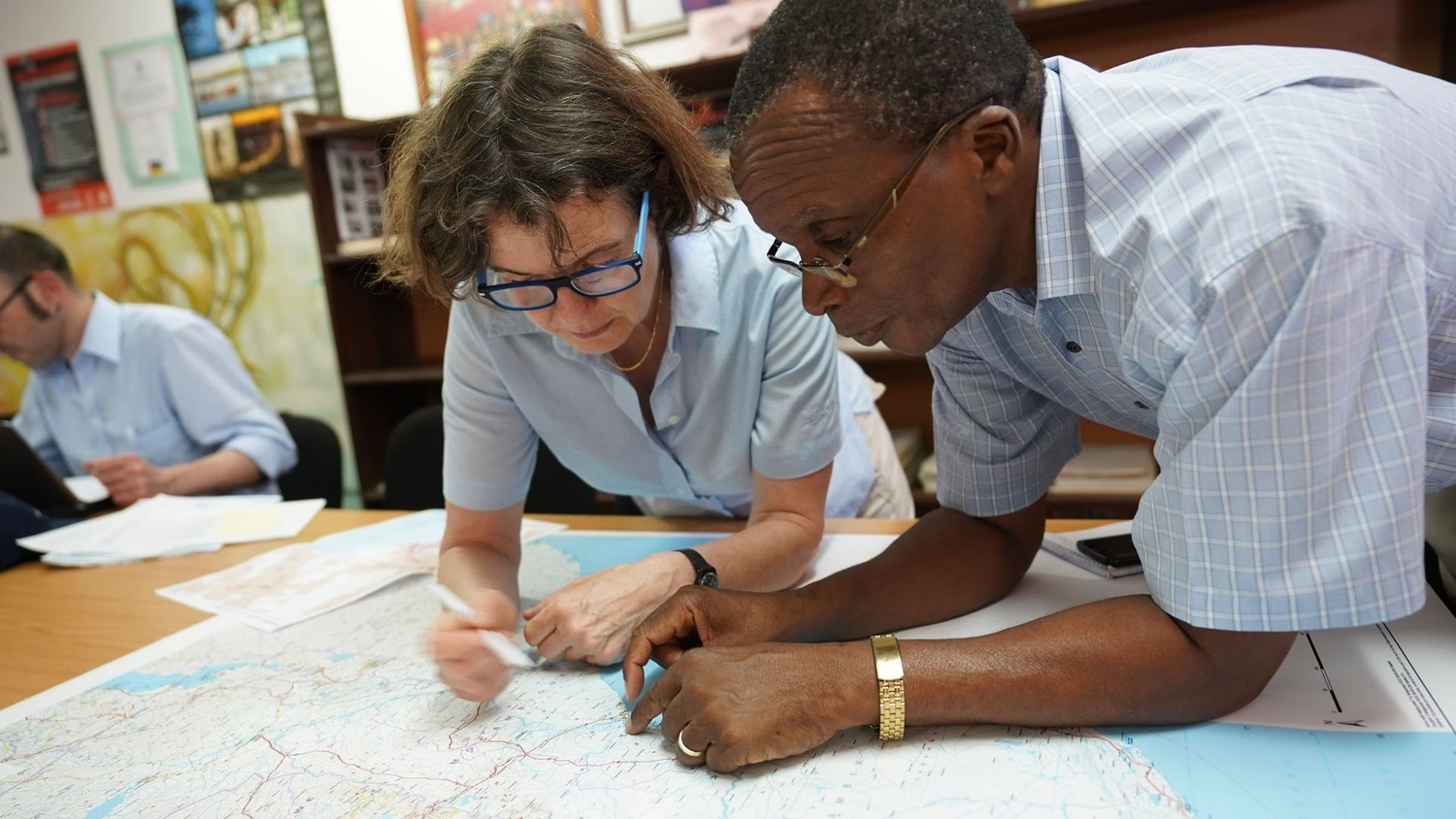
The Swiss Humanitarian Aid Unit (SHA) and its expert groups.
General Information about the Swiss Humanitarian Aid Unit.