
Freedom of expression
Switzerland is committed to the right to freedom of expression and freedom of assembly. Both freedoms are cornerstones of every liberal and democratic society. They include the right to form and express one's own opinion and to seek, receive and impart information and ideas of all kinds. Freedom of the press and the work of media professionals play an important role in the realisation of this right.
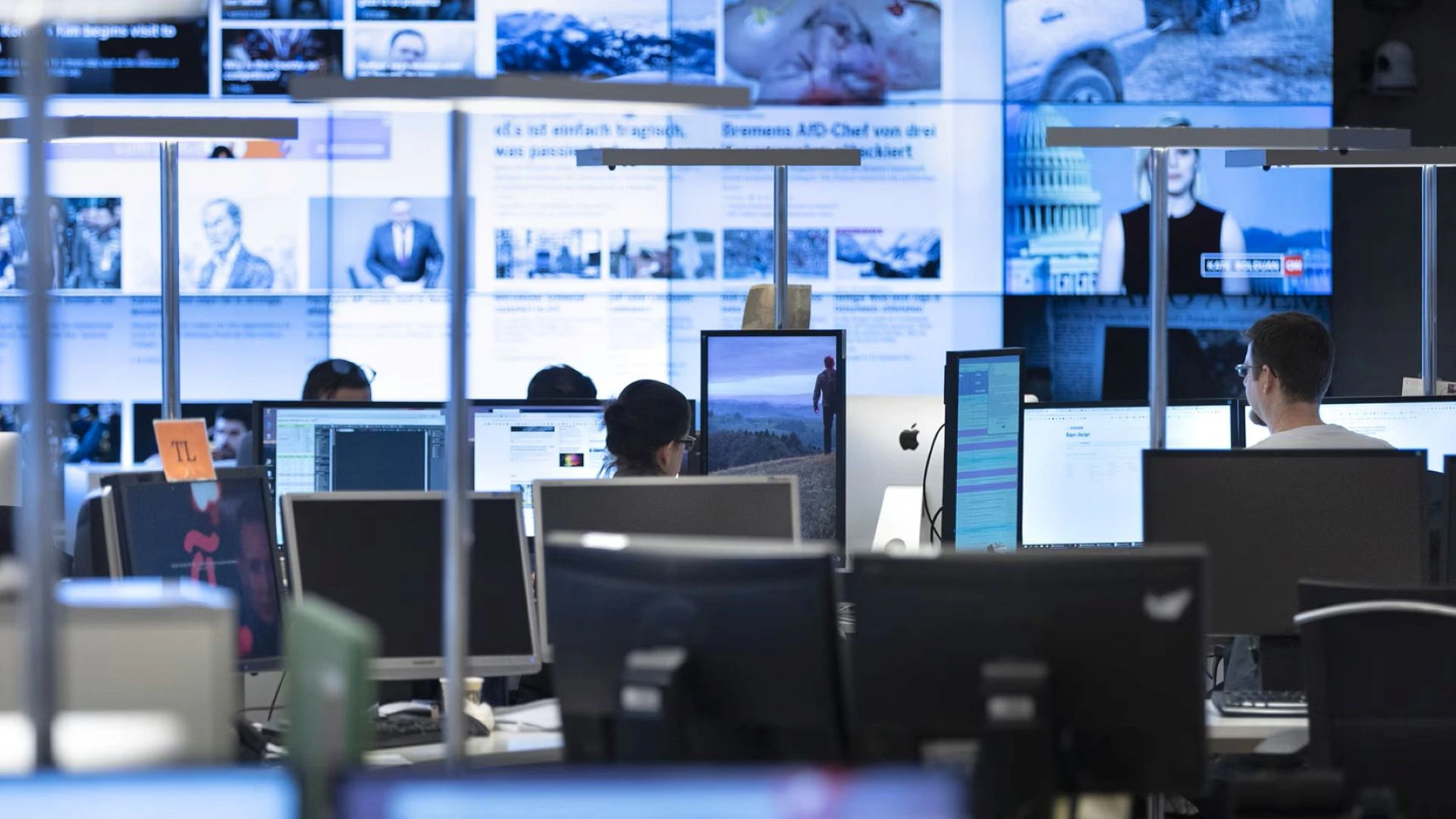
Media freedom and the work of media professionals play an important role in the realisation of freedom of expression. Indicators suggest that freedom of expression is coming under increasing pressure worldwide (Press Freedom Index 2024). In addition to freedom of expression, freedom of assembly is also of great importance. The latter focuses on the right to demonstrate peacefully in order to express one's opinion publicly together with others. Digitalisation has greatly expanded possibilities for communication. When determining rules for the digital space (digital governance), it is important to ensure that the right to freedom of expression is also guaranteed online. At the same time, Switzerland also ensures that hate speech, i.e. incitement to discrimination and violence, is not allowed under the guise of freedom of expression.
The priorities here for Switzerland are
- working towards the international recognition of the freedom of expression in the digital space and helping to strengthen the international legal framework in this area. To this end, it works, for example, within the Freedom Online Coalition and the Media Freedom Coalition.
- participating in international discussions on disinformation and the spread of hate speech online, and campaigns against internet shutdowns.
- working to protect media professionals and human rights in the context of peaceful demonstrations, and playing a leading role in corresponding initiatives within the UN framework.
- promoting the protection and recognition of people who stand up for human rights.
Protection of human rights defenders
Switzerland recognises the positive and essential role of human rights defenders (HRDs) in promoting and protecting human rights and the rule of law.
In addition to their commitment to protecting the rights of the most vulnerable groups, HRDs play an important role in drafting legislation that, for example, promotes gender equality or protects minorities and vulnerable groups. In doing so, they make a tangible contribution to improving the situation of affected communities in their region or country. HRDs make a significant contribution to the implementation of internationally recognised human rights standards.
The Swiss representations abroad support HRDs in documenting human rights violations. They also intervene in cases of restrictions on freedom of expression or in cases of extra-judicial executions and enforced disappearances. They work together with relevant government bodies, but also with representatives of like-minded states, non-governmental organisations and international initiatives. Switzerland also supports non-governmental organisations that campaign for the protection of human rights defenders and speaks out in UN bodies such as the Human Rights Council against the criminalisation of HRDs.
UN standards for the protection of HRDs
Everyone has the right, both individually and in community with others, to demand respect for fundamental freedoms and adherence to human rights norms, both nationally and internationally, and to defend them non-violently. States have a duty to protect people who make use of this right.
In 1998, the UN General Assembly adopted a resolution to this effect, thereby establishing international standards for the protection of HRDs for the first time.
The UN Special Rapporteur on HRDs undertakes regular country visits and serves as a point of contact for complaints.
Contact
State Secretariat STS-FDFA
Peace and Human Rights Division
Effingerstrasse 27
3003 Bern