
Humanitarian disarmament
The uncontrolled proliferation and improper management of conventional weapons and munitions can destabilise states and regions and hinder their peaceful development. Switzerland is therefore committed to humanitarian disarmament within the framework of multilateral processes by strengthening and promoting international law, protection of civilians, sustainable development, and global and regional security and stability.
Conventional weapons
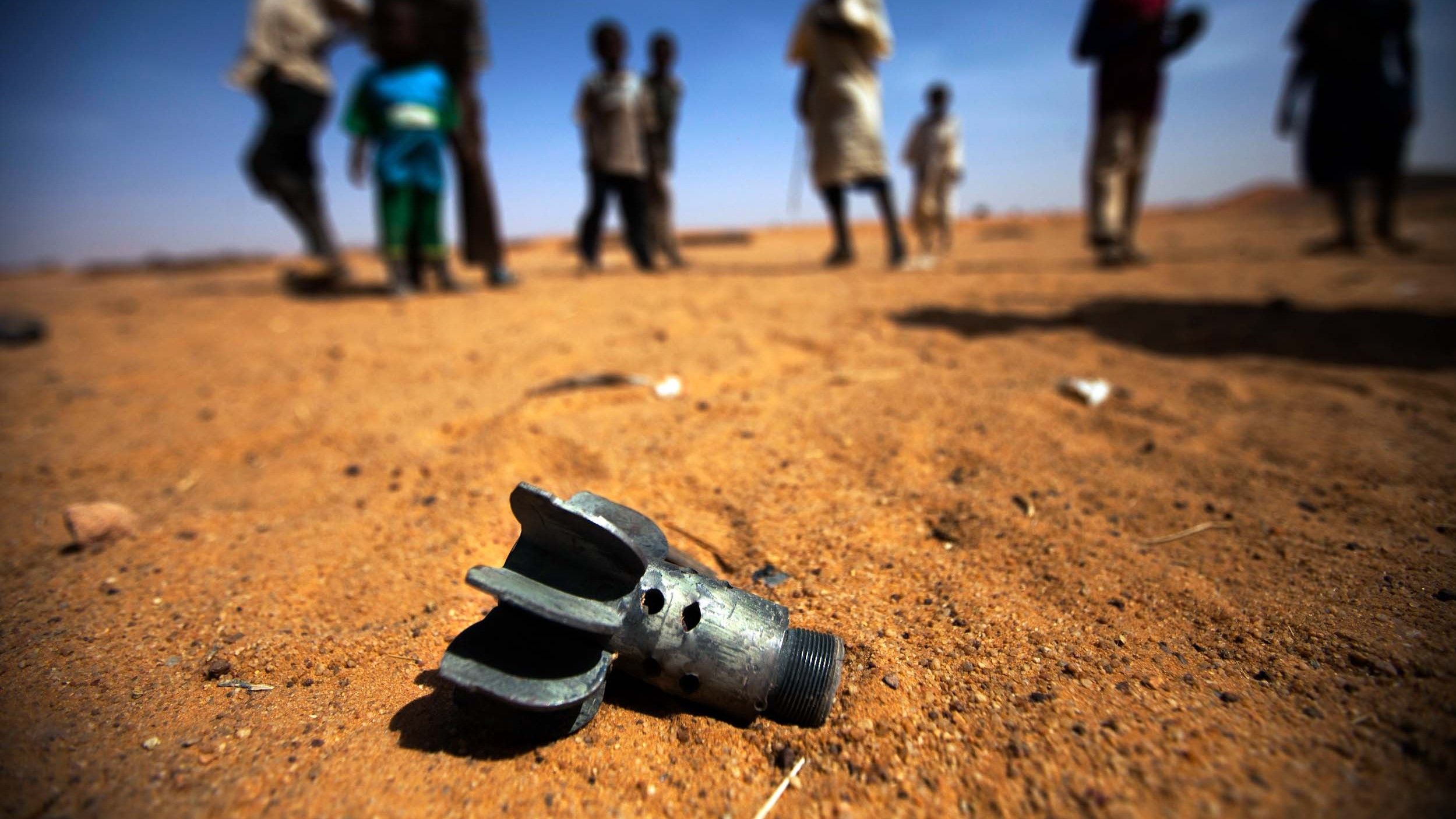
The illicit proliferation and misuse of conventional weapons, including small arms, light weapons and munitions, contribute significantly to human suffering around the world. These weapons often fuel, prolong and exacerbate armed conflicts and violence, thus hindering development.
The international community has therefore developed a number of instruments for conventional weapons that contribute to peace, security, stability and development. These focus primarily on banning certain conventional weapons or requiring states to take responsibility for their regulation over their entire life cycle. Switzerland is committed to the effective implementation and universalisation of these instruments, and to the observance and strengthening of international humanitarian law – in particular for the protection of civilians. Humanitarian diplomacy aims to limit and mitigate the impact of armed conflicts and armed violence on people.
The use of certain weapons, such as mines or cluster munitions, causes long-term human suffering and has a negative impact on sustainable development. The effects of these weapons often last long after a conflict has ended, and considerable resources are required to clear them and to restore and rehabilitate the regions affected. Switzerland advocates consistent compliance with existing treaties in this area, promotes their universalisation and supports mine action in affected states.
Small arms, light weapons and munitions
The improper storage and management of munitions has led to several hundred explosions at ammunition dumps worldwide every year in recent decades and contributes to weapons falling into the hands of armed groups or organised crime.
The unauthorised proliferation of small arms and light weapons and the unsafe and improper management of munitions leads to violence against civilians, prolongs and exacerbates conflicts, undermines peace processes, and hinders the sustainable development of communities and states. It also renders the provision of humanitarian aid more difficult and promotes organised crime and terrorism.
Switzerland is politically committed to preventing the unauthorised proliferation of small arms and light weapons and improving the management of munitions. In particular, Switzerland promotes the implementation of international and regional conventions on small arms and light weapons, such as the Arms Trade Treaty, the UN Programme of Action on small arms and its International Tracing Instrument, and the Global Framework for Through-life Conventional Ammunition Management. Switzerland also seeks out gaps in the current legal framework and international practice and helps to close them.
Example: the safe handling of munitions
In 2015, Switzerland launched an initiative to prevent explosions in ammunition dumps and stop the uncontrolled transfer of munitions. In doing so, Switzerland drew the attention of the international community to risks that were not sufficiently recognised. In 2017, the initiative made a significant contribution to successfully launching a political process within the UN. This process led to the Global Framework for Through-life Conventional Ammunition Management, which was adopted by the UN General Assembly in 2023. The states committed to the following:
- to prevent the diversion and illicit trafficking and misuse of ammunition;
- to avoid unplanned explosions at ammunition sites and limit their effects;
- to ensure the safety and security of conventional ammunition throughout its life cycle; and
- to contribute to lasting peace, security and sustainable development.
The international community thus closed a significant gap in global arms control.
At the same time, Switzerland supported the creation of an international support mechanism based in Geneva. The Ammunition Management Advisory Team (AMAT) supports states by providing technical advice and training in the development of state capabilities and infrastructure in ammunition management. It disseminates best practice and international guidelines and facilitates international cooperation. AMAT is a joint project of the Geneva International Centre for Humanitarian Demining and the UN Office for Disarmament Affairs.
Switzerland supports the implementation of these agreements with its own technical expertise and targeted projects with partner organisations. This strengthens International Geneva as a centre for international arms control. In particular, Switzerland supports the development of local expertise, enabling partner countries and regional organisations to tackle the small arms and munitions problem independently in the medium term.
The use of explosive weapons in populated areas often causes considerable harm to civilians, infrastructure and the environment. In 2022, states adopted a political declaration aimed at strengthening protection for civilians. Switzerland supports this declaration and its implementation at home and abroad.
Lastly, Switzerland supports research on arms flows and the impact of armed violence on civilians, peace and development, thereby promoting evidence-based policymaking. At the initiative of Switzerland, the Geneva Graduate Institute of International and Development Studies founded the Small Arms Survey research programme in 1999. Today, this centre of expertise is regarded as an international institution of reference in the field of small arms and light weapons.
Links
- International humanitarian law: Prohibition and restriction of weapons
- Disarmament and non-proliferation
- Arms Trade Treaty (German)
- Programme of Action on small arms and its International Tracing Instrument
- Global Framework for Through-life Conventional Ammunition Management
- Political Declaration on the Use of Explosive Weapons in Populated Areas
Mine action
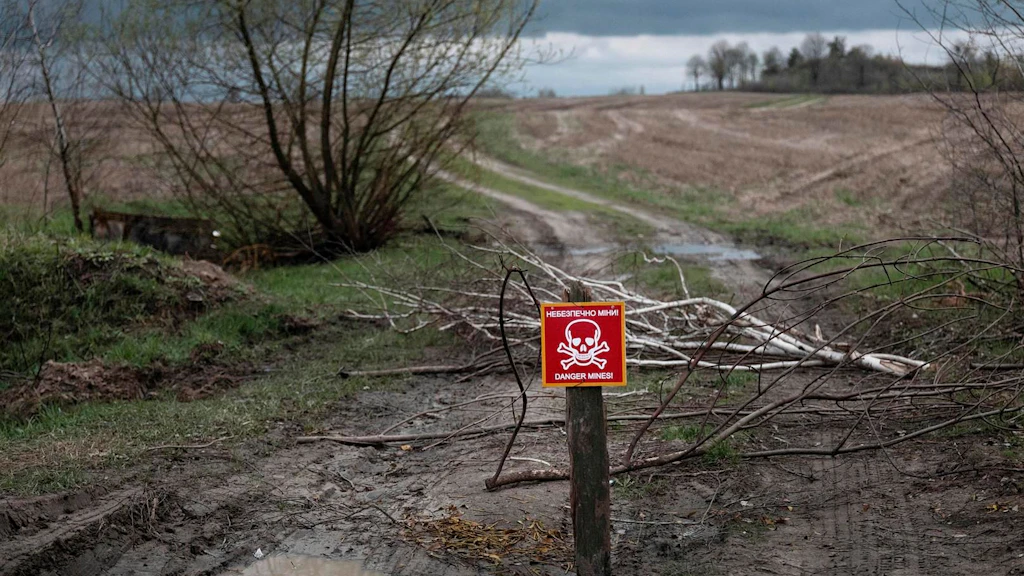
Switzerland works actively to achieve a world free of anti-personnel mines, cluster munitions and other explosive remnants of war, and supports international efforts to that end.
Contact
State Secretariat STS-FDFA
Peace and Human Rights Division
Effingerstrasse 27
3003 Bern