
“It's about alleviating suffering and creating prospects.”
Humanitarian aid must redefine its priorities: a geopolitical environment characterised by crises and massive budget cuts is making humanitarian work more difficult, which is why a reset is being discussed. We spoke to Dominik Stillhart, the Federal Council's delegate for humanitarian aid, about current changes, key challenges and the future of humanitarian aid.
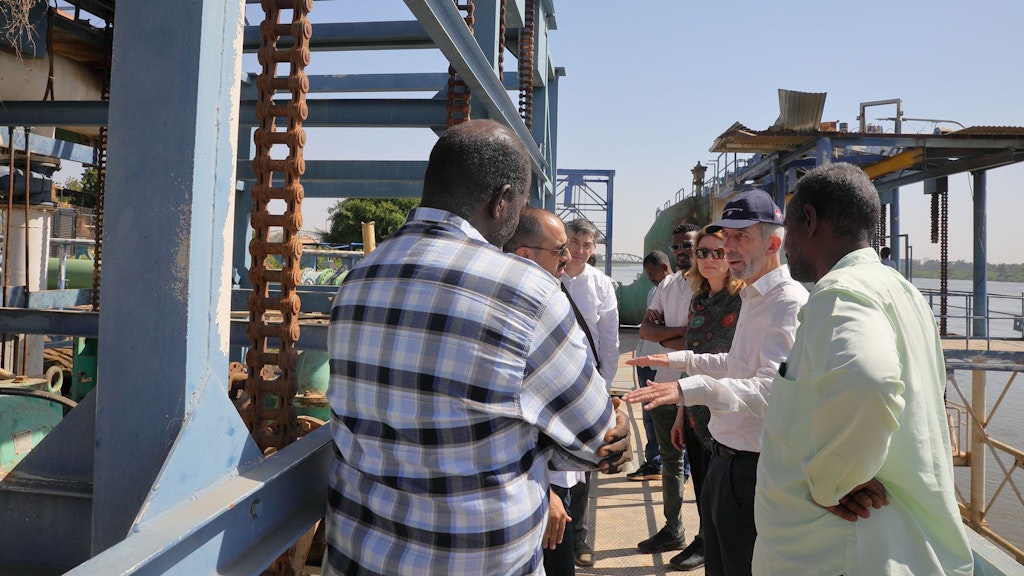
Humanitarian aid from the Swiss Agency for Development and Cooperation (SDC) is deployed worldwide to support people in crisis and disaster situations. This work includes direct emergency relief in the event of an emergency, the rebuilding of destroyed infrastructure and measures to minimise the risks of future disasters.
What does it mean to provide emergency relief?
It depends entirely on who you ask. Emergency relief is often equated with food, water, a roof over one's head and medical assistance. But it depends on the given situation. Emergency relief can also be to provide a woman with protection from sexual violence if she is on a migration route. Emergency relief can also be a hot meal, for example currently in Ukraine, where it is minus 20–30 degrees.
But what I always say is this: we can't reduce humanitarian aid solely to this emergency relief, i.e. saving lives. We also have to alleviate suffering and create prospects.
When girls and boys are suddenly no longer able to attend school, it is a catastrophe. It robs them of major prospects in life. Of course, food and drink are essential. But if children grow up in camps for years without education, they have little chance of finding work or participating in society later on. This is how the spiral of violence often continues.
Which programmes are the three largest in terms of Swiss humanitarian aid?
Ukraine, the occupied Palestinian territory and Sudan are among the SDC's largest humanitarian programmes. However, we mustn't forget that we're also running major programmes in Afghanistan, Syria and the Democratic Republic of the Congo.
In view of the catastrophic humanitarian situation in Sudan, the Federal Council approved an emergency relief package of CHF 50 million last November. How were these funds used?
Half of the additional emergency relief funds were used within Sudan and half to tackle the refugee crisis in the neighbouring countries of South Sudan, Chad, Egypt and the Central African Republic.
This year's IC Forum is dedicated, among other things, to the challenges facing humanitarian aid as a result of budget cuts. How are current geopolitical developments, and the increasing polarisation and financial cuts they entail, affecting humanitarian aid?
The effects are significant. Funding available worldwide for humanitarian aid has fallen by around 45% since 2022. Last year, only 98 million people received humanitarian aid as a result, although 300 million were in need of support. The hunger crises are also worsening. I was in Sudan recently, where 21 million people are affected by acute food insecurity.
Was there a particular situation in which it became clear to you that funds are becoming scarcer and that our partner organisations are also under increasing pressure?
At the beginning of February 2025, just three weeks after the United States announced its freeze on payments, I visited the refugee camp in eastern Bangladesh on the border with Myanmar. With around two million Rohingya refugees, it is the largest refugee camp in the world. The payment freeze had an immediate impact on the local population: World Food Programme distribution centres and several schools had to close immediately. There was great uncertainty about the further development and continued existence of the aid organisations.
How is Switzerland reacting to the changes?
At the beginning of last year, our emergency relief funding was quickly used up because we provided immediate assistance in the major crises. We were pleased that Parliament approved a supplementary credit of over CHF 50 million for Sudan, which was necessary due to the acute emergency situation. That new funding really made a noticeable difference, as it enabled us to provide extensive assistance to the affected population quickly and easily. When I was in Sudan, I felt a great sense of gratitude for the aid we were providing.
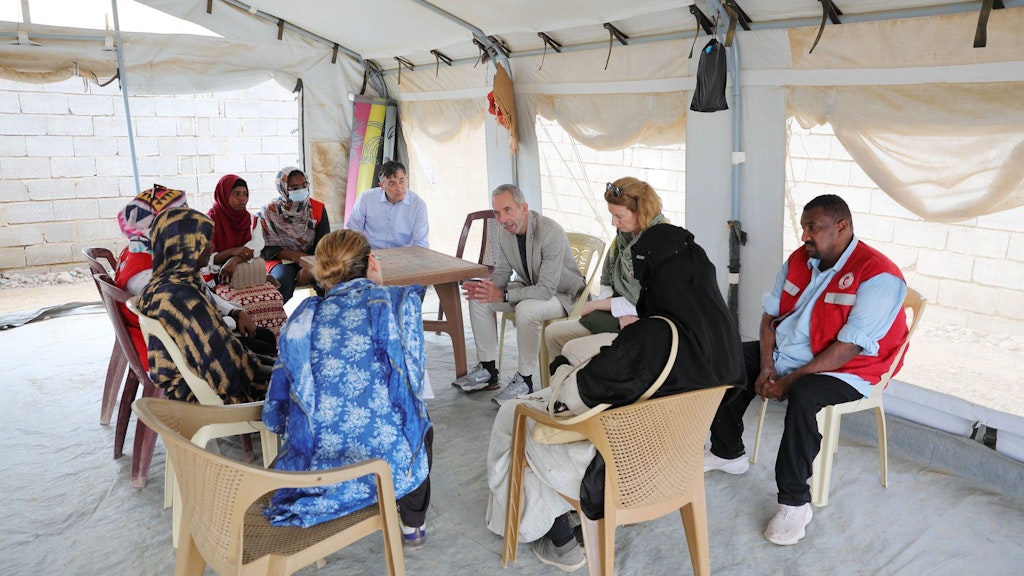
“Alleviating suffering and creating prospects”: how can these two aspects be combined in the context of humanitarian aid?
One major advantage of the SDC is the way we work. We don't work in silos – humanitarian aid on the one hand, development cooperation on the other. We think and act in a networked way. In many countries, we combine humanitarian aid with longer-term reconstruction and development work. Ukraine is a typical example of how our various instruments interlock and are used effectively.
How do we ensure that the programmes are implemented as intended?
We work very closely with our partner organisations and are also represented in some of their governing bodies. Cooperation requires the fulfilment of certain standards. Our external network plays an important role in selecting and cooperating with our partner organisations. We are present in many of these countries and see how these organisations work.
In times of increasing pressure on humanitarian aid, what role does Switzerland play as the depositary state of the Geneva Conventions?
Switzerland is recognised in its role as an advocate of international humanitarian law. It is precisely because this law is under massive pressure today that Switzerland's role as depositary state of the Geneva Conventions is particularly important and in demand. This is not just about making public statements, but also about consistently emphasising the importance of international law in our diplomatic relations. Compliance with international law is the most effective measure to protect people, reduce their vulnerability and significantly reduce humanitarian needs.
This year's IC Forum will focus on how humanitarian priorities need to be redefined in a changing geopolitical environment. In concrete terms, what impetus do you hope to gain for Switzerland's humanitarian work from this year's IC Forum?
I hope that the interesting programme at this year's IC Forum and our diverse range of guests will enable us to not just discuss matters in our own echo chambers, but establish a dialogue with actors from the Global South, the private sector, the academic community and civil society, in order to be able to hold controversial discussions, evaluate new approaches and find effective solutions.
Links
Contact
General Secretariat GS-FDFA
Federal Palace West
3003 Bern