
New beginnings, peace and a refugee crisis – Ignazio Cassis visits the Middle East
From 3 to 8 April 2021, Federal Councillor Ignazio Cassis will visit Iraq, Oman and Lebanon. Switzerland's strategy for the Middle East and North Africa aims to strengthen bilateral relations in the region and thus promote peace, security and prosperity. The head of the Federal Department of Foreign Affairs will discuss these objectives with his counterparts in Iraq and Oman. While in Lebanon, he will also be updated on Switzerland's humanitarian work there.
Federal Councillor Ignazio Cassis's itinerary in the Middle East takes in three countries that could not be more different.
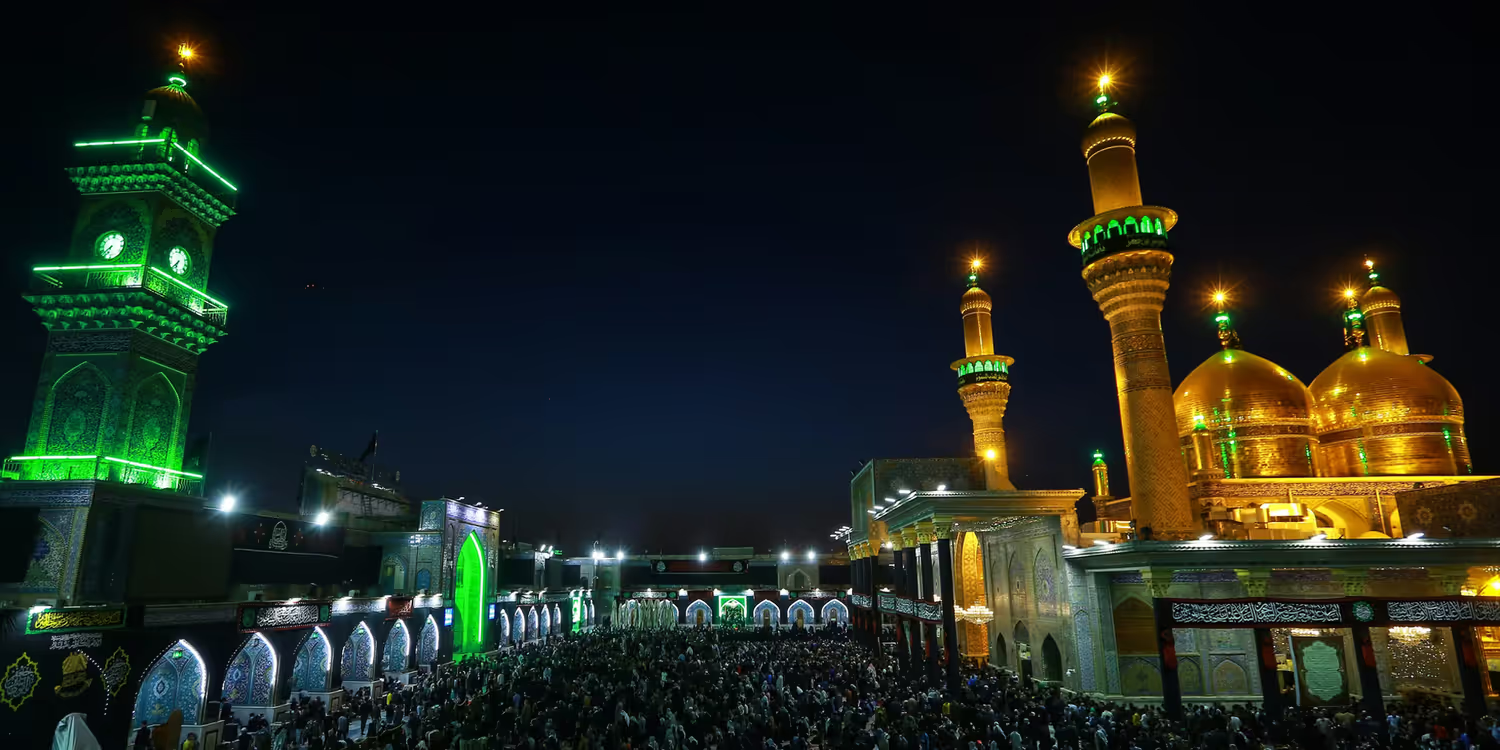
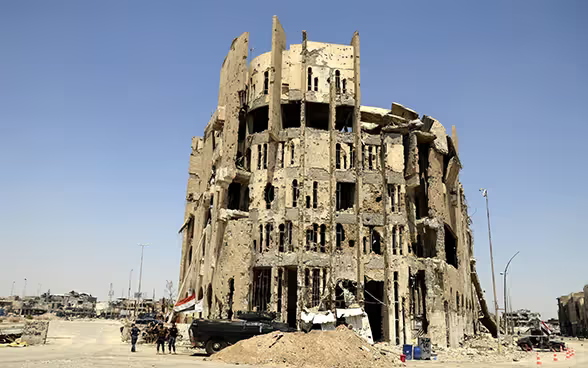
For many years, Iraq was faced with the spectre of the ‹Islamic State› group, whose hooded, darkly clothed members – driven by religious fanaticism – terrorised the local population. Atrocities, violence and displacement were part and parcel of everyday life. In 2018, the group was defeated by a large-scale military operation and driven underground. The ‹Islamic State› group's reign of terror and the consequences of decades of violence and armed conflict shape the humanitarian, economic and social situation in Iraq. Nevertheless, following a change of government in 2020, the country is embarking upon a new path.
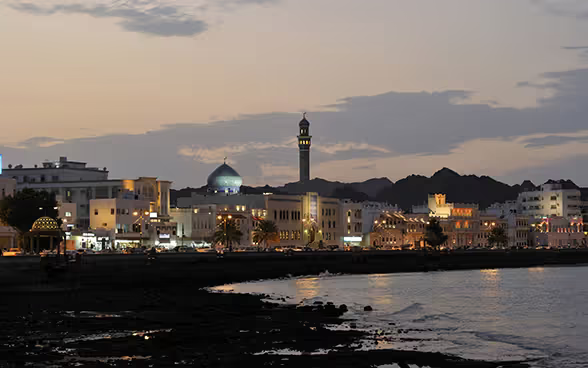
By contrast, Oman is a safe haven in an unstable region and has not been caught up in a war for some 50 years. The sultanate – frequently also referred to as the ‹Switzerland of the Middle East› owing to its neutral foreign policy – has traditionally played a mediating role. As is the case in many Gulf states, Oman is seeking to move away from its reliance on the petroleum industry and is currently in the process of restructuring its economy. Switzerland opened an embassy in the capital Muscat in 2014 with the aim of fostering a closer partnership with a like-minded country.
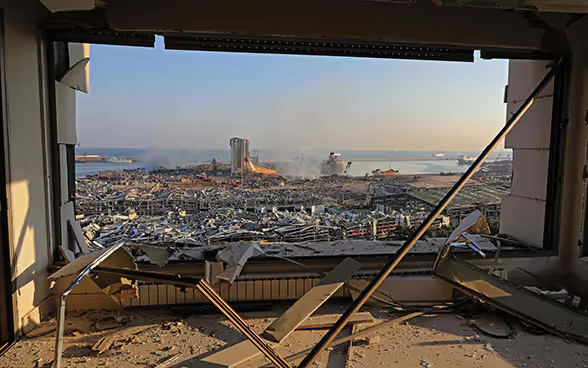
Following the explosion in the port area of Beirut on 4 August 2020, the Lebanese people were once again faced with disaster. Millions of refugees – primarily from Syria – can be found in numerous camps across Lebanon, waiting for a better future. The situation in Lebanon is visibly deteriorating, as there is no end in sight to the Syrian conflict and the country itself is facing a severe economic and political crisis.
Together into a better future
Despite facing considerable issues, many Middle Eastern countries find themselves at a turning point following decades of violence and are eyeing political, economic and social reforms. With its foreign policy, Switzerland is helping these nations make this transition by working together with regional partners such as Oman in the areas of conflict prevention, humanitarian aid and development cooperation. It also sees opportunities for Swiss businesses and seeks to harness the potential of a well-trained young workforce, new technologies and digitalisation. Switzerland has built up a good reputation in the region as a neutral intermediary and valued partner.
COVID-19 in the Middle East
Back in March 2020, it was said that the heat kills coronavirus. The world now knows, however, that the virus can thrive even when it is 50 degrees in the shade. The consequences of the COVID-19 pandemic have been devastating in the Middle East. As a result of past and ongoing conflicts, millions of people – with the exception of the Gulf states and Israel – already had to contend with a lack of medical care and shortages of food, energy and water, even before the virus spread across the region. The measures imposed to contain the virus are also having an impact on the already precarious youth unemployment levels in the MENA region, which are likely to rise even further in many countries there as a result of COVID-19. In addition to the danger posed by the virus itself, the pandemic has exacerbated the humanitarian situation – particularly in refugee camps – and has given rise to a number of new economic and social challenges. By providing emergency humanitarian aid, specifically adapting ongoing projects and programmes in line with the COVID-19 situation, and supporting international partner organisations in the region, the FDFA is helping mitigate the impact of the pandemic in the Middle East.
Strategic instruments – a combination of old and new
Against this backdrop, Mr Cassis will embark upon his trip on 3 April 2021, where he will meet with high-ranking government officials in Iraq, Oman and Lebanon. These three visits all fall under the umbrella of the Federal Council's Middle East and North Africa (MENA) Strategy 2021–24 (see blue information box below). To achieve its goals in the MENA region, Swiss foreign policy relies on both tried-and-tested and new instruments: good offices for peace and stability, international cooperation to alleviate poverty and save lives as well as vocational education and the use of new technologies to develop sectors of the economy and promote prosperity. All of these measures create prospects for the local population and have a positive impact on reducing migration and strengthening international security. This is Mr Cassis's fourth visit to the MENA region following his trips to Iran, Israel, the occupied Palestinian territory, the United Arab Emirates and Algeria in 2020 and early 2021.
For me, youth is synonymous with new beginnings and optimism.
Mr Cassis believes that the well-trained and politically aware young workforce in the MENA region have the potential to make a real difference: «For me, youth is synonymous with new beginnings and optimism.» To see this for himself, the head of the FDFA will visit a number of ambitious start-ups in Iraq and talk to young entrepreneurs in Oman about their projects.

A strategic compass for the Middle East and North Africa
Young people, peace and prosperity are at the heart of Mr Cassis's trip to Iraq, Oman and Lebanon; this is very much in line with Switzerland's foreign policy objectives and its MENA Strategy.
At the end of January 2020, after analysing the current state of the world and evaluating the trends that could shape the future, the Federal Council published its Foreign Policy Strategy (FPS) 2020–23, setting out its overarching objectives.
Based on the FPS, the MENA Strategy builds on Switzerland's long-standing commitment in the region to conflict prevention, humanitarian aid and development cooperation. It also identifies opportunities for Swiss businesses, seeks to harness the potential of a well-trained young workforce and promotes digitalisation and new technologies. With this new strategy for all of the Middle East and North Africa, Switzerland is increasing the impact and efficiency of its activities in the region.
The geographical strategies, such as the MENA Strategy, complement the thematic strategies, for example Switzerland's International Cooperation Strategy, in which the Middle East and North Africa is defined as a priority region. They are aligned with one another, which ensures that Switzerland's foreign policy activities are more effective, avoids any overlaps and harnesses synergies between the various federal offices involved and external partners.
This interaction between strategies is important to ensure Switzerland implements its foreign policy in a coordinated way in all regions of the world and presents a coherent and unified image.
Links
- Humanitarian aid and Syria crisis at centre of Ignazio Cassis's visit to Lebanon, press release, FDFA, 08.04.2021
- Working together for stability and peace in the Middle East, press release, FDFA, 06.04.2021
- Discussions focus on regional security during official visit by Ignazio Cassis to Iraq, press release, FDFA, 04.04.2021
- Federal Councillor Ignazio Cassis to visit Iraq, Oman and Lebanon, press release, FDFA, 01.04.2021
Contact
General Secretariat GS-FDFA
Federal Palace West
3003 Bern