
Polar regions
The peaceful, stable and sustainable development of the polar regions is in Switzerland's interests. The FDFA represents Switzerland on the Arctic Council, where it has had observer status since 2017.
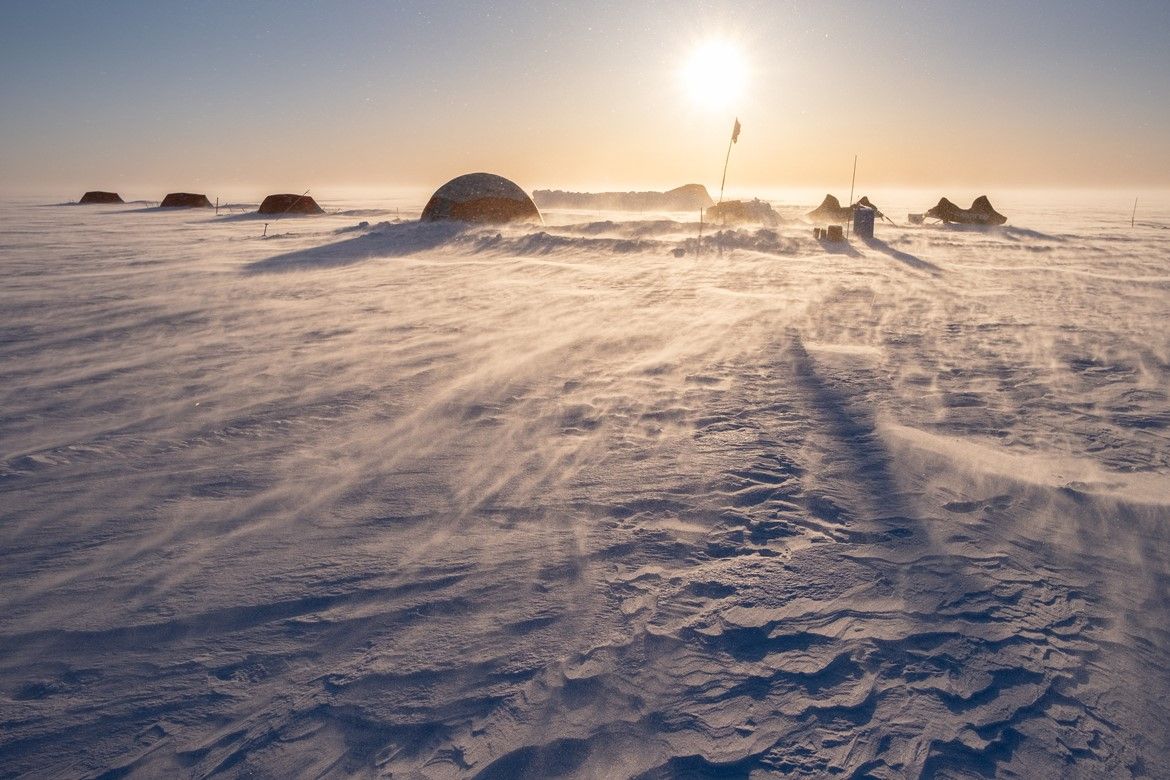
The polar regions are increasingly at the heart of geopolitical attention. Their strategic position and fragility are key indicators of global warming. The situation in the Arctic is of particular interest, both in and beyond the region itself. This is because it is warming faster than the global average, as well as undergoing rapid changes that are creating new environmental, economic, strategic and political challenges. To achieve progress on most of these challenges, cooperation and responses at global level are needed. Against this backdrop, science plays a key role in explaining the earth's mechanisms and the impacts of climate change. With its longstanding tradition and expertise in polar research, Switzerland can contribute to a better understanding of these changes and to peaceful multilateral cooperation.
Swiss polar commitment
Switzerland's approach to the polar regions is based on four main pillars that are closely interlinked: science diplomacy, international cooperation, governance and sustainability. Science diplomacy plays a key role in facilitating dialogue and contributing to the development of new policies, while international cooperation enables the development of joint solutions with global and regional partners. Thanks to its observer status on the Arctic Council and its expertise in polar research, Switzerland is stepping up its capacity to support and build on Arctic initiatives. Switzerland's Maritime Strategy 2023–27 also aims to promote international marine scientific research in the polar regions, while ensuring that the natural resources there are protected and used in a sustainable manner. This commitment is also part of the UN's 2030 Agenda for Sustainable Development, an essential global framework for anticipating and meeting the common challenges facing humanity and an Arctic region with rising temperatures.
Arctic Council and Antarctic Treaty
The Arctic Council is the main intergovernmental forum promoting cooperation on common Arctic issues, in particular sustainable development and environmental protection. Switzerland was granted observer status on the Arctic Council in 2017. Since then, it has been actively engaged with the eight Arctic states, representatives of indigenous peoples and other observer countries in order to advance scientific knowledge and limit the environmental and socio-economic impact of changes in the Arctic region. Swiss specialists take part in all the various formats and working groups of the Arctic Council, helping to shape environmental policies and promote the protection of the Arctic region, while also fostering dialogue between the fields of science and diplomacy.
Switzerland was among the original signatories of the Antarctic Treaty in 1959 and became a party in 1990. The treaty stipulates that the region may be used for peaceful purposes only, making the entire continent a unique space dedicated to scientific research and international cooperation. By ratifying the Protocol on Environmental Protection to the Antarctic Treaty in 2017, Switzerland has committed itself to the peaceful and sustainable use of Antarctica.
Switzerland's participation in the Arctic Council and Antarctic Treaty consultative meetings is coordinated by the FDFA together with the Federal Department of Economic Affairs, Education and Research (EAER), which includes the State Secretariat for Education, Research and Innovation, and the Federal Department of the Environment, Transport, Energy and Communications (DETEC). This work is also supported by the Swiss Commission for Polar and High Altitude Research (SCPH) of the Swiss Academy of Sciences and the Swiss Polar Institute.
Polar research
As an Alpine country that has been shaped by glacial periods and is experiencing accelerating glacier retreat in its numerous mountain ranges, Switzerland attaches great importance to the scientific exploration of the cryosphere (water in the form of ice or snow). There are a number of parallels between polar and high-altitude research. The Alps are undergoing changes similar to those observed in the polar regions. The scientific excellence of the Swiss research community, which combines knowledge bases on both high altitudes and high latitudes, lies in research into climatic conditions and ecosystems in both mountain and polar regions, for example to measure the impact of human-induced changes on the environment and the world's climate. The research has interdisciplinary goals, which are achieved through international and multi-stakeholder collaborations via global scientific programmes, such as the International Arctic Science Committee (IASC) and the Scientific Committee on Antarctic Research (SCAR). Since 2016, Swiss-based scientists working in polar regions and high-altitude environments have also been receiving support from the Swiss Polar Institute, recognised by the Swiss Confederation as a research institution of national importance.
Contact
State Secretariat STS-FDFA
Technology and Prosperity Division (ATEC)
Bundesgasse 28
3003 Bern