Mines and explosive remnants of war kill and injure civilians and combatants indiscriminately, even long after the end of the conflict, and impede humanitarian access, the return of the population and reconstruction. In 2025, the Swiss Confederation further strengthened its commitment to mine action, placing a focus on Ukraine in line with the Action Plan on Mine Action 2023–26. On the occasion of this year’s International Day for Mine Awareness and Assistance in Mine Action, the Confederation is reporting on last year’s activities.
Even decades after the end of conflicts, mines and other explosive remnants of war, such as unexploded ordnance, still have devastating consequences. They kill and injure thousands of people every year, with victim numbers rising again since 2022. They impede the return of displaced populations, hamper humanitarian access and sustainable development, and prevent reconstruction. Switzerland has been involved in mine action for more than 30 years and further expanded its support in 2025.
As per the Action Plan on Mine Action 2023–26, the Confederation's activities are divided into three fields of action: 1) Promotion of the normative framework, 2) Humanitarian demining on the ground and 3) Innovation. Last year, it spent around CHF 46 million on implementing the action plan.
Mines and other explosive ordnance, such as unexploded ordnance or other explosive remnants of war, continue to pose a major threat to the population even years after the end of hostilities. Mine action contributes to alleviating the health-related, social, economic and environmental impact of mines and other explosive ordnance. The aim is to prevent accidents and further suffering while also allowing communities affected by conflict to return and develop in a sustainable manner. To this end, in addition to the actual clearance work, mine action also includes Explosive Ordnance Risk Education (EORE), victim assistance, advocacy for the ban on anti-personnel mines and cluster munitions, and the destruction of stockpiles.
The five pillars of mine action:
mine clearance
risk education
victim assistance
advocacy
stockpile destruction
Field of action 1: Promotion of the normative framework
The Swiss Confederation is committed to ensuring that the Conventions on anti-personnel mines and cluster munitions are signed, adhered to and implemented by all states at national and international level. This is intended to prevent the use of these weapons and avoid their humanitarian consequences. Switzerland uses both multilateral meetings and bilateral contacts to this end. In 2025, for the first time, states withdrew from the two conventions – a setback for humanitarian disarmament and international humanitarian law as a whole. Switzerland is committed to the strengthening of the conventions and their universalisation.
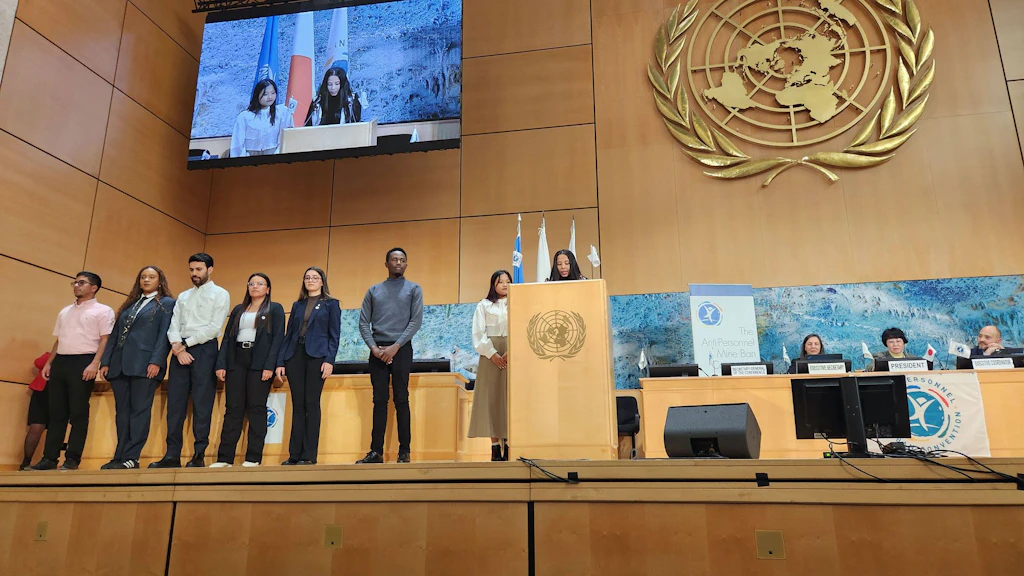
For several years, the FDFA has been funding a programme empowering young leaders in mine action.
Through a project with Mines Action Canada, around 15 young people from affected contexts who are working in mine action are invited to the meetings of states parties to the conventions on anti-personnel mines and cluster munitions every year, where they follow a training programme. This strengthens the capacities of young mine action actors, empowering them to participate in decision-making processes. In addition, the multilateral meetings are enriched by the perspectives of these young people from all over the world.
Field of action 2: Humanitarian demining on the ground
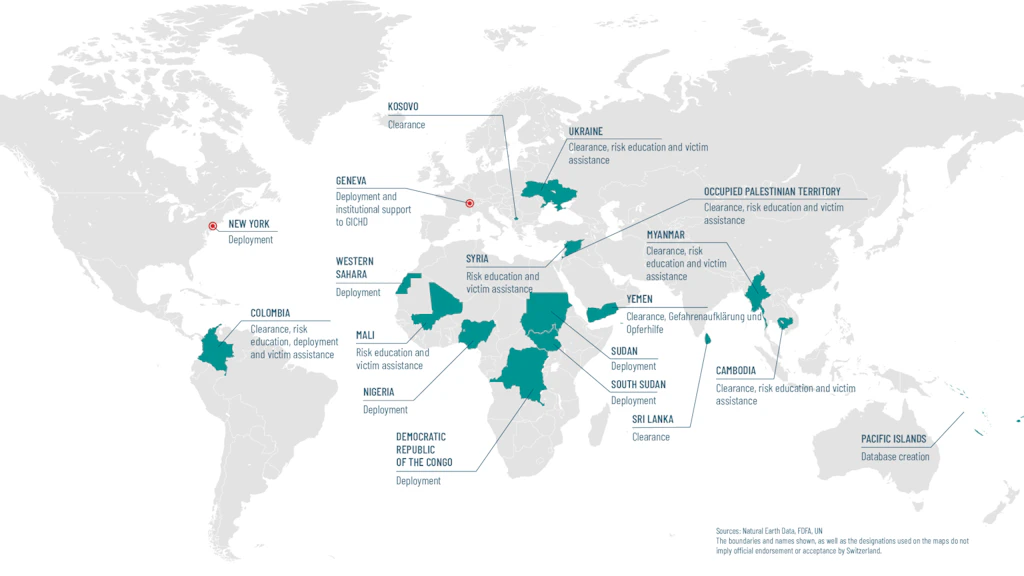
Despite decades of work by various mine action organisations, the areas affected by explosive ordnance worldwide are once again increasing after a long period of reduction. Through projects and secondments of experts, Switzerland enhances the security of the people affected, enables sustainable development, and contributes to peacebuilding. In accordance with the principle of helping people to help themselves, it particularly supports the development of sustainable national capacities. In 2025, the Confederation supported 11 regions directly through projects and seconded 17 experts to 8 locations. Below are two specific examples of these activities.
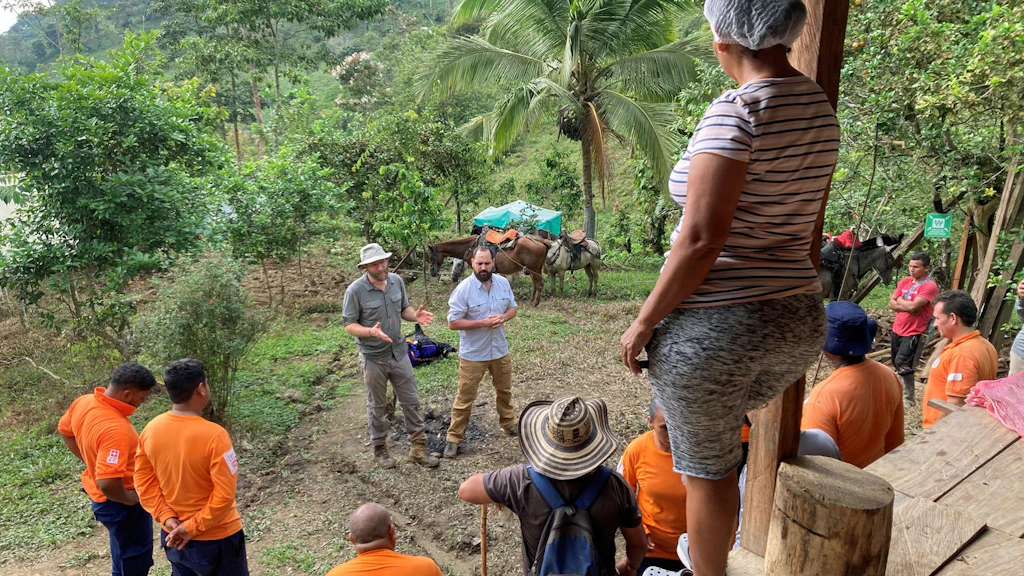
Over six decades of armed conflict have left many rural areas of Colombia contaminated by landmines and improvised explosive devices.
Through the Swiss Agency for Development and Cooperation (SDC), Switzerland is supporting Colombia to become free of anti-personnel mines by 2030. These humanitarian efforts are complemented by ongoing dialogue and negotiation processes that Switzerland accompanies through its Peace and Human Rights Division (PHRD), addressing, inter alia, the challenges posed to ongoing operations and supporting access for deminers.
Switzerland connects peacebuilding with mine action. In 2025, it supported HumanicemosDH, the first civilian mine action organisation made up of former combatants, thus contributing to redress and reconstruction. Their experiences inspired the Special Jurisdiction for Peace (JEP) to include mine action as a possible reparation measure.
Since Sudan's most recent conflict broke out, the number of unexploded ordnances and mines has increased significantly. Comprehensive measures are needed in terms of risk education and mine clearance to ensure the freedom of movement of the displaced population and their safe return to habitable areas.
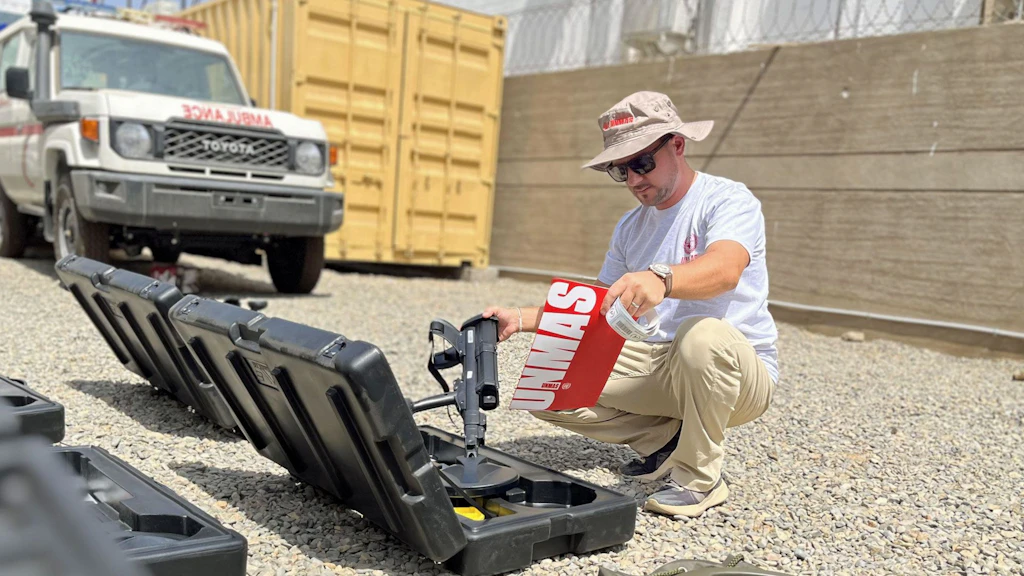
This work is coordinated and supported by the United Nations Mine Action Service (UNMAS). The Swiss Armed Forces have deployed a civilian logistics specialist to the UNMAS programme in Sudan since March 2025.
The specialist's remit focuses on the management of UNMAS equipment. This includes in particular the procurement, inventory management and maintenance of the resources used. He also coordinates the import of specialised devices and materials for mine action and ensures their timely availability in the respective areas of operation. Functional equipment is crucial in providing the clearance teams in the field with effective support.
By seconding a logistics specialist, Switzerland is making an important contribution to mine action in Sudan and thus helping to improve the safety of the civilian population.
Since February 2022, Ukraine has become one of the most heavily mined countries in the world. It is estimated that nearly a third of Ukrainian territory, an area almost four times the size of Switzerland, might be contaminated by mines and other explosive ordnance. This is why Switzerland placed a special focus on Ukraine in its Action Plan on Mine Action 2023–26. In 2025, the FDFA and the DDPS launched new projects with various partner organisations. In this context, the Confederation works in particular with the Geneva International Centre for Humanitarian Demining (GICHD) as well as with other Swiss and international organisations and mine clearance machine manufacturers.
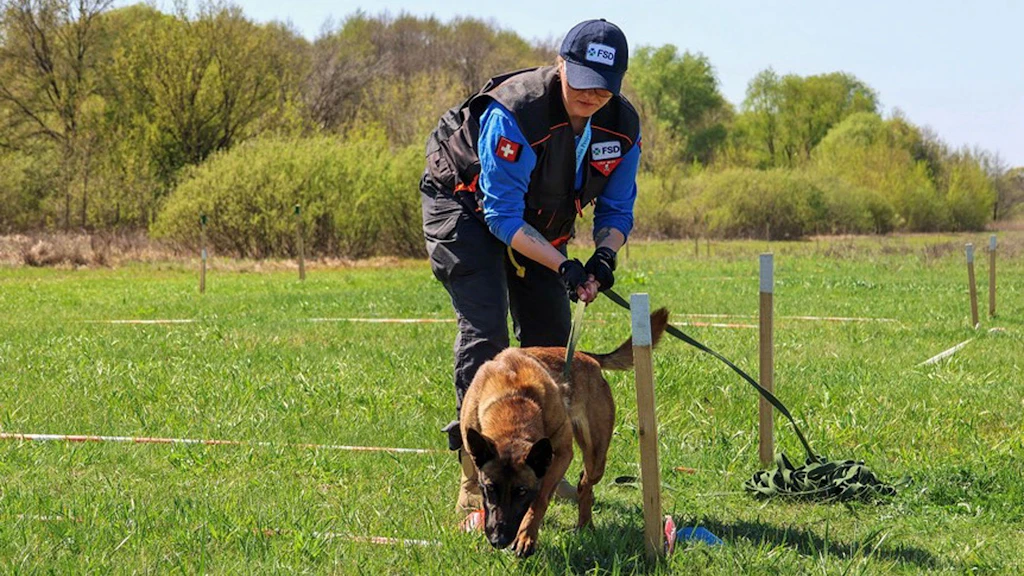
The largest Swiss project supporting mine action in Ukraine, implemented by the Fondation suisse de déminage (FSD), conducts risk education and clearance in the Kharkiv and Kherson regions. To date, over 400,000 square metres of contaminated areas have been cleared, giving the civilian population safe access to agricultural land, infrastructure and basic services.
FSD identifies contaminated areas and then clears them using manual, animal-assisted and mechanical means. In addition, risk education reduces the likelihood of accidents, which in turn helps the local population feel safe again.
The Swiss organisation is also investing in building the capacities of a Ukrainian mine action organisation. In doing so, it is contributing to sustainability and national ownership in mine action.
Swift technological advances harbour great potential for mine action. The Confederation promotes efforts to support mine action actors in the use of innovative technologies and approaches to make mine action more efficient, more effective and safer.
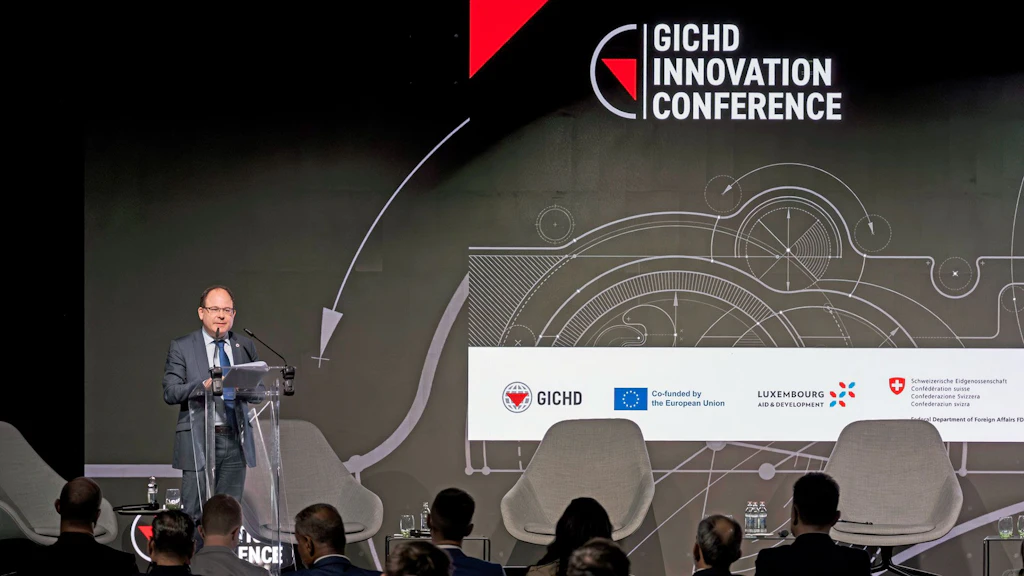
With the support of Switzerland and other donors, the Geneva International Centre for Humanitarian Demining (GICHD) organised an innovation conference in Luxembourg in October 2025. The conference connected innovative technology actors with mine action operators and facilitated an exchange on how innovation can support mine action. The discussion focused in particular on how new ideas and research-based approaches can be used to solve specific problems the mine action sector faces in the field.