
Switzerland and multilateralism: five personal accounts of peace and diplomacy
The International Day of Multilateralism and Diplomacy for Peace is held on 24 April. It is an occasion that takes on great importance for Switzerland, whose foreign policy contributes towards a peaceful international order. It does so by bringing added value to multilateral bodies and by drawing on the strengths of International Geneva. In the following accounts, five individuals talk about their commitment to peace: diplomacy, mediation and dialogue are the order of the day.
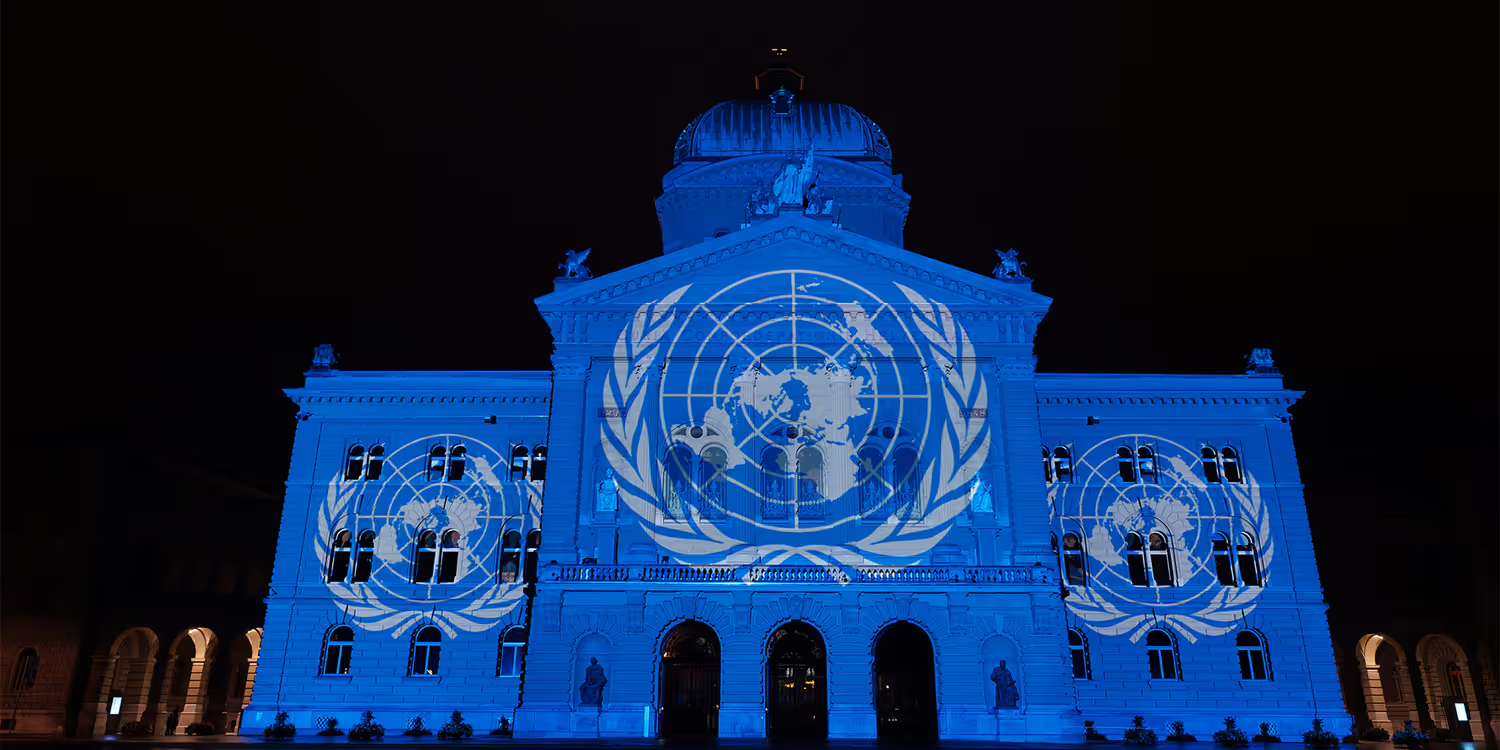
The current pandemic has made it all the more evident that global challenges, as outlined in the 2030 Agenda, call for a multilateral response. Providing good offices, preventing and resolving conflicts, mediating, and promoting dialogue are just some of the ways in which Switzerland contributes towards peace and security on a global level – one of the country's foreign policy priorities.
Switzerland builds bridges: this statement is often used to refer to the nation's engagement as a host state, as a mediator or as a member of international organisations. But what added value does it offer at the multilateral level? What role do Swiss experts play within international organisations? The answer to this question first takes us to International Geneva, capital of peace dialogue.
Geneva: a platform for negotiations
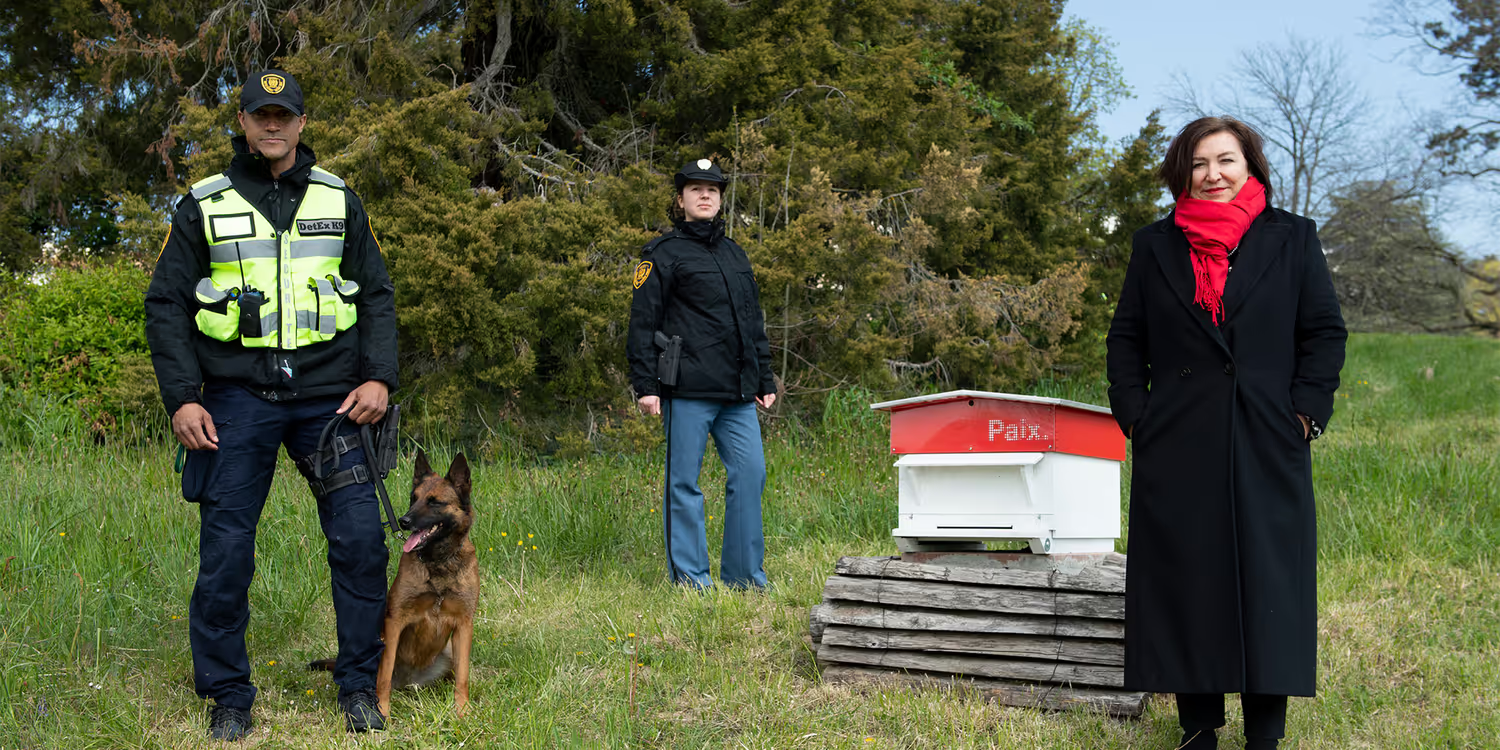
«Having parties in conflict sit down at the same table to talk is already a success in itself. Sometimes, discussions bring about important steps forward, such as a truce, the formation of a transitional government, the opening of humanitarian corridors or the exchange of prisoners – steps which move away from war and towards peace.» – Anne-Lise Favre Pilet, head of the Section for Security and General Affairs of the Permanent Mission of Switzerland to the United Nations Office and to the other international organisations in Geneva.
Geneva is a platform where those seeking dialogue meet. It regularly hosts negotiation rounds. Examples include the talks that led to the Iran nuclear deal and, more recently, talks relating to conflicts in Syria, Yemen and Libya. Switzerland offers services ranging from mediation to logistical support. Security is a key aspect.
Diplomacy for peace and the role of the mediator
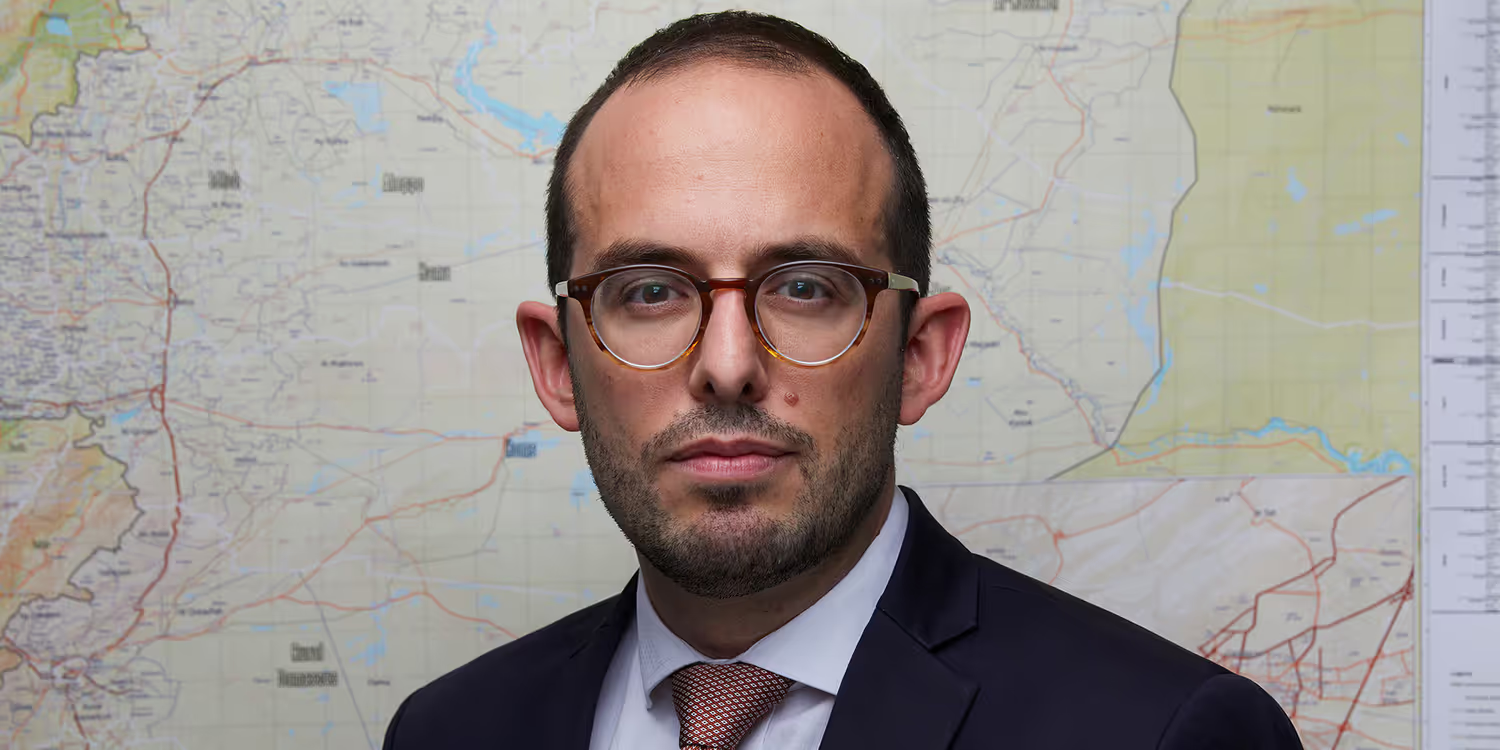
«The creation of the Civil Society Support Room in Geneva marks the first time that civil society has been institutionally involved in a UN peace process. Switzerland's efforts in Syria reflect the participatory nature of our democracy.» – Luca Urech, diplomatic desk officer for the Peace and Human Rights Division (PHRD) of the FDFA
Over the years, a veritable ‹ecosystem› has emerged in Geneva made up of actors and institutions working to promote the peace process in Syria. Swiss peace diplomacy endeavours to ensure that Geneva negotiations are open not only to the parties in conflict but also to civil society. Switzerland is widely trusted thanks to its reputation as a neutral and impartial mediator. In cooperation with the ETH, the FDFA is committed to professionalising peace diplomacy. The role of the mediator is becoming a profession.
Swiss diplomats at the United Nations – stopover in Colombia
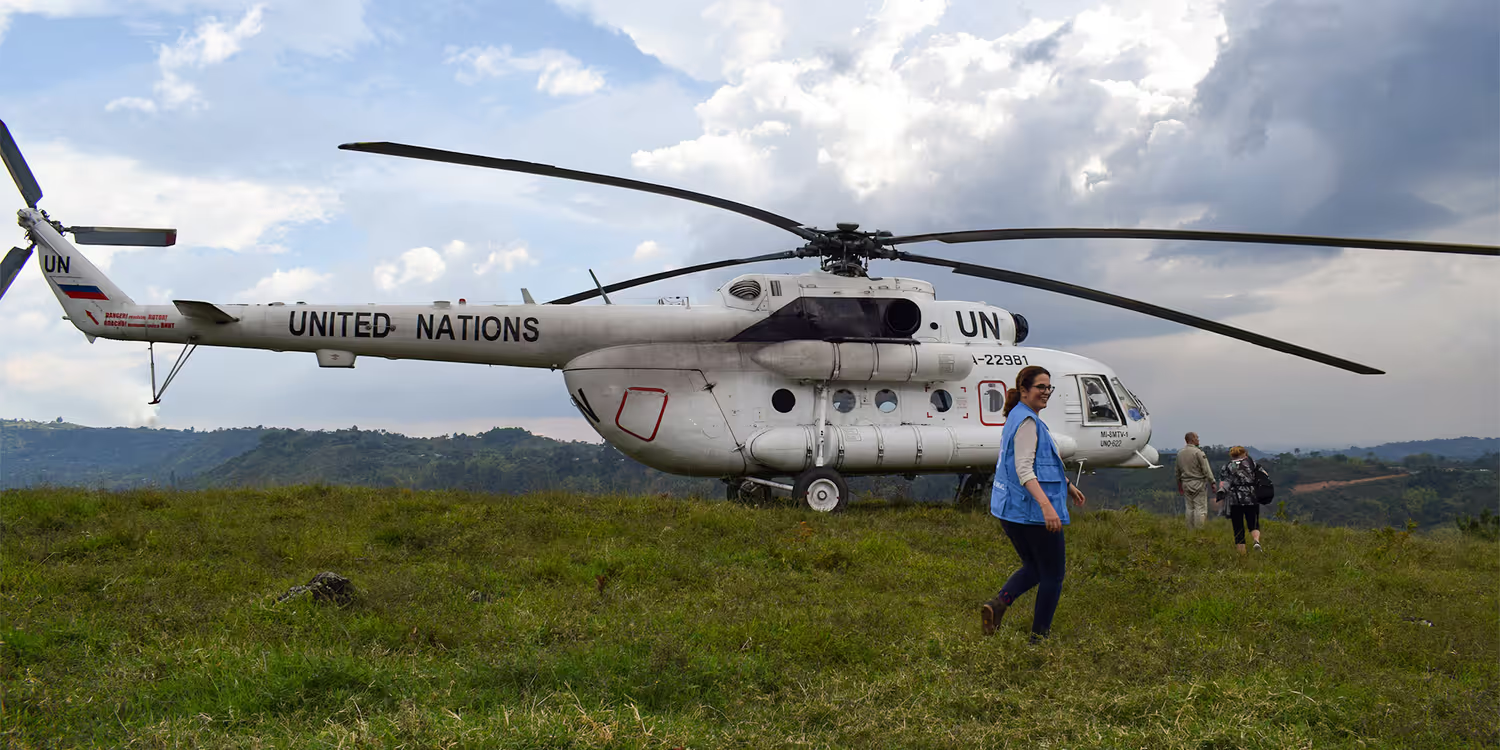
«I joined the FDFA shortly after Switzerland joined the UN, and the UN has been the common thread in my career as a diplomat. Switzerland enjoys an excellent reputation and is a well-established name within the UN thanks to its involvement in a wide range of thematic dossiers and its role as a bridge-builder and a host state.» – Natalie Kohli, Chief of Staff at the United Nations Verification Mission in Colombia (UNVMC)
Swiss diplomats also occupy a variety of roles within international organisations such as the UN. Although they do not represent Switzerland within these organisations, they bring with them their values and experience as multilateral negotiators, thus contributing to the peace agenda.
Women in peace processes
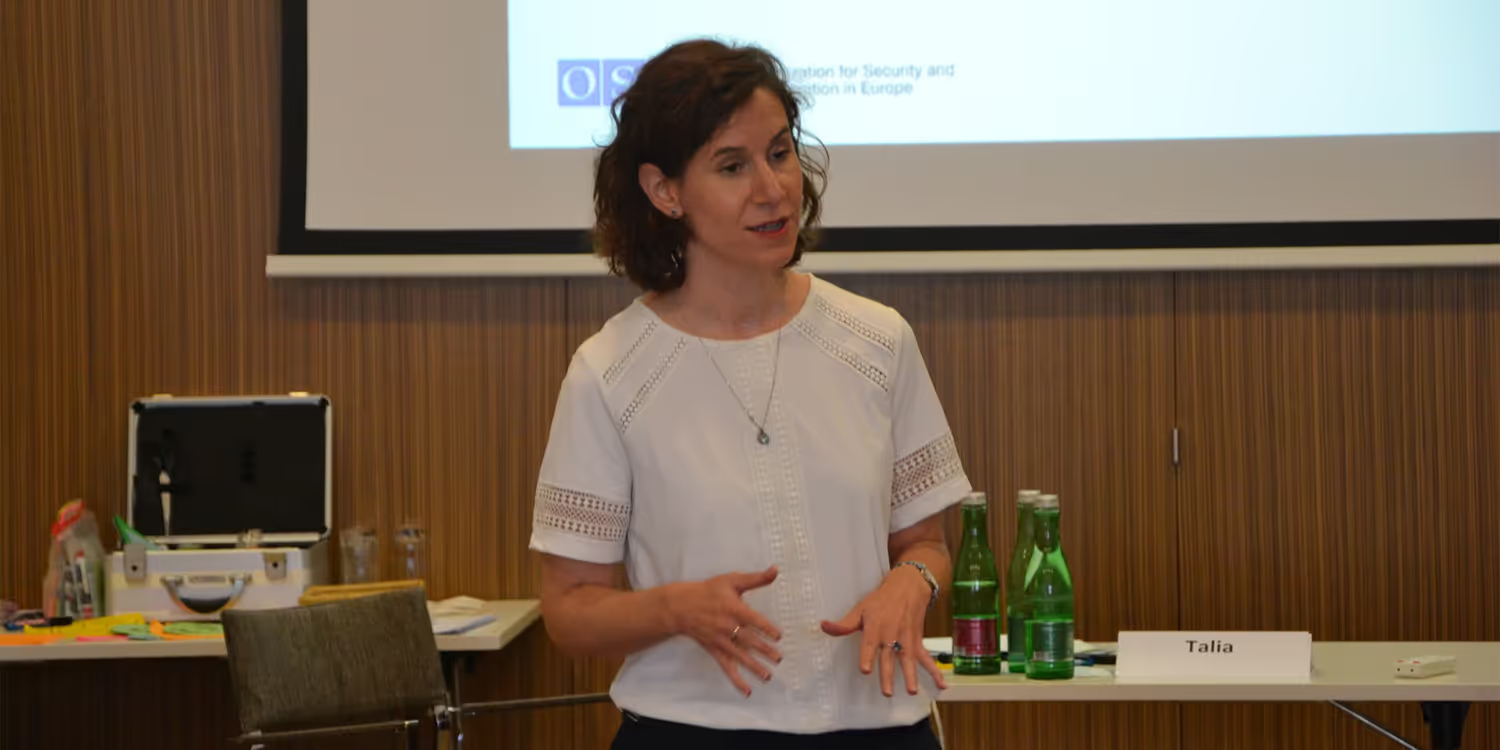
«The major challenge is to tackle the fundamental and systemic issues that, even today, stand in the way of women's effective and efficient participation in the prevention, management and resolution of conflicts. The effective inclusion of women in peace processes requires political will above all else.» – Talia Wohl, Senior Adviser of the Peace and Human Rights Division of the FDFA and Swiss representative at the Women, Peace and Security Focal Points Network (WPS FPN)
Women have a key role to play in peace and security. On the strength of this conviction, Switzerland is committed to stepping up the role of women in peace processes and takes part in related initiatives undertaken by regional and international bodies, including the UN, the OSCE and NATO. For example, on the FDFA's initiative, a number of Swiss women diplomats and international security specialists came together to form a network called ‹Swiss Women in Peace Processes› (SWiPP). Moreover, Switzerland will co-chair the Women, Peace and Security Focal Points Network (WPS FPN) as of 2022.
Conflict prevention: the role of the Peace and Development Advisor
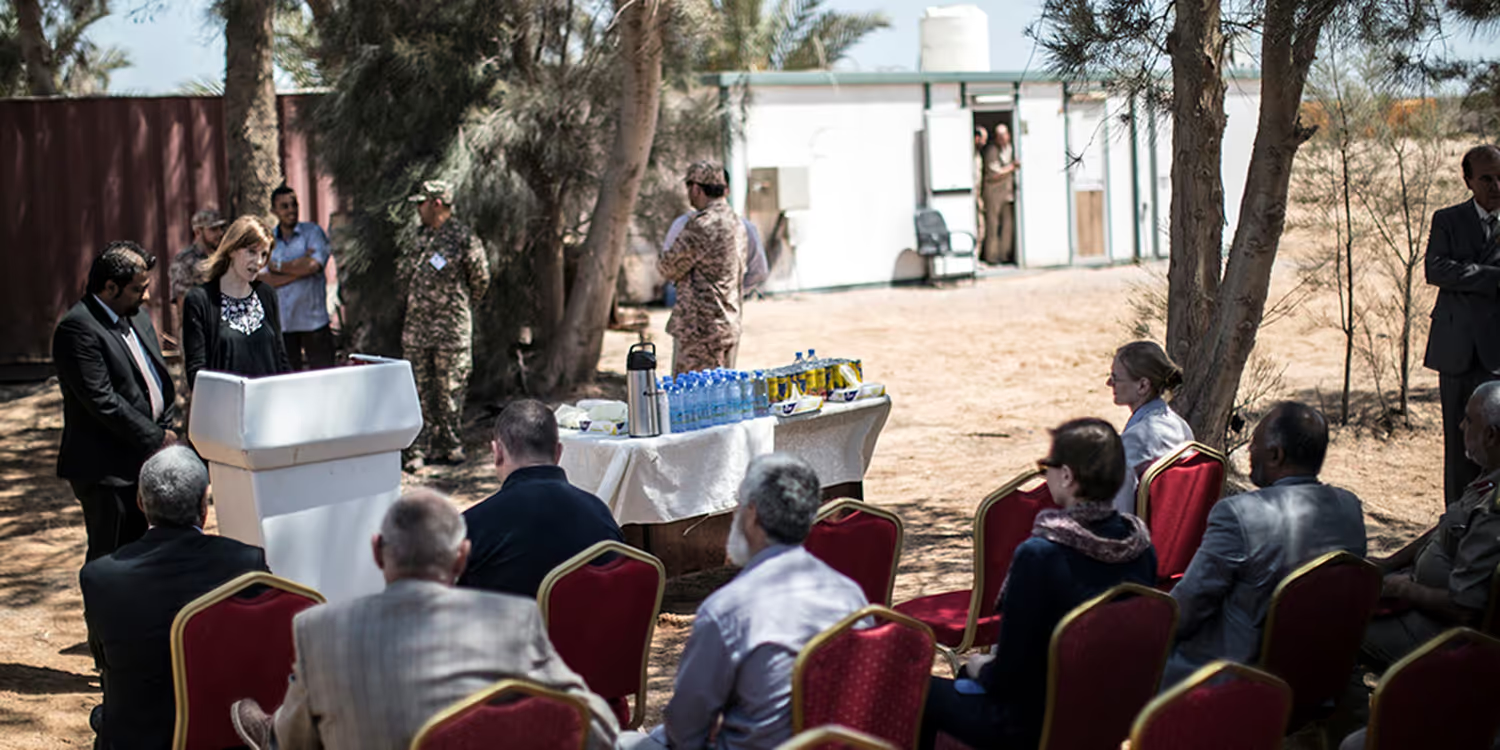
«A central pillar of the role of a Peace and Development Advisor is to support national conflict prevention, peacebuilding and peacekeeping initiatives that are owned and implemented by national actors.», Claudia Marti, Peace and Development Advisor, Office of the UN Resident Coordinator in Bolivia.
Switzerland's international cooperation contributes to conflict prevention and peacebuilding in fragile states. The fragility of a state is characterised by the government’s inability to ensure the security of the population and provide basic public services, alongside its failure to establish mutually constructive relations with the country’s citizens. The SDC is active on several fronts at a multilateral level, with key players such as the United Nations and the World Bank Group. The United Nations Development Programme (UNDP) plays a central and catalytic role in strengthening the UN in its work to address fragility and prevent conflict - for example by supporting the Pool of Peace and Development Advisors (PDA) in collaboration with the UN Department of Political and Peacebuilding Affairs (DPPA), whose experts are deployed to fragile countries to advise and support host governments and the UN system on the ground.
Links
Contact
General Secretariat GS-FDFA
Federal Palace West
3003 Bern