
“Switzerland can directly co-determine the rules of Rhine navigation”
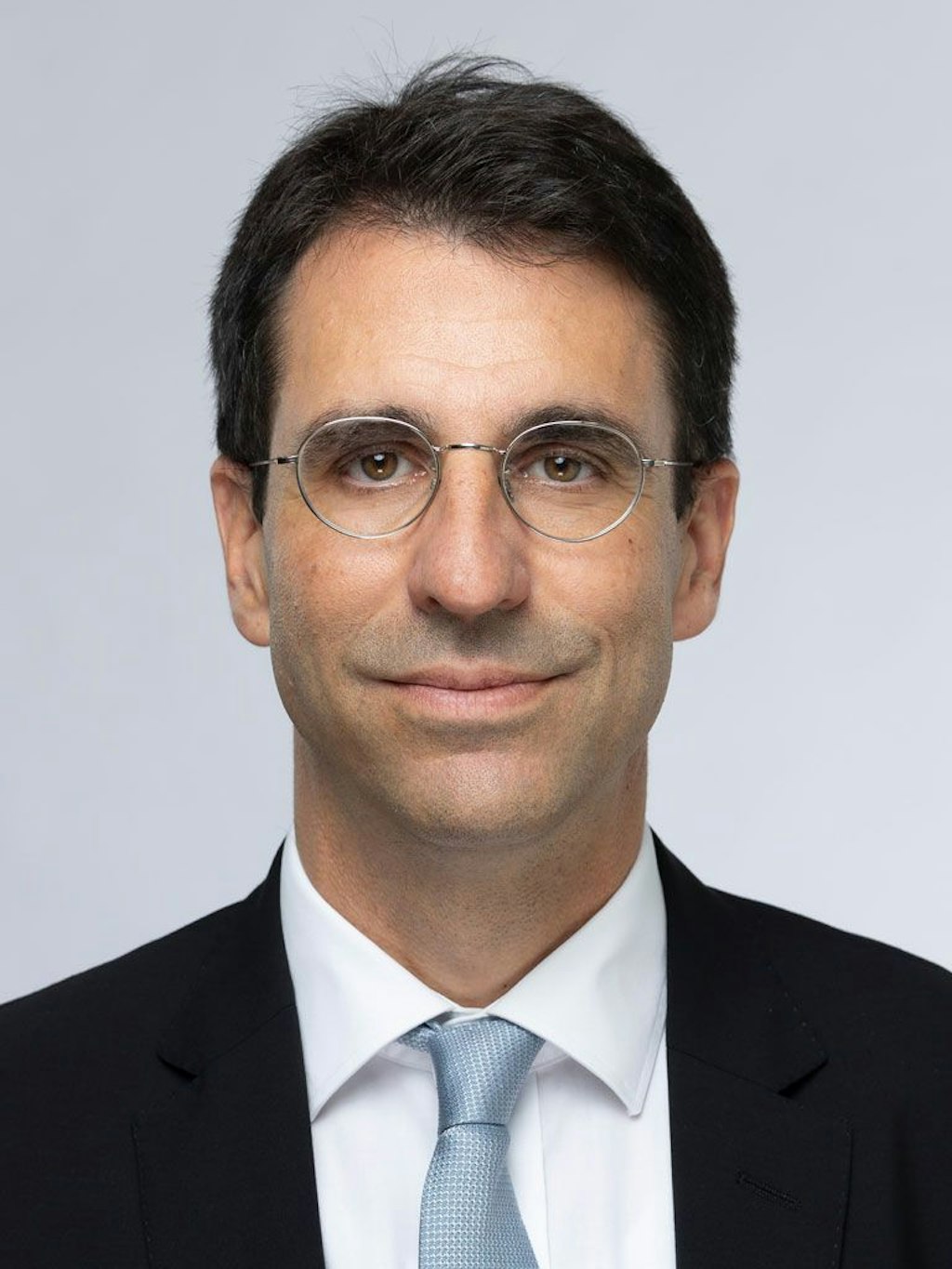
On 1 January 2026, Switzerland assumed the rotating presidency of the Central Commission for the Navigation of the Rhine (CCNR) for two years. The CCNR defines the international regulations for free navigation on the Rhine and guarantees Switzerland access to the largest European seaports. Roland Portmann, deputy director of the Directorate of International Law (DIL) and head of the Swiss delegation in Strasbourg, explains.
The origins of the CCNR go back to the Congress of Vienna in 1815. At that time, the intention was to establish a commission to ensure that the Rhine was open to all neighbouring countries for free use and thus promote international trade. Matters that had to be dealt with included fees and charges, the types of goods transported and the use of ports. It then took another 16 years of negotiations between the states until the CCNR was formally founded in 1831 with the Convention of Mainz.
Switzerland only became a member of the CCNR after the Rhine ports in Basel were founded and Switzerland's interest in trade increased. This took place on Switzerland's initiative via the 1919 Treaty of Versailles, which reorganised the composition of the CCNR after the First World War. However, Switzerland did not formally ratify the legal basis of the CCNR until the 1960s.
What significance does the CCNR have for Switzerland?
As a member of the CCNR, Switzerland has the right under international law to navigate the Rhine unhindered from Basel to the major European seaports Antwerp and Rotterdam. The CCNR creates the international regulatory framework that applies uniformly along the Rhine, such as safety standards for shipbuilding and navigation, or requirements relating to labour law or patents. Through its membership, Switzerland can directly influence this international regulatory framework on the Rhine and how its rights under international law are specifically implemented.
How does free navigation on the Rhine contribute to Switzerland's security of supply and economic stability?
About 10% of Switzerland's entire foreign trade is conducted via the Rhine. Around 30% of petroleum products are transported to the seaports and via the Rhine to Basel. All the jet fuel required for Zurich Airport is delivered by tanker via the Rhine. These figures show how important Rhine shipping is for supplying the country.
What are Switzerland's thematic priorities during its 2026–27 presidency? As chair of the CCNR, what will you be paying particular attention to this year?
There are four focus areas, two of which relate to current key issues in shipping. On the one hand, there's sustainability, which primarily means alternative fuels. In order to move away from fossil fuels, we need to push ahead with the necessary infrastructure for ships and ports. On the other hand, we want to promote digitalisation and automation in order to make shipping more efficient and safer. In addition to these two major issues, we will focus on maximising cooperation with the EU as a partner. The fourth point concerns the organisation of the CCNR itself, i.e. we want to further optimise the secretariat's working methods using modern technology.
In the face of challenges such as low water events, what solutions would Switzerland like to promote within the CCNR?
Switzerland's approach is on two levels: first, dealing with water scarcity and second, adapting to the current situation of increasing low water events. One solution is to optimise the digital measuring instruments for predicting low water levels. In addition, structural measures on the Middle Rhine channel in Germany are pending in order to ensure the navigability of this section of the river even at low water. There are also ways of optimising shipbuilding, logistics and loading technology to deal with the problem.
Another solution ties in with the question of whether low water could be prevented or whether more water could be added – for example by feeding it in from reservoirs to the Rhine at critical points. Studies to that effect are currently under way.
What insights has Switzerland gained from the transboundary management of the Rhine, for example for the Blue Peace initiative?
The management of the Rhine has parallels with the Blue Peace initiative in that it shows that states have to work together on a common waterway and that individual states are unable to achieve much on their own. In this respect, the CCNR provides an institutional framework based on international law, which is key to resolving common challenges. The experience with the CCNR also makes it clear how important it is to have a broad range of stakeholders in the organisation. It is worth noting that other stakeholder groups from the shipping industry or employee associations are also represented in the individual CCNR country delegations. The CCNR works according to the bottom-up principle.
What is your own personal relationship with the Rhine?
I grew up in the ‘Rhine’ neighbourhood of Chur, on Rheinstrasse. The Rhine, which is of course still a small river in the canton of Graubünden, has always been part of my life.
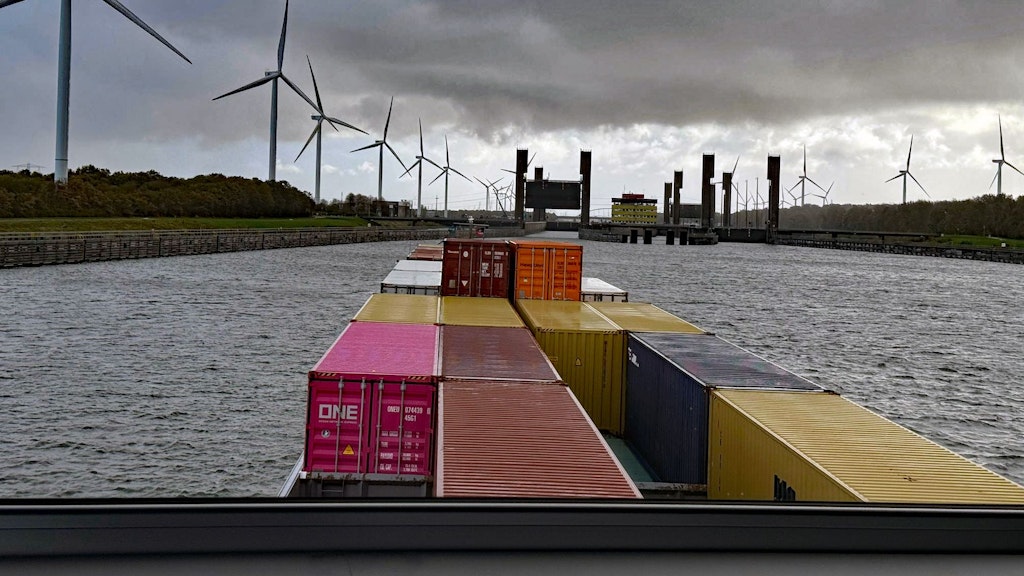
Last autumn I had the opportunity to travel on a cargo ship from Basel to Antwerp. During those four days, I saw what it means to live and work on a ship. It was impressive to see how these vast quantities of goods, which we need in our everyday lives, are transported to and from Switzerland on this route and showed how important a properly functioning Rhine navigation system is for us.
Central Commission for the Navigation of the Rhine (CCNR)
The Central Commission for the Navigation of the Rhine (CCNR) is an international organisation based in Strasbourg that regulates navigation on the Rhine. The presidency rotates every two years between the five member states: Germany, France, the Netherlands, Switzerland and Belgium. The Swiss delegation is led by the FDFA's Directorate of International Law and also includes representatives from the Federal Office of Transport, the Port of Switzerland and the Swiss shipping industry. The Swiss Maritime Navigation Office, which is part of the FDFA, provides the secretariat for the delegation.
Contact
General Secretariat GS-FDFA
Federal Palace West
3003 Bern