
Switzerland's priorities for serving on the UN Security Council
On 31 August 2022, the Federal Council adopted four thematic priorities for Switzerland's seat on the UN Security Council for the 2023-24 period: building sustainable peace, protecting civilians in armed conflict, addressing climate security and enhancing the effectiveness of the Security Council. The priorities were consulted with the foreign policy commissions. The priorities in brief.
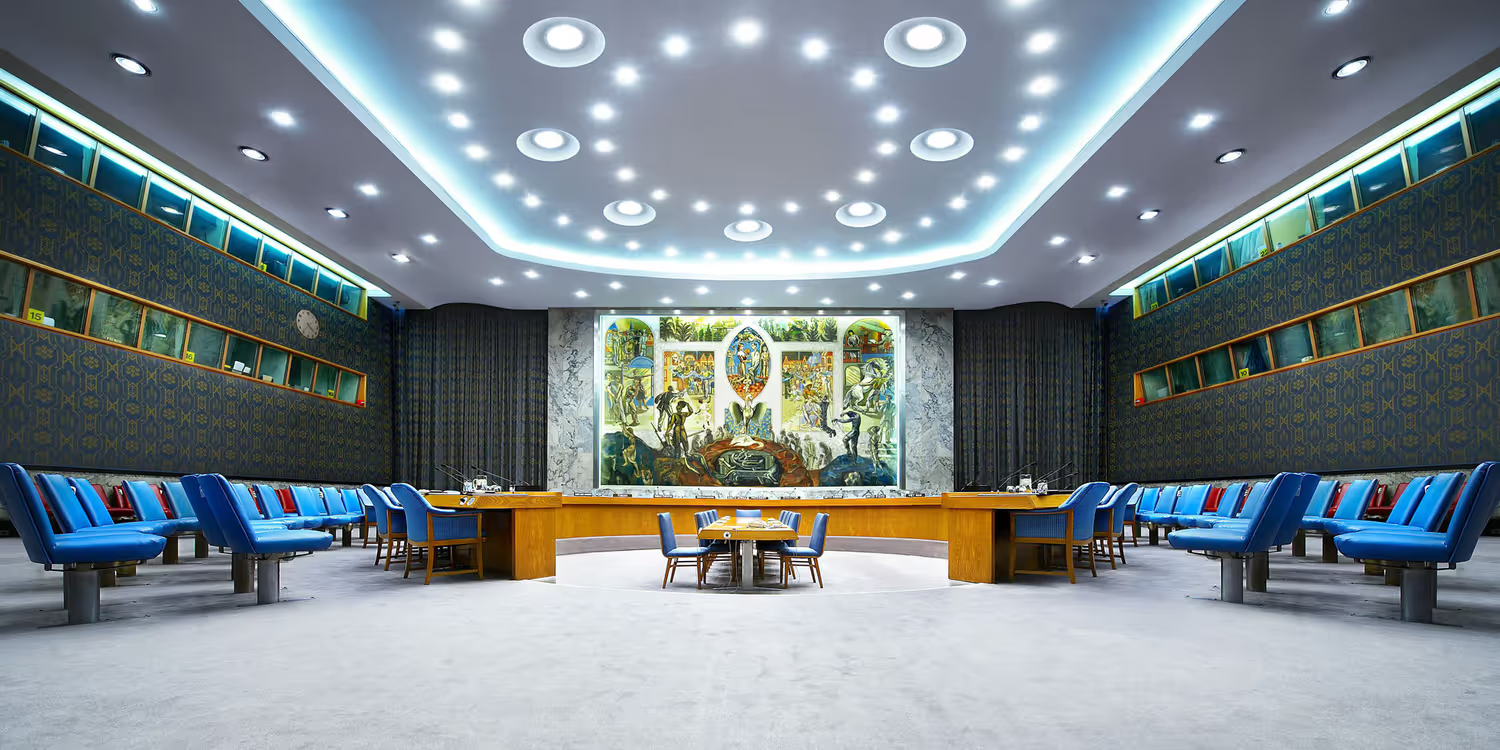
On 9 June 2022, the UN General Assembly elected Switzerland as a non-permanent member of the UN Security Council. On 31 August 2022, the Federal Council adopted four thematic priorities for Switzerland's term on the Security Council. Switzerland intends to represent its foreign policy values and interests in the Security Council. It seeks to build sustainable peace, protect civilians in armed conflict, address the impacts of climate change on security and improve the Council's effectiveness. By serving on the Council, Switzerland will be able to fulfil its constitutional mandate to work for the long-term preservation of natural resources and a just and peaceful international order to even greater effect. Furthermore, it will be able to search for solutions between conflict parties and create added value for the international community.
Setting priorities does not mean that Switzerland will neglect other issues. In line with its Foreign Policy Strategy 2020–23, Switzerland strives for credible engagement in the Security Council across the full range of its agenda in which means above all its day-to-day business on individual country situations.
Switzerland's thematic priorities in detail:
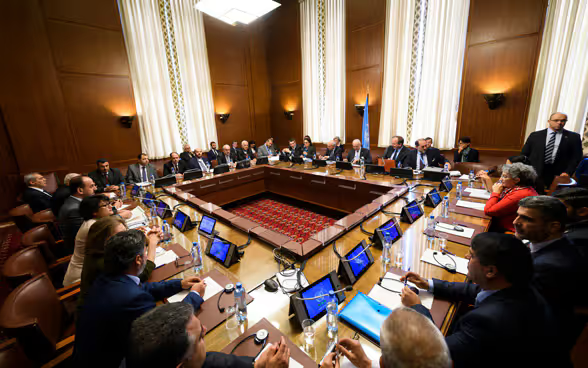
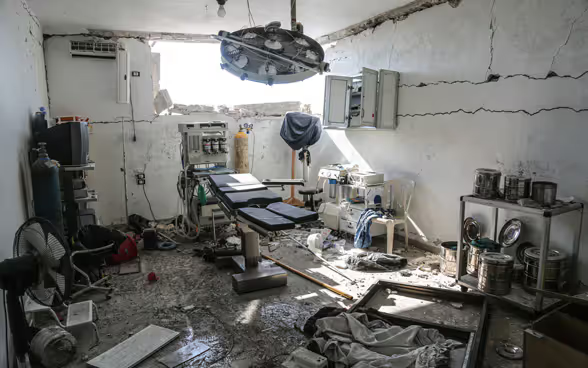
Logical extension of current Swiss commitment
Switzerland's non-permanent seat on the UN Security Council will be a logical extension of its commitment to peace and security worldwide. The Federal Council submitted Switzerland's candidature in 2011 following extensive consultations with Parliament. The Federal Constitution states that Switzerland shall promote the peaceful coexistence of peoples and help to build a just international order. This is also the declared goal of the UN Security Council. It is also vitally important for a country that is as integrated into global economy and as dependent on stability and clear international rules as Switzerland is. Peace and stability are essential for prosperity and development.
Next steps
From October 2022, Switzerland will have observer status on the UN Security Council and will be able to attend all meetings, although without voting rights. The FDFA will use this opportunity to review and adjust the internal coordination and decision-making processes so that Switzerland is optimally prepared for its seat from 1 January 2023.From October 2022, Switzerland will have observer status on the UN Security Council and will be able to attend all meetings, although without voting rights. The FDFA will use this opportunity to review and adjust the internal coordination and decision-making processes so that Switzerland is optimally prepared for its seat from 1 January 2023.
UN Security Council and Switzerland's neutrality
Neutrality is an advantage for a state serving on the UN Security Council. It lends a neutral state the credibility to mediate between parties to a conflict. The Security Council's mandate is to maintain peace and security on behalf of the international community. As a member of the Security Council, Switzerland would contribute to the UN's system of collective security. Neutral states, such as Austria or currently Ireland, regularly serve on the Security Council. A Federal Council report published in 2015 concluded that Switzerland would retain its ability to fully exercise its neutrality while serving on the Security Council.
Contact
General Secretariat GS-FDFA
Federal Palace West
3003 Bern