
“The question of accountability is crucial”
The 70th session of the Commission on the Status of Women took place in New York from 9 to 19 March 2026. Aurora Danese, a specialist in women's rights from the Human Rights Diplomacy team, reports on this year's session, changes and current challenges, but also on hopes for the rights of women and girls.
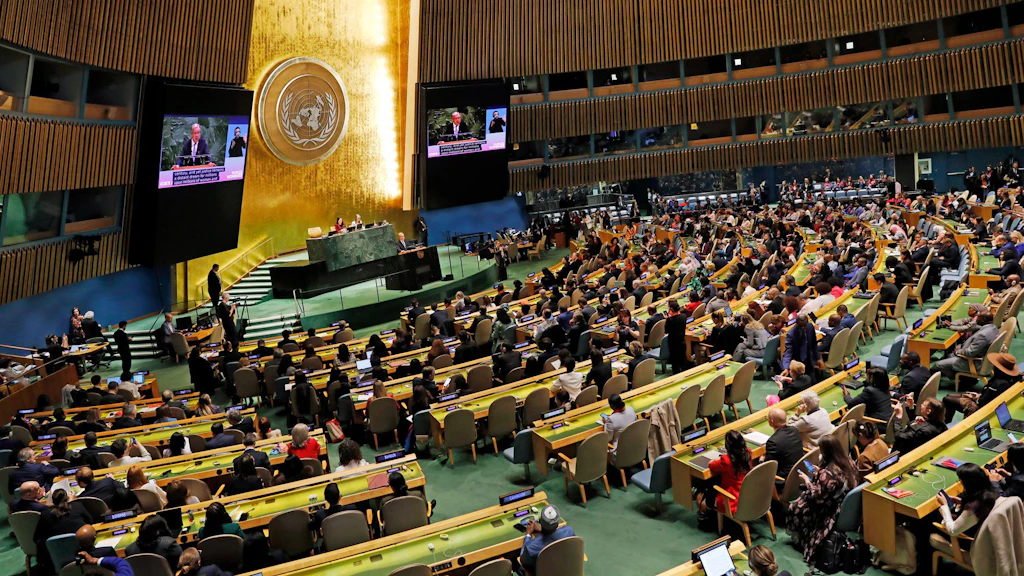
The Commission on the Status of Women (CSW) is the UN's central multilateral body for the implementation of gender equality and the promotion of women's rights and empowerment.
Every year, representatives of UN member states, NGOs and civil society come together at the CSW's two-week session to evaluate progress in the area of gender equality, to set global standards and concrete tasks, and to identify existing gaps in the implementation of the 1995 Beijing Declaration and Platform for Action. In addition, the member states discuss current developments and new challenges that are important for gender equality and strengthening rights and opportunities for women and girls.
This year, the 70th session of the CSW took place from 9 to 19 March, with a focus on ensuring and improving access to justice for all women and girls. Access to justice is of fundamental importance as it is a prerequisite for the exercise of all other rights.
In its Foreign Policy Strategy 2024–27, Switzerland emphasises the importance of promoting women's rights. Protecting the rights of women and girls is therefore also one of the key priorities of the Guidelines on Human Rights 2026–29. Women and girls are still underrepresented in the labour market, in public life and in decision-making bodies and continue to be particularly affected by gender-based violence. Switzerland is committed to ensuring that women can participate equally in political and public life and live free from discrimination.
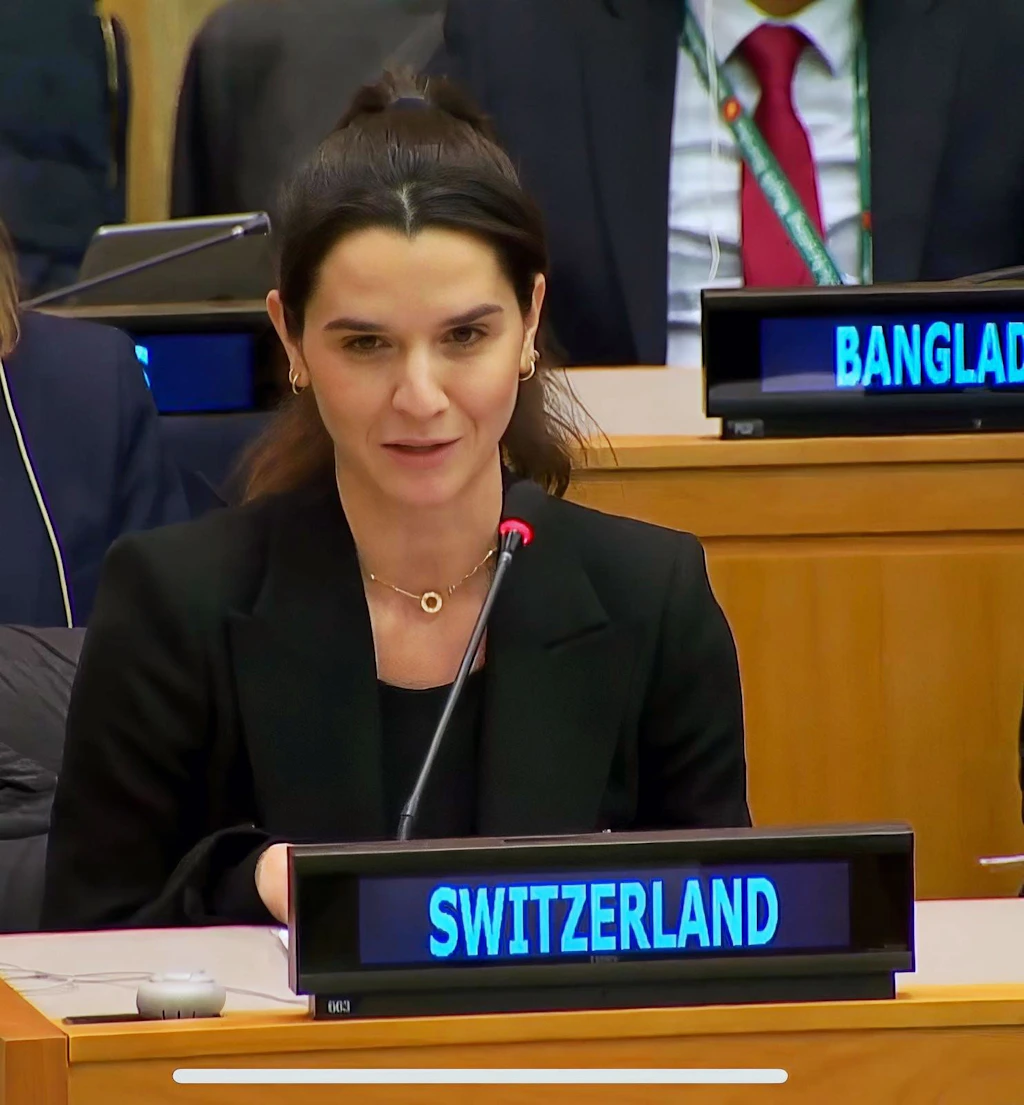
This year's session was intense and politically charged. On the one hand, the high level of participation of ministers at the opening was once again a strong signal that gender equality remains a key global priority. On the other hand, it became clear that discussions about women's rights are becoming increasingly polarised.
Nevertheless, it was noticeable that many delegations were willing to work together to find solutions despite the difficult geopolitical conditions. Switzerland played an active role in this process and contributed to finding solutions as a bridge-builder. The fact that substantial results were achieved in the end shows that multilateral cooperation and dialogue remain possible even under challenging conditions.
For me personally, this session was also special for another reason: last year, I conducted the negotiations while still pregnant. This time my daughter was able to accompany me to New York. It was a truly memorable experience – and a reminder that many of the topics discussed at the CSW also touch on very concrete realities and challenges.
How would you describe how the negotiations went?
During the negotiations at the CSW, delegations from all over the world, with different perspectives and opinions, discussed and argued for days on what are referred to as the ‘agreed conclusions’. This text contains non-binding standards that serve as concrete guidelines for the promotion of gender equality. Governments can use them as a guide for forming policy. They are also used and implemented by civil society organisations and other actors at the international, national, regional and local levels. Conservative and progressive views clash openly in such discussions.
However, the dynamics of the negotiations have changed somewhat in recent years. In the past, negotiations often lasted late into the night. Due to the UN's current liquidity crisis, such long meetings are hardly possible today. In practice, however, this does not necessarily mean fewer negotiations, but rather a shift, whereby the dialogue moves quickly to more informal formats and smaller discussion groups. This makes dialogue, trust and good networking all the more important – areas in which the excellent work of the specialists at the Swiss mission in New York is particularly indispensable, in order to build bridges between the positions of the delegations and thus find compromises.
What issues were of particular importance to the Swiss delegation?
At the CSW, Switzerland is particularly committed to strengthening the rights of women and girls and to the consistent implementation of existing international commitments.
In line with this year's priority theme, Switzerland's negotiating priorities included effective, equal access to justice for all women, strengthening the rule of law, combating gender-based violence, including conflict-related sexual violence, the effective and equal participation of women at all levels of decision-making, the protection of civic space and the role of women in peace processes. Switzerland is also committed to recognising the specific needs of female prisoners and detainees, especially those on death row.
At this year's session, Switzerland succeeded in strengthening the negotiating text in line with these priorities and developing workable compromises, for example in the area of accountability for international crimes.
A regression in women's rights can be observed. How do you perceive this in your day-to-day work?
Norms that have long been considered established in the area of women's rights are increasingly being called into question again. As a result, discussions sometimes return to fundamental issues instead of focusing on making progress.
In addition, the behaviour of individual countries has become less predictable. Countries that used to be regarded as reliable partners on certain issues now sometimes take a different stance or are more reserved or even regressive. This makes negotiations, discussions and project work more complex.
In practice this means that, on the one hand, efforts continue to be made to achieve progress and to further strengthen the rights of women and girls. At the same time, however, a large part of the work goes into defending achievements already reached and maintaining existing international standards.
What gives you hope for the implementation of women's rights at the international level?
Despite the current setbacks, there are developments that give cause for cautious optimism. In recent years, civil society movements have given greater visibility to the issue, far beyond traditional women's rights circles. They have mobilised new groups and – at least in parts of the world – also involved men more closely as allies in the discussion about equality and violence against women.
There is also a simple reality: women's rights affect around half of the world's population. Gender equality issues will therefore return to the political and social agenda time and again.
Global dynamics are complex, and in many parts of the world women continue to be subject to far-reaching restrictions on their rights. At the same time, this reality shows just how crucial these rights are. Women who experience discrimination or oppression first-hand often campaign for change with great determination. This commitment is hard to suppress over the long term, and it remains a key driving force for progress.
What inspirational ideas from this year's CSW session will you be taking back to Switzerland?
One takeaway from this session is that adopting a text by consensus is no easy feat, even in committees that traditionally work without voting. Until the final hours of the negotiations in New York, it was unclear whether an agreement would be reached. Numerous ministers were able to experience first-hand how demanding and challenging such processes can be. In terms of content, I take away the importance of functioning legal systems. The discussions have once again shown that rights are ultimately only as strong as their actual enforcement. International obligations and legal guarantees are only effective if those affected have access to justice and if violations of rights also have consequences.
Especially in the area of women's rights, the question of accountability is crucial. Without functioning institutions, independent courts and clear procedures, much remains on paper only.
The focus of this year's CSW on access to justice therefore emphasised an important message: strengthening the rule of law and institutions is a central component of promoting women's rights – both at the international level and in the national context.
Contact
General Secretariat GS-FDFA
Federal Palace West
3003 Bern