
Women, peace and security
Switzerland is committed to the participation of women in conflict prevention, conflict resolution and reconstruction. At the same time, women's rights and protection against sexualised violence in conflicts are to be strengthened. Switzerland reaffirms this commitment in its national action plan for the implementation of UN Security Council Resolution 1325 on ‘Women, Peace and Security’.
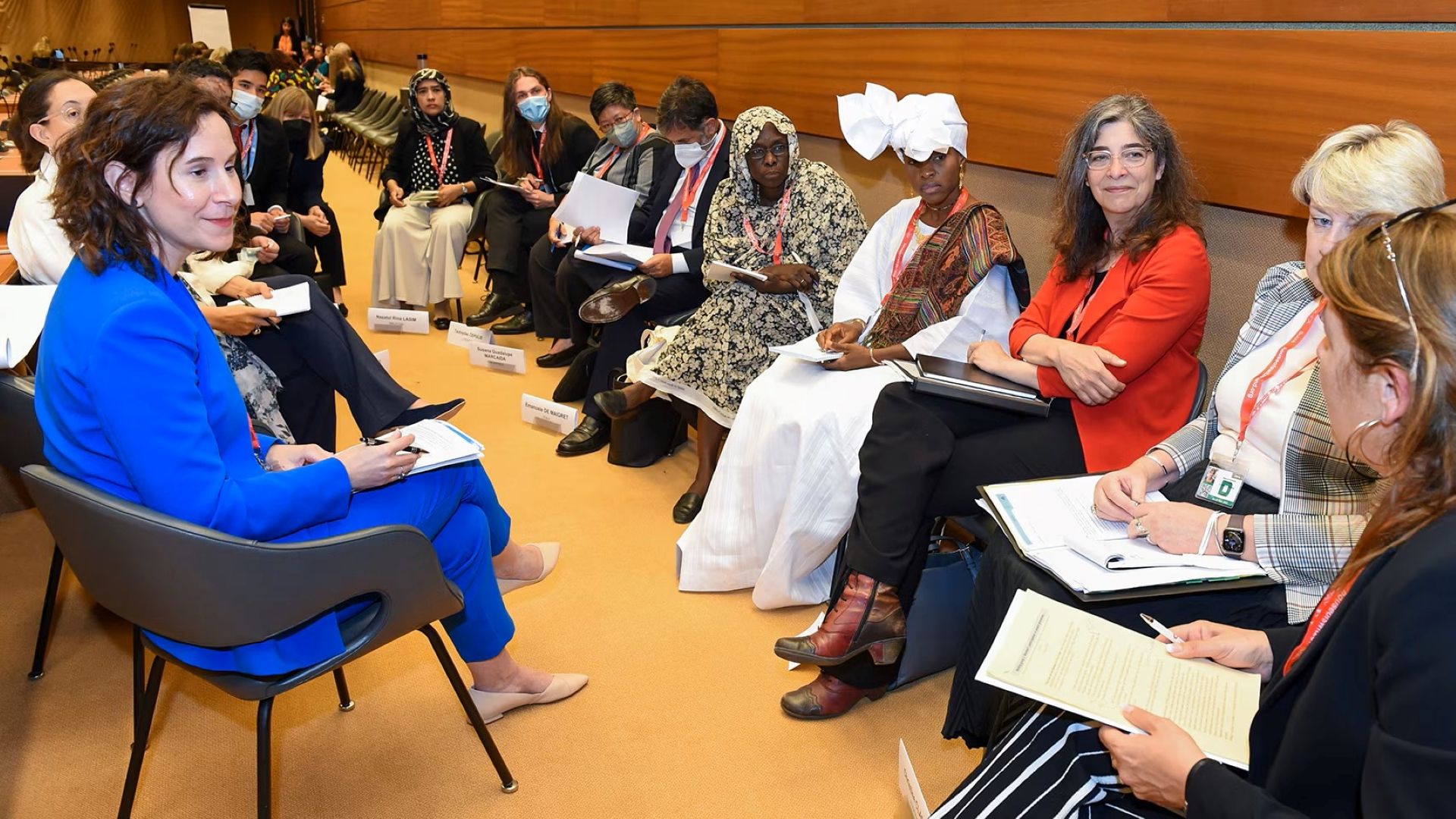
With UN Resolution 1325, the Security Council recognised the important role of women in peace and security for the first time in October 2000. In order to integrate Resolution 1325 and the nine follow-up resolutions into national policies, the UN member states are developing national action plans (NAPs). Switzerland's 5th NAP 1325 sets four thematic priorities:
- Crisis and conflict prevention
- Conflict resolution and peace processes
- Protection from sexual and gender-based violence (SGBV) in conflicts
- Emergency aid and reconstruction
Swiss national action plan for the implementation of UN Resolution 1325
So far, two reports have been published to illustrate and review how Switzerland is implementing Resolution 1325 with the NAP ‘Women, Peace and Security’. The latest report documents the period covered by the last action plan for 2018–22 and is based on a peer review with Germany. The first report covers the implementation period between October 2018 and the end of 2019.
The measures and implementation of the resolution are reviewed annually and the results are included in the UN secretary-general's report.
Commitment of the FDFA
The FDFA supports initiatives and organisations that take Resolution 1325 into account in their work for peace and security on the ground and in international cooperation.
UN Resolution 1325 on ‘Women, Peace and Security’
Resolution 1325 calls for women to be fully, equally and effectively involved in conflict prevention, peace processes, security policy and state reconstruction at all levels in accordance with international law. The UN and its member states are also obliged to strengthen protection against sexualised and gender-based violence during and after conflicts and to take measures to prevent violence.
States must take measures to
- involve women more in peacebuilding;
- protect the rights of women and girls during and after conflicts and prevent gender-based violence;
- give greater consideration to the gender perspective in emergency relief, in reconstruction during and after armed conflicts, and in conflict prevention and dealing with the past.
The UN member states are also urged to take into account the different living conditions of women and men in war and post-war situations, in civil crisis prevention and in state reconstruction. At the end of October 2000, the UN Security Council thus recognised for the first time that women experience war and peace differently from men.
Contact
State Secretariat STS-FDFA
Effingerstrasse 27
3003 Bern