

Geneva Conventions
The four Geneva Conventions of 1949, the two Additional Protocols of 1977 and the Additional Protocol of 2005 form the core of international humanitarian law. They protect persons who are not, or no longer, participating in hostilities.
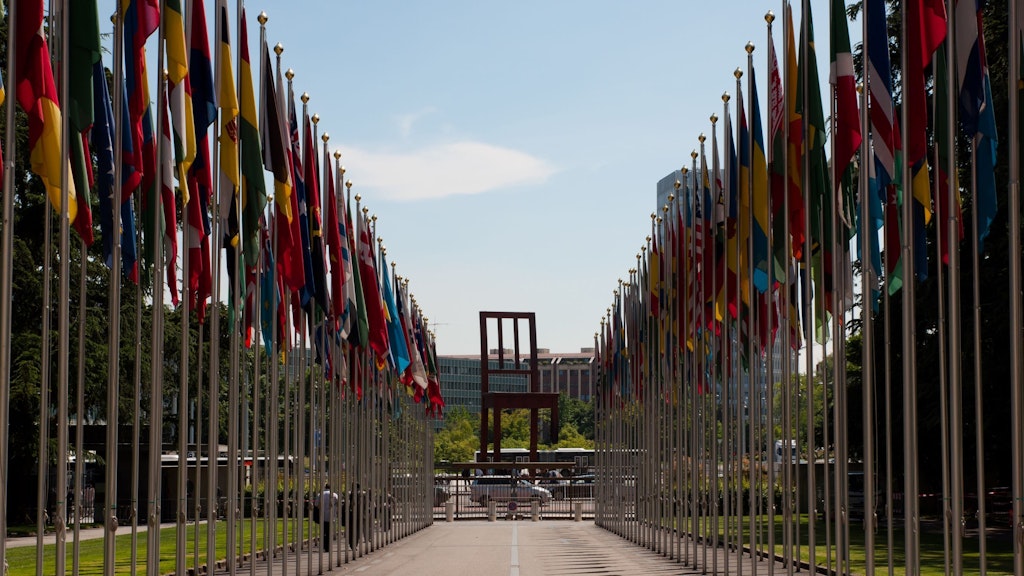
75 years of the Geneva Conventions
To mark the 75th anniversary of these treaties, which are at the heart of international humanitarian law, the FDFA presents articles, videos and infographics. From the origins of the Geneva Conventions to the challenges they face and Switzerland's commitment to their implementation.
.png?w=1024&auto=format)
Platform dedicated to the Geneva Conventions of 1949
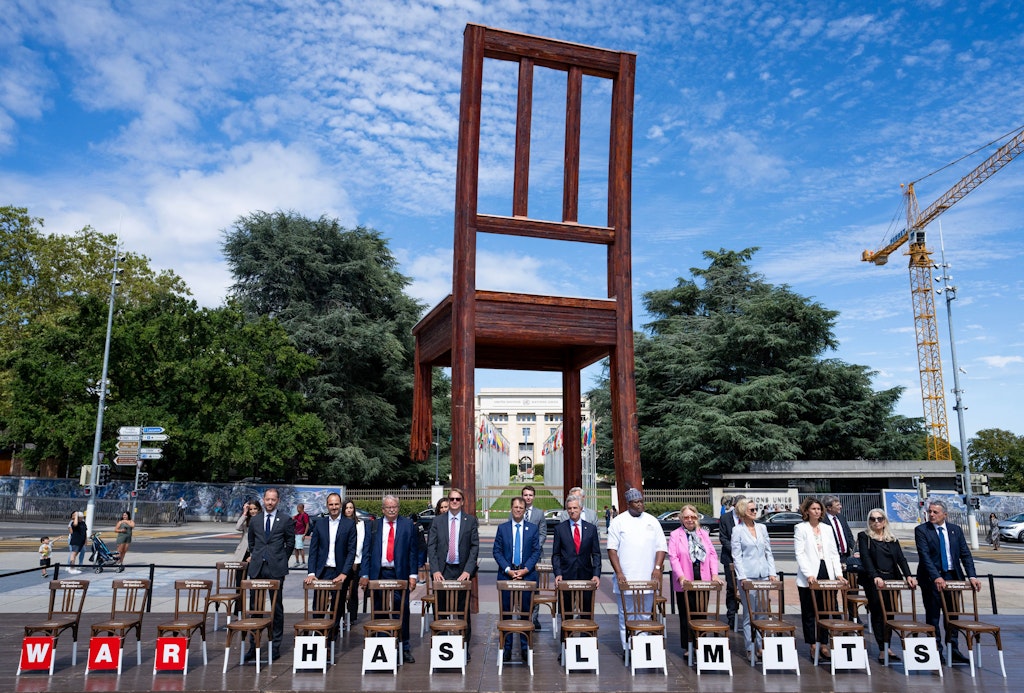
Commemoration of 75 years of the Geneva Conventions on the Place des Nations, 26.08.2024
News articles
Content of the Geneva Conventions and their Additional Protocols
Persons in the hands of the enemy are entitled at all times to respect for their life and for their physical and mental integrity.
- Under the first and second Geneva Conventions of 1949, the belligerents must protect the sick, wounded and shipwrecked as well as medical personnel, ambulances and hospitals. All persons protected under these conventions must be given shelter and cared for by the party to the conflict that holds power over them.
- The third Geneva Convention contains detailed rules on the treatment of prisoners of war.
- The fourth Geneva Convention protects civilians in the hands of the enemy, whether in their own or in occupied territory.
- The first Additional Protocol of 1977 supplements the rules applying to international armed conflicts contained in the four Geneva Conventions. It imposes restrictions on the conduct of hostilities; for example, it prohibits attacks against civilians and civilian objects and restricts the means and methods of warfare.
- The second Additional Protocol of 1977 supplements Article 3 which is common to the four Geneva Conventions and is the sole provision of the Geneva Conventions applicable to non-international armed conflicts.
- The third Additional Protocol provides for an additional emblem in the form of a red crystal. Since 1 January 2007, it has been possible to use this emblem as an alternative to the red cross or red crescent – the emblems recognised by the Geneva Conventions for identifying persons and objects entitled to special protection.
- Additional Protocol to the Geneva Conventions of 12 August 1949 relating to the Protection of Victims of International Armed Conflicts (Protocol I) (de, fr, it)
- Additional Protocol to the Geneva Conventions of 12 August 1949 relating to the Protection of Victims of Non-International Armed Conflicts (Protocol II) (de, fr, it)
- Additional Protocol to the Geneva Conventions of 12 August 1949 relating to the Adoption of an Additional Distinctive Emblem (Protocol III) (de, fr, it)
- Geneva Convention for the Amelioration of the Condition of the Wounded and Sick in Armed Forces in the Field (1st Geneva Convention) (de, fr, it)
- Geneva Convention for the Amelioration of the Condition of Wounded, Sick and Shipwrecked Members of Armed Forces at Sea (2nd Geneva Convention) (de, fr, it)
- Geneva Convention relative to the Treatment of Prisoners of War (3rd Geneva Convention) (de, fr, it)
- Geneva Convention of 12 August 1949 relative to the Protection of Civilian Persons in Time of War (4th Geneva Convention) (de, fr, it)
Wide recognition
The four Geneva Conventions have been universally ratified. Their rules and those of the Additional Protocols of 1977 are now to a large extent considered international customary law, binding on all states and all parties to conflicts.
Historical background
It was Henry Dunant of Geneva (1828–1910) who, having witnessed the carnage of the Battle of Solferino in 1859, initiated the first measures for the protection of persons in conflict situations. His humanitarian initiative ultimately led to the founding of the International Committee of the Red Cross (ICRC). In 1864, 1899, 1906, 1907 and 1929, international conferences in Geneva and The Hague adopted several conventions designed to protect the victims of war and regulate the means and methods of warfare. The Second World War demonstrated the need to further strengthen these provisions. An international conference in Geneva chaired by Federal Councillor Max Petitpierre drafted the four Geneva Conventions of 1949. They were supplemented by two Additional Protocols in 1977 and a third in 2005.
Index
Links
- Conference paper “60 Years of the Geneva Conventions”
- Database of the International Committee of the Red Cross on customary international law (ICRC)
- Information from the International Committee of the Red Cross (ICRC) on the Geneva Conventions
- Message of the Federal Council concerning Additional Protocol III (25 January 2006) (fr)
- Message of the Federal Council concerning the Additional Protocols, 18 February 1981 (fr)
- Message of the Federal Council concerning the Geneva Conventions, 5 December 1949 (fr)
- Overview by the International Committee of the Red Cross (ICRC) of the agreements on international humanitarian law of the International Committee
- The Geneva Conventions 150 years later … still relevant?
Documents
Kontakt
Kochergasse 10
3003 Bern