
International justice
To uphold international law, the international community has established a number of bodies at regional and international level. These include the International Court of Justice, the European Court of Human Rights and the International Criminal Court. All of them make an essential contribution to a stable and just international order. Switzerland supports these bodies.
The International Court of Justice
The International Court of Justice (ICJ), the main judicial body of the United Nations, is governed by the primacy of law and greatly contributes to the peaceful resolution of disputes between states. Its judgements and advisory opinions make it a cornerstone of the international legal system. The rising number of legal cases and questions submitted to the ICJ are an indication of how much it is trusted by the international community. Switzerland recognises the authority of the ICJ and calls on all states to do the same.
Human Rights Authorities
The European Court of Human Rights is an institution of the Council of Europe. It oversees compliance with the Convention for the Protection of Human Rights and Fundamental Freedoms (European Convention on Human Rights, ECHR). It has become a global reference, providing a model for other regional courts. Switzerland ratified the ECHR in 1974. This means that natural or legal persons may file a complaint with the Court against Switzerland for violation of rights recognised in the Conventions or the Protocols to which Switzerland is a party.
The United Nations has established seven committees to supervise the implementation of the most important human rights Conventions. Whilst these are not courts in the strict sense of the term, they help to clarify the relevant norms. Switzerland supports efforts to make them more effective.
International criminal Justice
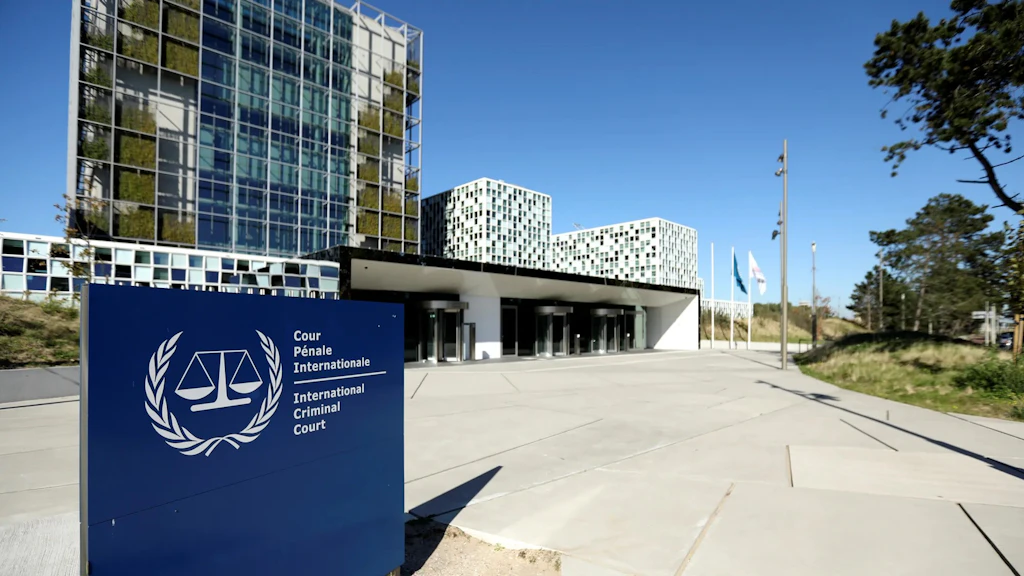
International criminal tribunals prosecute individuals accused of committing international crimes such as genocide, crimes against humanity, war crimes and the crime of aggression. Switzerland supports the International Criminal Court, which it sees as central to the fight against impunity and the promotion of and respect for international humanitarian law and human rights. Switzerland also supports other international criminal tribunals established for a limited period of time to prosecute crimes in specific regions (ad hoc tribunals).
Index

International criminal justice
To punish the most serious crimes, Switzerland is committed to effective international criminal justice and supports institutions such as the International Criminal Court.
Amendments to the Rome Statute
Switzerland has ratified all seven amendments to the Rome Statute, thereby strengthening the ICC’s jurisdiction over the most serious crimes.
Contact
FDFA, Directorate of International Law DIL
Kochergasse 10
3003 Bern