
Nuclear non-proliferation
The non-proliferation of nuclear weapons is a priority for Switzerland. Nuclear weapons in the arsenals of additional states or even non-state actors would have serious security policy consequences. Switzerland is therefore actively working on the global non-proliferation architecture, with the International Atomic Energy Agency and export controls at its centre. High standards in the areas of nuclear safety and security support these efforts.
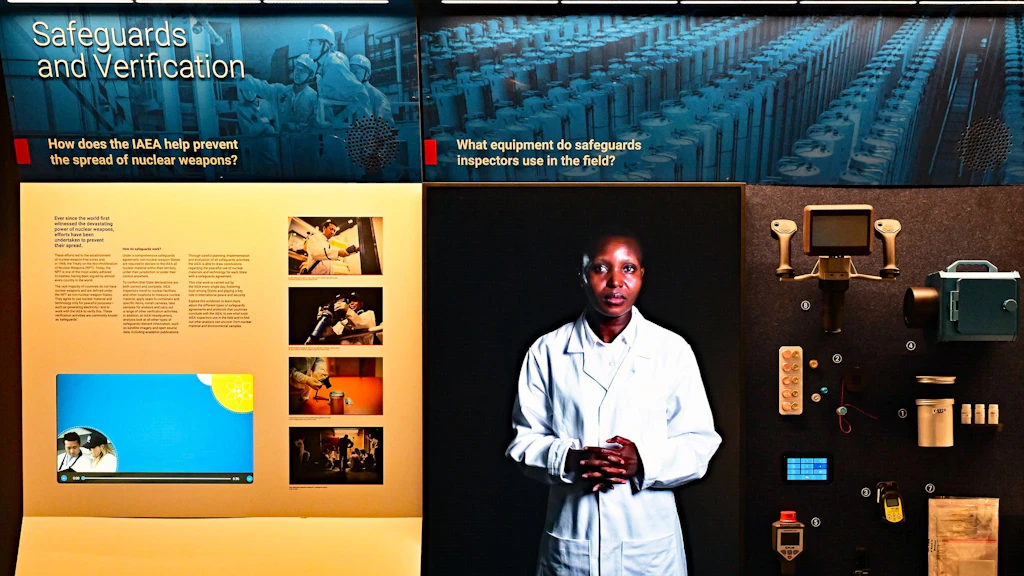
The international community has various instruments at its disposal to prevent the proliferation of nuclear weapons. These include the International Atomic Energy Agency, the Comprehensive Nuclear-Test-Ban Treaty and multilaterally negotiated and applied export controls on nuclear goods. Switzerland is involved in all these areas on the basis of the Treaty on the Non-Proliferation of Nuclear Weapons. This forms the basis for nuclear non-proliferation efforts by establishing the ‘non-proliferation norm’ and the right to the peaceful use of nuclear energy.
International Atomic Energy Agency (IAEA)
The IAEA is the global intergovernmental forum for scientific and technical cooperation in the nuclear field. Its main task is to promote international cooperation for the peaceful use of nuclear energy. Its mandate also includes preventing the misuse of nuclear facilities and nuclear material for military purposes. The organisation thus makes a key contribution to nuclear non-proliferation. The IAEA also fulfils important tasks in the areas of nuclear safety and security.
As set out in the Treaty on the Non-Proliferation of Nuclear Weapons, all non-nuclear-weapon states are obliged to conclude safeguards agreements with the IAEA. For example, the IAEA verifies that declared nuclear material and nuclear facilities are used exclusively for peaceful purposes.
An additional protocol to the safeguards agreement allows the IAEA to verify that no undeclared nuclear material and no undeclared nuclear activities exist. Switzerland has concluded both a safeguards agreement and an additional protocol with the IAEA.
Switzerland has been a member of the IAEA since its foundation in 1957 and contributes to the development of standards for the safety and security of nuclear materials. Various Swiss research institutes, e.g. the Spiez Laboratory and EPFL, are cooperation partners of the IAEA.
Internationale Atomenergie-Organisation, IAEA (en)
Comprehensive Nuclear-Test-Ban Treaty
Over 2,000 nuclear tests were carried out during the Cold War. Such tests have a negative impact on health, the environment, global security and the nuclear non-proliferation regime. A comprehensive ban on nuclear explosions significantly impedes the development of new and more advanced nuclear weapons and is thus a key component of the global non-proliferation regime.
The Comprehensive Nuclear-Test-Ban Treaty Organization (CTBTO) aims to enforce an absolute ban on nuclear explosions of all kinds – in particular nuclear weapons tests – through a global monitoring network and to make this ban verifiable. The existing monitoring network (International Monitoring System) comprises over 300 measuring stations worldwide, which can detect even the smallest explosions in the atmosphere, under water, on land and underground with pinpoint accuracy. The system has demonstrated its usefulness in the detection of several North Korean nuclear weapons tests. Switzerland has a seismic monitoring station in Davos, which is part of the International Monitoring System.
The CTBTO negotiations created a global norm against nuclear testing. Since 1998, all countries with the exception of North Korea have observed a corresponding moratorium. However, the treaty itself will only enter into force once certain states with relevant nuclear technologies have ratified it. Switzerland regularly calls on these states in particular to ratify the treaty in order to facilitate its rapid entry into force.
Until then, the tasks of the CTBTO secretariat provided for in the treaty will continue to be fulfilled by the Provisional Technical Secretariat based in Vienna.
Organisation des Vertrages über das umfassende Verbot von Kernwaffenversuchen, CTBTO (en)
Nuclear safety and security
Nuclear safety and security are also at the centre of Switzerland's efforts to prevent the proliferation of nuclear weapons. Nuclear safety guarantees that nuclear facilities are operated in such a way that people and the environment are protected from harmful radiation. At the same time, nuclear security is intended to prevent unauthorised actors (e.g. terrorists) from gaining access to nuclear facilities and materials.
For example, Switzerland is an advocate for the Convention on the Physical Protection of Nuclear Material and Nuclear Facilities (CPPNM), which aims to prevent and punish theft or other offences in connection with nuclear material for civilian use. Switzerland co-chaired the review conference of the amended convention in 2022.
Amendment to the Convention on the Physical Protection of Nuclear Material
Nuclear safety and security issues have taken on a new urgency with the fighting around Ukrainian nuclear power plants and the Zaporizhzhya Nuclear Power Plant (ZNPP) in particular. Switzerland fully supports the IAEA's ‘seven indispensable pillars for ensuring nuclear safety and security during an armed conflict’ and ‘five concrete principles to help ensure nuclear safety and security at the ZNPP’. In addition, Switzerland supports the IAEA politically, financially and materially in all its endeavours to maintain nuclear safety and security in Ukraine.
Read more
Export controls
Switzerland controls the import, export, transit and brokering of goods in order to prevent the proliferation of weapons of mass destruction.
Disarmament and non-proliferation
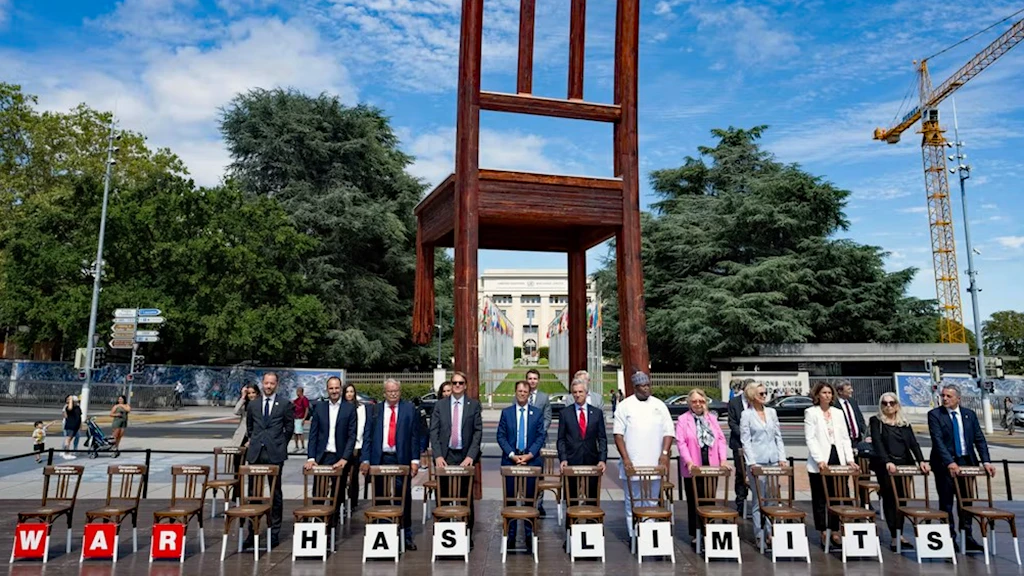
At the international level, Switzerland advocates the complete elimination (disarmament) or at least the non-proliferation of weapons of mass destruction.