
Pluralism
Federal Councillor Ignazio Cassis believes it is vital to promote plurality, both at the FDFA and in Switzerland's foreign policy, which is determined by the Federal Council. While plurality certainly comes with its challenges, it is also a major asset and a fundamental part of Swiss identity. It fosters dialogue and the development of innovative ideas. The FDFA and the Confederation have implemented a range of actions and initiatives to encourage and support plurality, the most important of which are outlined below.
This page is also available in Romansh.
With four national languages and a wide range of cultures, opinions and interests, Switzerland has plurality in its DNA. It is a resource that fosters dialogue ‒ more vital than ever in the current geopolitical context. Since taking up his post as head of the FDFA in 2017, Mr Cassis has supported a variety of plurality-related initiatives.
Switzerland's linguistic diversity
Four languages, four identities, four cultures in one small country: Switzerland. This diversity shapes the way we live together, but how does it work in practice?
Romansh Language Week
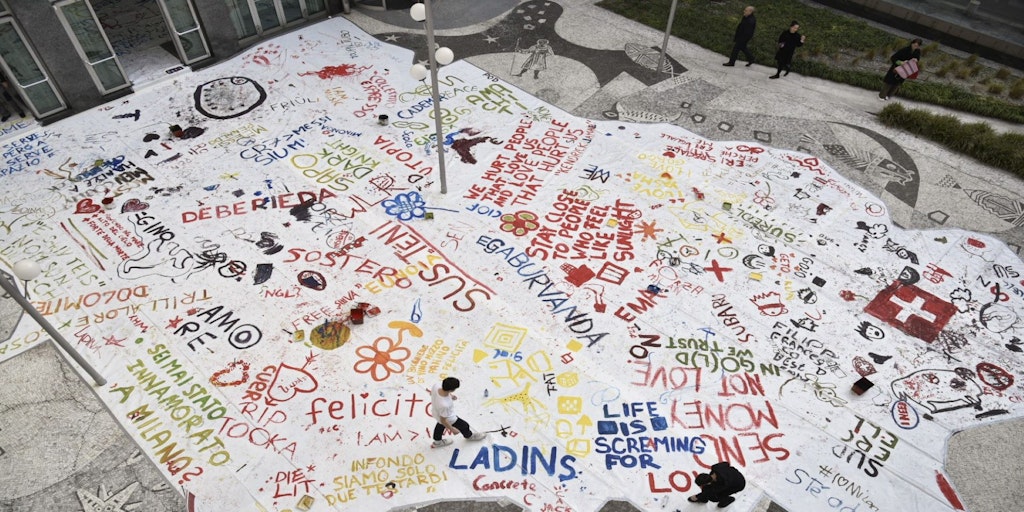
Romansh Language Week (Emna Rumantscha) aims to highlight the importance of multilingualism for Switzerland's national unity and foreign policy by shining a spotlight on the country's smallest and oldest national language. The event was established on the initiative of Mr Cassis and has been organised by the FDFA in cooperation with Canton of Graubünden and the Lia Rumantscha since 2021. Kick-off events for Romansh Language Week have been held in cities such as Bern, Milan and Bucharest, with Mr Cassis and representatives of the government of Graubünden in attendance.
Themed weeks dedicated to Italian, French and German
Romansh Language Week is part of a series of events underscoring the importance of multilingualism for Switzerland's national unity and foreign policy, in the vein of the Days of Multilingualism, Italian Language Week, Francophonie Week, and German Language Week. The FDFA and its representations are actively involved in celebrating the weeks dedicated to Italian, French and German.
Swiss representations abroad offer a range of activities to mark Italian Language Week, which is organised by the ‘Accademia della Crusca’ in collaboration with the Italian Ministry of Foreign Affairs. These have included investigations into the Swiss-Italian history of Paris and other cities, as well as readings of Italian-speaking Swiss authors in Tunis and Santiago.
Plurality: the motto of the presidential year and Swiss national day in 2022
Mr Cassis chose plurality and innovation as the themes of his presidential year in 2022. “Our cohesion and plurality are an enduring challenge. Our different languages, cultures, religions and political views sometimes make dialogue laborious, uncomfortable and even costly. But this challenge is our driving force, our raison d'être,” said Mr Cassis (it, fr, de, rm), speaking to the Federal Assembly on his election as president on 8 December 2021. “Plurality is an invitation to be modest,” he continued. “It is a considerable asset, rather than just a luxury. It helps us find the right solutions and is a source of innovation too.”
A number of initiatives on plurality were implemented in 2022. For example, Mr Cassis travelled to Djerba to take part in the 18th Francophonie Summit and gave a speech (fr) at the UN to mark the 30th anniversary of the Declaration on the Rights of Persons Belonging to National or Ethnic, Religious and Linguistic Minorities. He also took part in the Federal Chancellery's Language Day, Romansh Language Week (see below), and the 10th anniversary of the ‘Italianità’ cross-party group. The Federal Council's ‘extra-muros’ meetings took place at the western and eastern extremities of Switzerland, in Meyrin (Geneva) and Müstair (Graubünden), respectively, while their summer outing saw them travel from the far north of the country (Schaffhausen) to its southern tip (Mendrisio, canton of Ticino).
Every year, Mr Cassis also makes a point of joining in the celebrations of Swiss National Day in towns and villages around the country, which reflect Switzerland's diversity and multilingualism. In his presidential year in 2022, for example, he chose to illustrate that diversity by embarking on a train journey from Lugano (Ticino) to Lausanne (Vaud), via Knonau (Zurich), Grenchen (Solothurn) and Yverdon-les-Bains (Vaud).
Structured political dialogue with the cantons of Graubünden and Ticino
The promotion of minority languages in Switzerland is part of the ongoing structured political dialogue that Mr Cassis is conducting with the cantons of Graubünden and Ticino. Mr Cassis meets representatives of the two cantonal governments once a year to discuss current issues, support for multilingualism and the protection of minorities. A trilateral meeting attended by the governments of Ticino and Graubünden also takes place every two years. In addition, a meeting with lawmakers from Italian-speaking Switzerland (Ticino and Grisons) takes place four times a year, during each parliamentary session.
Decentralised foreign policy
Over the years, Mr Cassis has chosen to host a number of his foreign policy-related events and discussions with presidents and ministers away from Bern and Geneva, with the aim of putting the spotlight on other Swiss towns, while also highlighting Switzerland's linguistic and cultural diversity.
In 2024, the high-level summit on peace in Ukraine took place at the Bürgenstock resort (Nidwalden), while Mr Cassis also met with the Brazilian foreign minister, Mauro Vieira, in Solothurn. The town of Murten (Fribourg) provided the venue for a meeting with the Chilean foreign minister in 2023. In 2022, Mr Cassis took part in the 50th anniversary of the International Lake Constance Conference on the Säntis (Argau), alongside representatives from various cantons as well as from Germany, Austria and Liechtenstein.
Italian-speaking Switzerland has been well represented too, with some 15 official foreign policy meetings organised in Ticino since 2019. In 2022, these included the Ukraine Recovery Conference, the official meeting with the Estonian prime minister, Kaja Kallas (in Bellinzona), and the meeting with the Emirati foreign minister, Sheikh Abdullah bin Zayed Al Nahyan (in Ascona). In 2023, Mr Cassis also met the Maltese foreign minister, Ian Borg, in Mendrisio.
FDFA and multilinguism
The FDFA's Equal Opportunities Section
The FDFA's Equal Opportunities Section advises the department's governing bodies and directorates on equal opportunities in the workplace. It ensures a coherent approach to promoting equal opportunities, diversity and inclusion.
The work of the Equal Opportunities Section is based on the directives of the Federal Council on the implementation of equal opportunities for women and men in the Federal Administration, the Federal Council directives on the promotion of multilingualism in the Federal Administration, the Federal Council guidelines on the employment and integration of disabled people in the Federal Administration and the FDFA's directive on protection against sexual harassment in the workplace.
FDFA Communication
3003 Bern