
Security policy
The international order is undergoing a process of transformation. The Russian war of aggression against Ukraine marked a breach in the European security architecture. The geopolitical situation is being shaped by growing rivalry between major powers, while rapid technological development presents an additional challenge to security governance. As a neutral state, Switzerland is stepping up its commitment to multilateral dialogue, arms control and the defence of international law.
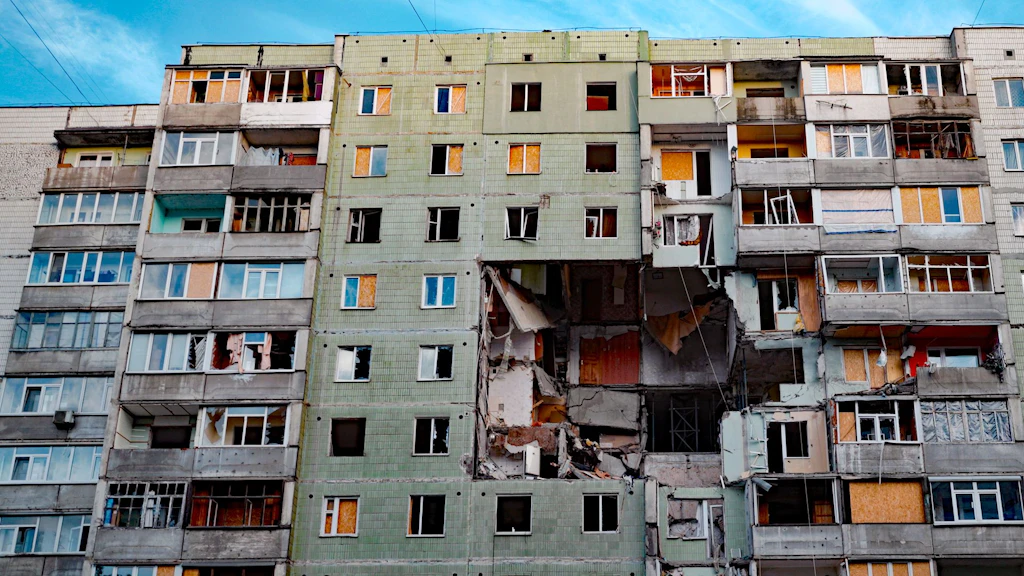
The current international security situation is characterised by increasing antagonism between the major powers and emerging regional powers. At the same time new, transnational security policy risks are on the rise, such as jihadist terrorism, technological advances, hybrid threats such as influence operations, and the security-related implications of climate change. Serious violations of international law are becoming increasingly frequent. As a result, the stability of the world order is in decline.
In its foreign policy, Switzerland advocates for an international order based on international law. It is committed to disarmament and combating the proliferation of weapons of mass destruction. It also participates in efforts to find solutions, primarily through multilateral cooperation with international bodies such as the Organization for Security and Co-operation in Europe (OSCE), the United Nations (UN), the European Union (EU) and the North Atlantic Treaty Organization (NATO).
Switzerland remains actively committed to security in Europe. In connection with the war in Ukraine it therefore organised the Ukraine Recovery Conference (URC) in Lugano in 2022, a National Security Advisers' Meeting in Davos in January 2024, and the Summit on Peace in Ukraine at the Bürgenstock resort in June 2024. Switzerland also provides informal platforms to discuss the future of the security architecture in Europe.
Foreign policy is domestic policy
Security policy threats are increasingly presenting themselves in forms such as cyberattacks, disinformation campaigns or coercive economic measures that affect both external and internal security. Close cooperation between different agencies of the Federal Administration is therefore essential. The Federal Council Security Committee (FCSC) and the Security Core Group (SCG) are the two most important bodies of the Federal Administration in this regard. In keeping with the whole-of-government approach, the FDFA works alongside the other departments concerned to support the Federal Council with regular reporting on security policy challenges and their significance for Switzerland.
Competition between major powers and the impact on multilateralism
The global security situation is characterised by intensified regional and global rivalries. These play out primarily through the battle for political, economic and military influence and control of infrastructure, technologies and resources. These rivalries are hampering multilateral cooperation among states, a framework on which Switzerland also depends. Western nations are increasingly challenged to find a balance between their security policy and economic interests.
In Europe, too, Russia's military aggression against Ukraine is testing the effectiveness of multilateral bodies, especially the OSCE, which is fundamentally dependent on its members' willingness to compromise and seek solutions. The utility of keeping the OSCE operational is never more evident than in times of crisis. It is still the sole multilateral platform that brings together not only European countries, but also key North American and Asian states that are crucial to Europe's security. Thanks to its inclusiveness and comprehensive security approach, the OSCE remains an important platform for dialogue and cooperation to bring about the peaceful and lasting resolution of crises. Switzerland is chairing the OSCE for the third time in 2026. It is using its term to ensure that the OSCE maintains its capacity to act and its inclusiveness as a platform for dialogue between all participating states.
New and disruptive technologies
Technological advancements create a wide range of opportunities to improve living conditions worldwide. However, they also harbour risks and pose fundamental challenges for governments. The continued development of military equipment and lethal autonomous weapons systems in particular is transforming how conflicts are conducted and crises are managed. There is also a growing dependence on private actors, whether as providers of support to the armed and security forces (e.g. private security companies) or as producers (e.g. big tech companies).
The rapid spread of new technologies and their ready availability are frustrating international regulatory efforts. The democratisation of these technologies also increases the risk of their misuse by non-state actors in contexts such as drone deployment.
Regulation of private military and security companies
Private military and security companies (PMSCs) are now present around the globe. They operate in a wide variety of settings, from armed conflict zones to protecting critical facilities in stable environments. At the same time they offer a wide range of services. Alongside conventional security solutions like the protection of individuals and property, many provide state security agencies with operational and logistical support, as well as training and consulting services. The breadth of their activities and their deployment in sensitive contexts reinforce the need for clear regulations and effective oversight mechanisms.
As a co-initiator of the Montreux Document and the International Code of Conduct for Private Security Service Providers (ICoC), Switzerland has made a major contribution to the development of international standards for PMSCs, and continues to promote the implementation of these standards through various multilateral initiatives. At the national level, the Federal Act on Private Security Services Provided Abroad (PSSA) provides a binding set of rules that strengthens the effective regulation of private security actors and makes a real contribution to promoting international security and stability.
Links
International cooperation on security matters
In order to be able to respond to new threats, Switzerland works with organisations such as the UN and the OSCE as part of its security policy.
Cybersecurity
Switzerland is committed to an open, free and secure digital space in order to minimise the risks posed by malicious use of digital technologies.
Disarmament and non-proliferation
At the international level, Switzerland advocates the complete elimination (disarmament) or at least the non-proliferation of weapons of mass destruction.
Export controls
Switzerland controls the import, export, transit and brokering of goods in order to prevent the proliferation of weapons of mass destruction.
Private security services
Private security firms are in demand worldwide. The Federal Act on Private Security Services Provided Abroad (PSSA) regulates their operations.
Contact
State Secretariat STS-FDFA
Effingerstrasse 27
3003 Bern