
Why does Switzerland need a maritime strategy?
Lake Constance, Lake Geneva, Lake Lucerne – Switzerland has many lakes. But as a landlocked nation, surrounded by five other countries in the centre of Europe, it has no direct access to the sea. On 2 June 2023, the Federal Council adopted Switzerland’s Maritime Strategy 2023–27. The sustainability of marine ecosystems, the maritime economy and Swiss-flagged shipping are all important issues for Switzerland. Here’s why.
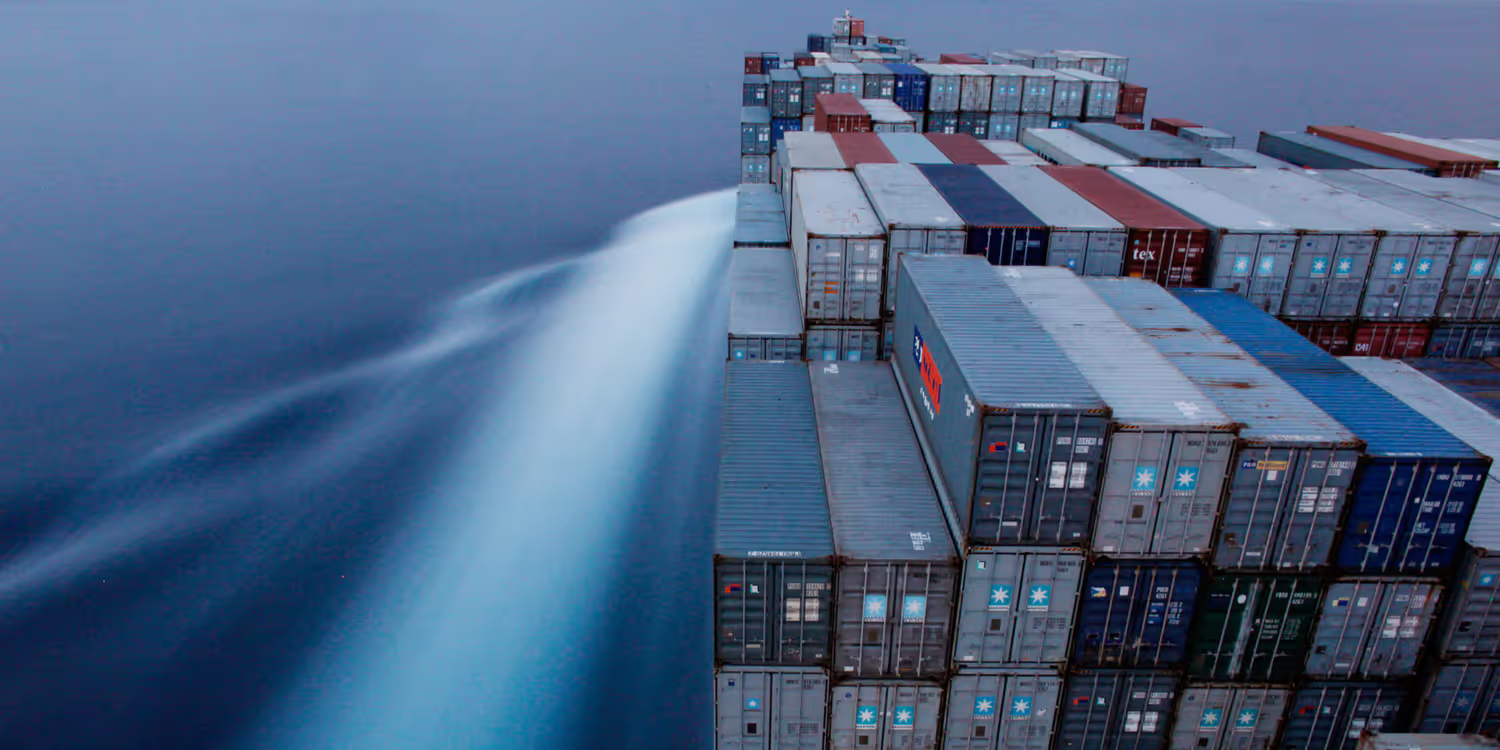
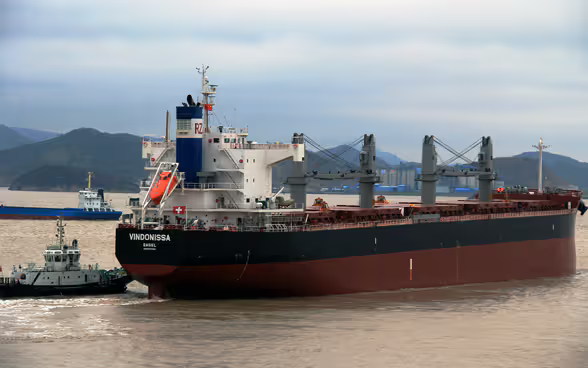
The seas and oceans are key trade routes, with around 90% of intercontinental trade being transported by sea. As a globally oriented economy, Switzerland is dependent on maritime trade and global logistics chains. Since 1941, Switzerland has also had its own merchant fleet, built up during the Second World War to ensure food supplies. Major shipping and logistics companies are based in Switzerland, operating around 900 vessels. It is one of the largest merchant fleets in the world.
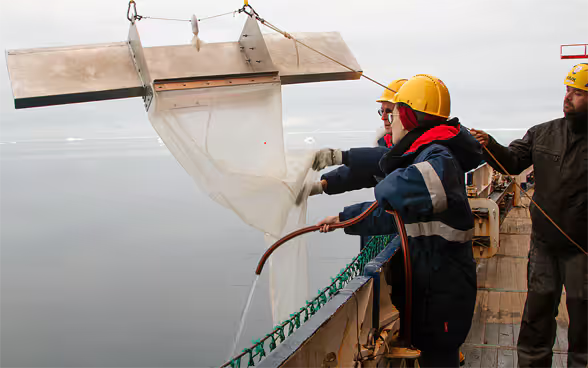
Switzerland also depends on the quality and sustainable use of marine ecosystems, which play a decisive role in solving global challenges such as climate change and food security. Through its rivers, which connect it to the North Sea, the Mediterranean, the Adriatic and the Black Sea, Switzerland also directly influences these ecosystems.
Five thematic priorities
Switzerland’s maritime strategy aims to provide a comprehensive overview of Switzerland’s maritime interests. It serves as a compass for federal policy and improves coherence in the sector. It also serves as a guide for all maritime sector stakeholders in Switzerland.
The strategy was developed in collaboration with various federal departments and partners from the scientific, economic, environmental and social sectors. The cantons were also consulted before drafting commenced.
It is structured around five thematic priorities as follows:
Coherent foreign policy
The maritime strategy is based on the objectives set out in Switzerland's foreign policy strategy, in which the Federal Council defines a general orientation. This is based on a current analysis of the global context and of developments and trends that may have an impact in the future.
In a cascading approach, Switzerland's priorities are translated into geographical and thematic strategies.
Contact
General Secretariat GS-FDFA
Media
Federal Palace West
3003 Bern