
The project database provides concrete insights into the international cooperation work of the Swiss Agency for Development and Cooperation (SDC) and the State Secretariat for Economic Affairs (SECO). You can filter for projects by topic, country and project owner (either the SDC or SECO).
Projects
Project database
Selection
Démocratie sans frontières – DSF
01.06.2014
- 30.09.2018
«Démocratie sans frontières» associe des personnalités suisses de renommée nationale et internationale à certains projets visant particulièrement le renforcement de la démocratie, de la paix et des droits de l’homme, mis en œuvre par la direction du Développement et de la Coopération (DDC) du Département fédéral des Affaires étrangères. Une telle association permet de sensibiliser ainsi tant la population concernée que le public suisse aux défis que doivent relever nos pays partenaires.
Project completed
UNHCR WEM Training Scheme
01.06.2014
- 31.12.2014
Project completed
IGAD-FAO Partnership Programme (PP) on Building Resilience for (Agro-) Pastoralist Communities
01.06.2014
- 31.12.2022
IGAD and FAO will jointly contribute to build resilience of communities in the Horn of Africa’s cross-border areas by addressing marketing and trade, transboundary animal diseases and natural resources management. It will also contribute to strengthen the capacity of IGAD specialized agencies to lead the regional agenda for the improvement of cross-border pastoral livelihoods.
Project completed
OIM: Assisted Voluntary Return and Reintegration for Sub-Sahara Migrants (AVRR)
01.06.2014
- 31.07.2016
Due to reinforced security controls at European boarders, an increasing number of irregular migrants remain blocked in Morocco. Despite some improvement since the announcement of the new migration policy, abuse of migrants still persists. Stranded migrants live in very precarious conditions and as a result many of them wish to leave Morocco and return to their home-countries. This project responds to a humanitarian need and offers stranded, irregular migrants the possibility to return and to be reintegrated into their countries of origin.
Project completed
Swiss Programme for Research on Global Issues for Development (Theme 5: Public Health)
01.06.2014
- 30.09.2024
Weak health systems have a number of commonalities: Insufficient and erratic funding, inefficient management, poor governance and lack of social accountability. How can health systems be strengthened and sustainable financing mechanisms be created for the benefits of poor people in developing countries? The thematic module public health of the SDC’s and SNSF’s joint r4d Programme (Swiss Programme for Research on Global Issues for Development) will promote research on the service provision systems and financing mechanisms in the public health sector.
Project completed
Community Based Family Medicine in Tajikistan
01.06.2014
- 31.12.2018
Tajikistan is the poorest country in CIS region, and only 2.2% of the country's $6.9 billion GDP is allocated to the healthcare sector. Malnutrition and waterborne diseases are the main factors contributing to the child mortality rate (the highest among CIS countries).The present project will contribute to the ongoing health reform implemented by the Ministry of Health and Social Protection, by improving the access of the targeted population (400'000) to quality family medicine services provided in the local Primary Health Care Centres.
Project completed
Disaster risk reduction
01.06.2014
- 31.12.2018
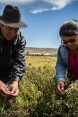
The effects of climate change and the impact of natural hazards keep affecting rural vulnerable livelihoods. The Bolivian Government prioritised food security to reduce extreme poverty through major increase of public investments in sectors of water resources (dam) & on rural development (irrigation system, soil conservation, and early warning system). The risk of failure of these infrastructures because of disasters is high for lack of integrated risk management and climate change adaptation (CCA). The SDC project intends to strengthen the resilience of the existing and future infrastructures in the sectors.
Project completed
Support to National Decentralised Planning and Finance Programme (PNPFD)
01.06.2014
- 31.12.2015
In 2005, the district has been declared the cornerstone of development in Mozambique. It is the primary level of the national planning system and it is the level where sector policies are operationalised. The aim of the intervention is to improve the institutional capacity of the Local State Bodies (Provinces, Districts) in managing public resources for district development in a participative and transparent way.
Project completed
Institutional Strengthening of IGAD
31.05.2014
- 31.03.2022
The Intergovernmental Authority on Development (IGAD) is a sub-regional organization in the Horn of Africa. In line with Switzerland’s decision to increase its engagement with IGAD, the proposed contribution aims at strengthening the organization institutionally based on its political legitimacy, thematic relevance and capacity to contribute to peace and development in one of the world’s most fragile regions.
Project completed
WFP Expert Mission SHA
24.05.2014
- 23.02.2015
Project completed
Improvement of the local self-governance system Armenia

19.05.2014
- 30.06.2019
Switzerland has been supporting the Armenian government in its plans for territorial and administrative reform, particularly its plans to merge municipalities since 2014. The Goal of the program is to contribute to strengthening accountability and efficiency of the local self-governance system in Armenia.
| Country/region | Topic | Period | Budget |
|---|---|---|---|
|
Armenia |
Governance nothemedefined
Decentralisation
Democratic participation and civil society
|
19.05.2014 - 30.06.2019 |
CHF 8’025’000 |
Project completed
Integration of the Do No Harm Approach within the land restitution process
15.05.2014
- 31.10.2016
In Colombia, as an effect of the armed conflict, since 1985, 2-3 million people have been forced to abandon the equivalent of about 3 million hectares of land. In 2011, in order to solve the problem and prevent further land dis-possessions, the Colombian government ratified the Victims and Land Restitution Law 1448. Being aware of the deli-cate task to work on land restitution in an ongoing armed conflict, SDC with its experience in promoting the DNH approach continues to support the Ministry of Agriculture’s Land Restitution Unit to integrate the approach into the land restitution process in order to maximize its positive impacts while reducing its potential negative effects.