
Switzerland is committed to normalising relations between Serbia and Kosovo
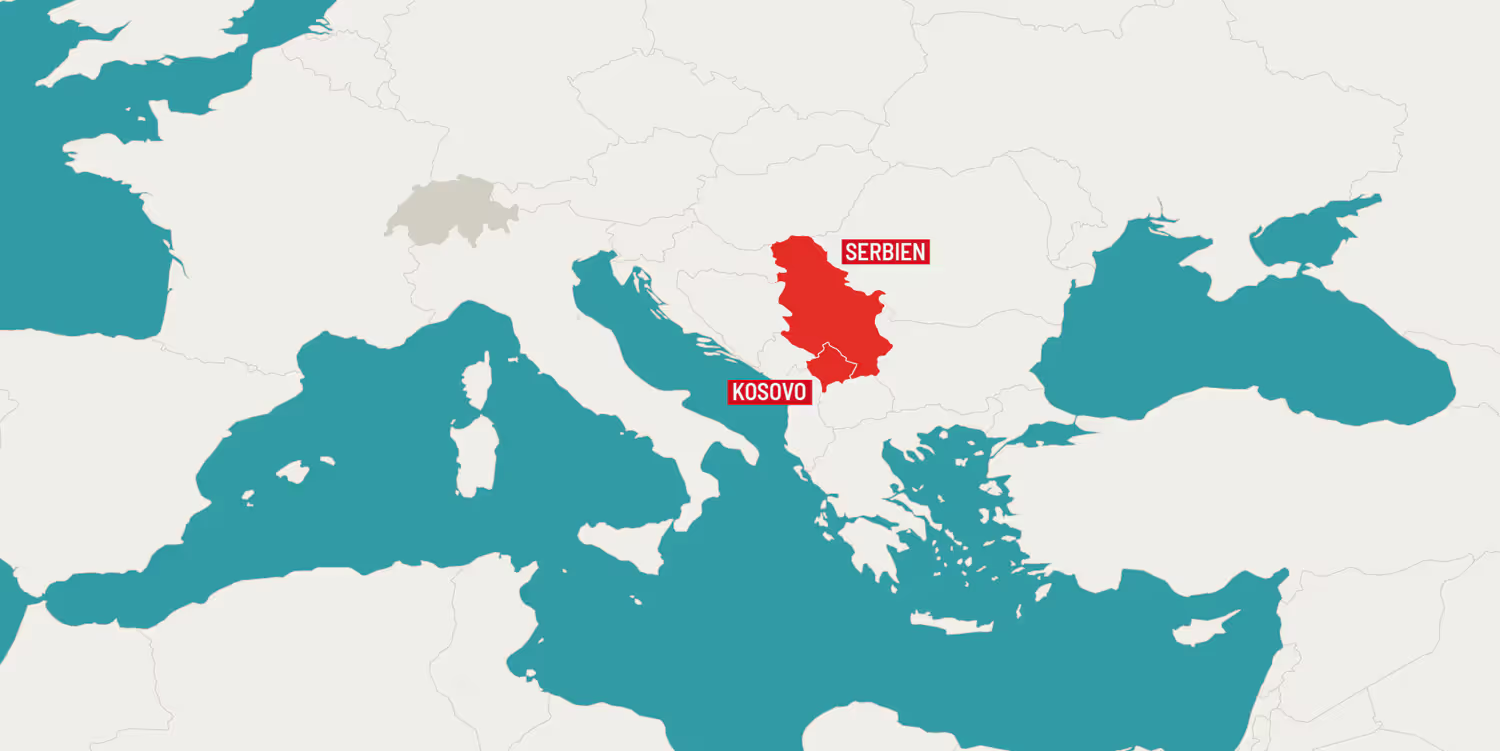
In northern Kosovo, tensions between Kosovo and Serbia have increased in recent days. Pictures of Serbian army convoys are fuelling fears that the violence will escalate further. On behalf of the UN Security Council, the Kosovo Force (KFOR) has been present in the region since 1999 to ensure a peaceful and secure environment. Within the framework of military peacebuilding, Switzerland is also deployed in the KFOR mission with the SWISSCOY. Switzerland also supports efforts to normalise relations between Serbia and Kosovo with other instruments.
23.10.2023 – Kosovo: Switzerland calls on both parties to return to dialogue
The situation in Kosovo was the focus of a UN Security Council meeting today, attended by Kosovo President Vjosa Osmani and Serbian Prime Minister Ana Brnabić. Tensions and insecurity in Kosovo have increased since the last Council meeting. A Kosovar police officer was killed and several people were injured in an attack on the Kosovar police this September. De-escalation is therefore necessary in view of a serious return to the normalisation process.
In view of this, Switzerland condemned the recent violence in Kosovo in the Security Council and called on all parties to cooperate. In order to implement political solutions, inflammatory rhetoric or the increased stationing of troops near the border should be avoided. Switzerland called on the parties to engage in the EU-led dialogue and to implement their obligations under the agreement to normalise relations between Kosovo and Serbia.
Switzerland maintains close relations with Kosovo for more than thirty years and is home to a large diaspora. Switzerland actively supports the dialogue between Serbia and Kosovo and contributes to building trust. A central pillar in the reconciliation process is coming to terms with the past. Among other things, Switzerland actively supports both states in the search for and identification of missing persons. As part of its international cooperation, Switzerland promotes inclusive and democratic governance in Kosovo and creates decent jobs. In this way, it contributes to future prospects for the whole of society.
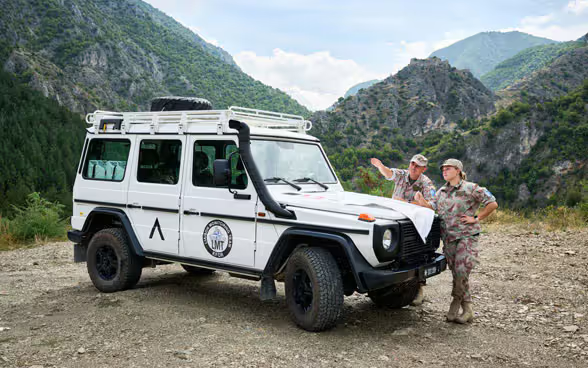
In addition, the Swiss contingent in the Kosovo Force (KFOR) is the largest Swiss contingent in a peace mission, with up to 195 members of the armed forces. KFOR has its origins in a UN Security Council resolution from 1999. KFOR pursues the goal of ensuring the freedom of movement of the population and providing a stable environment. Swiss Armed Forces personnel are making a concrete contribution on the ground so that KFOR can achieve this goal. At today's meeting of the Security Council, Switzerland underlined its support for KFOR as a guarantor of security.
Statement by Switzerland on the situation in Kosovo
29.05.2023 – Switzerland condemns the attacks in Zvecan
The FDFA strongly condemns the violent actions of the demonstrators in Zvecan, which were also directed against the Kosovo Force present in the area to maintain a peaceful and secure environment.
@SwissMFA, social media platform X, 30.05.2023
27.12.2022 – FDFA concerned over rising tensions between Serbia and Kosovo
Tensions are rising in Kosovo. The Serbian army has been put on a heightened state of alert and barricades continue to block many roads in the area. On Twitter the FDFA called on both sides to take measures to calm the tensions.
@EDA - DFAE, social media platform X, 27.12.2022
20.12.2022 – Switzerland supports efforts to normalise relations between Serbia and Kosovo
The deployment of SWISSCOY is an example of Switzerland's commitment to security and stability in the region. The normalisation of relations between Serbia and Kosovo is crucial to promoting stability and development in the Western Balkans. This is in Switzerland's interests, given that it is home to 400,000 people from the Western Balkans.
@EDA - DFAE, social media platform X, 12.12.2022
With regard to normalisation efforts, Switzerland has consistently made it clear in official contacts with Serbia and Kosovo that they are primarily responsible for finding a solution. They are both looking to join the EU. The EU has led negotiations for the past 10 years. Various agreements were concluded in 2013 and 2015. Since then, the heads of government and technical negotiating teams of Serbia and Kosovo have conducted many rounds of negotiations, partly to prevent escalations and partly to hammer out the details of the agreements so that they can finally be implemented.
Switzerland’s commitment
Since 2015, the FDFA has deployed its own complementary instruments to support these efforts. The Peace and Human Rights Division has organised regular meetings, which have been attended by representatives of the most influential parties in both countries. It was important to help representatives of both countries engage in regular dialogue on political issues, enabling them to forge relationships and build trust away from the public eye. This facilitated discrete direct contact between the parties, for example to prevent violence from erupting, and allowed them to test ideas that were later incorporated into official negotiations. One of these meetings was held in Switzerland one week after the Serbs withdrew from Kosovo's institutions.
Questions and answers
Links
- Bilateral relations Switzerland–Kosovo, FDFA
- Bilateral relations Switzerland-Serbia, FDFA
- Swiss cooperation programme Kosovo 2022-25 (en)
- Swiss cooperation programme Serbia 2022-25 (en)
Documents
Contact
General Secretariat GS-FDFA
Federal Palace West
3003 Bern