
Switzerland’s commitment as a state party to the Geneva Conventions
Compliance with, strengthening and promoting international humanitarian law are priorities of Swiss foreign policy.
As a State Party to the four Geneva Conventions of 1949 and the three Additional Protocols of 1977 and 2005, Switzerland is obligated to respect and ensure respect for international humanitarian law under all circumstances.
This is why soldiers of the Swiss Armed Forces must undergo training in international humanitarian law. The States Parties have a shared obligation regarding the respect for international humanitarian law. While international humanitarian law provides a suitable legal framework even for new forms of conflict, violations nevertheless continue to occur.
Compliance
Switzerland works to ensure respect with international humanitarian law in concrete conflict situations. It has a number of instruments at its disposal for this purpose. It can:
- publicly condemn violations committed
- urge the conflict parties to respect international humanitarian law
- instigate diplomatic measures
Switzerland is making constant efforts to find ways to improving compliance with international humanitarian law.
Switzerland is committed to combating impunity. It supports the International Criminal Court, the other international criminal courts and the International Humanitarian Fact-Finding Commission for which it manages the secretariat. These institutions need to be supplemented by sustainable measures for dealing with the past.
Reinforcement
Switzerland is actively committed to strengthening international humanitarian law by advocating for its clarification and implementation. In particular, it is committed to developing rules of international humanitarian law for weapons and new technologies.
Promotion
To promote international humanitarian law, Switzerland launches or supports various initiatives and activities. Examples:
- In accordance with its humanitarian tradition, Switzerland, during its term on the UN Security Council in 2023 and 2024, worked to improve compliance with and strengthen international humanitarian law in armed conflicts. It called for respect for international humanitarian law in all relevant negotiation processes.
- Switzerland supports the Global Initiative to give new impetus to political engagement for international humanitarian law, launched by the ICRC together with Brazil, China, France, Jordan, Kazakhstan and South Africa.
Together with Luxembourg, Ghana and Mexico, Switzerland leads Workstream 6 on information and communication technologies. - Publication of a voluntary report on the implementation of international humanitarian law (in 2020 and 2024).
- Organisation of meetings of government experts on international humanitarian law (IHL). These meetings aim to strengthen the implementation of IHL at the national level and to address specific issues such as the protection of medical activities or the environment in armed conflicts.
- Publication of two reference documents clarifying the legal status and responsibilities of private military and security companies: the Montreux Document on relevant international legal obligations and good practices for States related to the use of private military and security companies in armed conflicts, and the International Code of Conduct for Private Security Service Providers.
- Support for the engagement of the International Committee of the Red Cross (ICRC) in its role as guardian of the Geneva Conventions.
- The Geneva Conventions and their Additional Protocols must be disseminated, particularly within the armed forces and already in peacetime. This means that the relevant texts must be translated and integrated into training.
- Convening of diplomatic conferences; in 2005, a diplomatic conference in Geneva adopted the Third Additional Protocol to the Geneva Conventions, which recognises the Red Crystal as an additional emblem.
- Interdepartmental Committee for International Humanitarian Law.
Index
Links
- Press release, Switzerland is working to strengthen the implementation of the principle of precaution in armed conflicts, 20.04.2026
- Strategy for the Protection of Civilians in Armed Conflicts
- Humanitarian Access in Armed Conflicts: Handbook on the Normative Framework
- International Institute of Humanitarian Law in San Remo
- Academy of International Humanitarian Law and Human Rights, Geneva
Documents
State Expert Meeting on International Humanitarian Law: Implementing the Principle of Precaution in Armed Conflicts
Background document
International Humanitarian Law in the Security Council: Switzerland’s Lessons learned and How to strengthen IHL while serving on the Council
The ABC of International Humanitarian Law
The ABCs of International Humanitarian Law is essentially a glossary of terms explaining the key concepts of international humanitarian law, which is also known as the law of armed conflict. The brochure offers, beside the glossary, a short introduction on the development and area of application of this special field of international law.
ABC of International Law
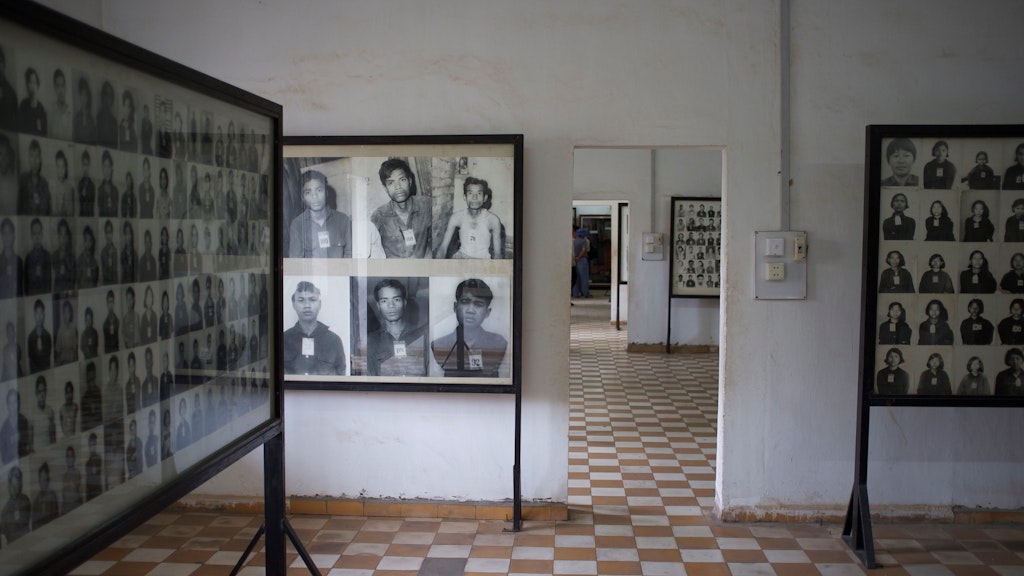
Dealing with the past and preventing atrocities
Switzerland is committed to dealing with the past and preventing atrocities as part of its efforts to promote peace and human rights.
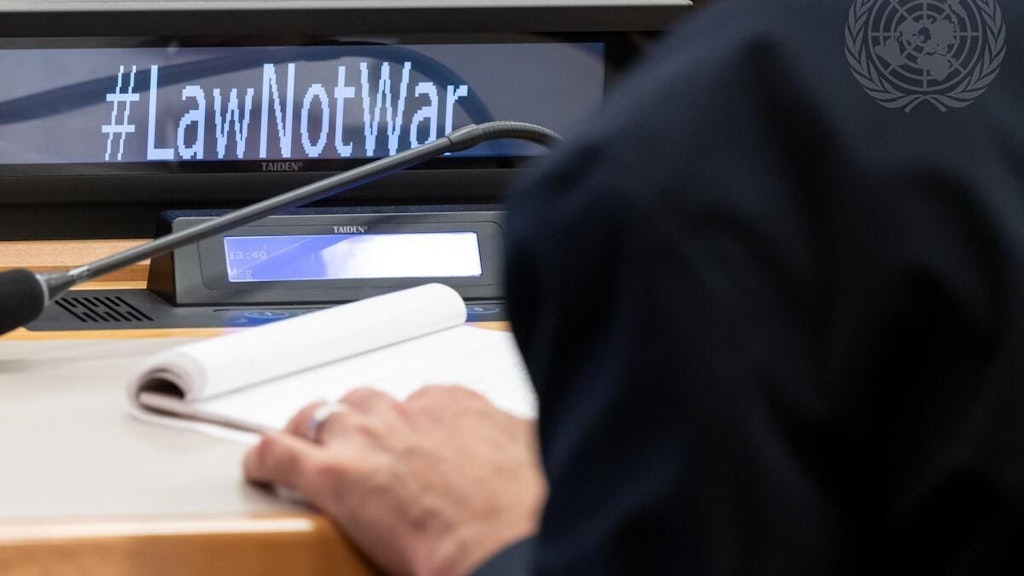
International criminal justice
To punish the most serious crimes, Switzerland is committed to effective international criminal justice and supports institutions such as the International Criminal Court.

The Montreux Document
The Montreux Document, the first international document to do so, reaffirms the international legal obligations of states regarding the activities of private military and security companies. It also includes a number of best practices to help states take appropriate measures to comply with their international legal obligations.
The Interdepartmental Committee for International Humanitarian Law
The Interdepartmental Committee for International Humanitarian Law (IHL) promotes and coordinates the national implementation of international humanitarian law, as well as its dissemination at the national and global levels.
International Humanitarian Fact-Finding Commission
The IHFFC is an expert body established by the First Additional Protocol to the Geneva Conventions to investigate alleged violations of international humanitarian law.
Commissione internazionale d'inchiesta umanitaria (IHEK)
Official website
Contact
FDFA, Directorate of International Law DIL
Kochergasse 10
3003 Bern