
The sixth edition of Emna rumantscha to be celebrated in Slovenia
Die Schweiz und Slowenien teilen nicht nur eine ausgedehnte Alpenlandschaft, sondern auch ein starkes Engagement für den Schutz und die Förderung von Minderheiten sowie der Mehrsprachigkeit. Dieses Thema zieht sich wie ein roter Faden durch den offiziellen Besuch von Bundesrat Ignazio Cassis in Ljubljana und Štanjel, der für den 19. Februar 2026 geplant ist. Ein Interview mit der Schweizer Botschafterin in Slowenien, Gabriele Schreier.
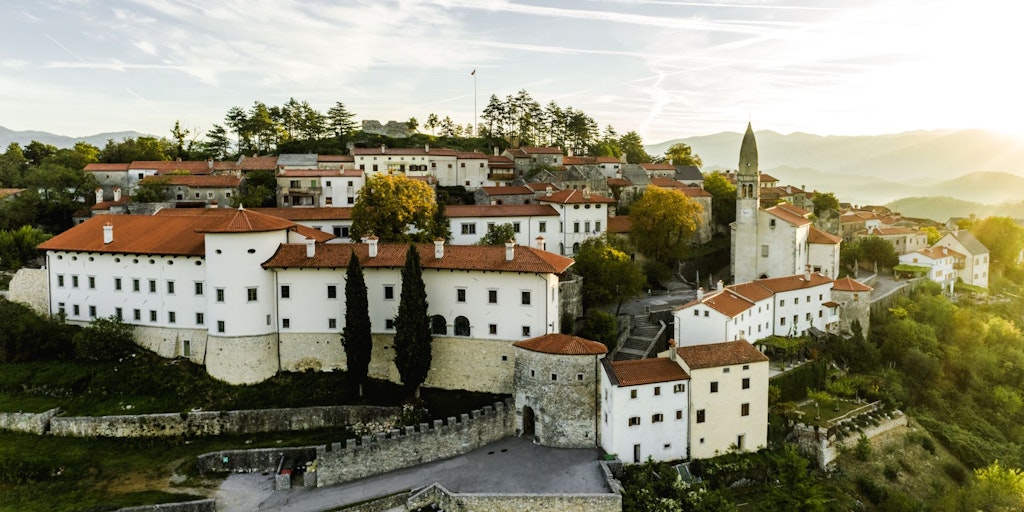
On 19 February, Romansh will also be heard in Slovenia. During Federal Councillor Ignazio Cassis’s official visit and his meetings with representatives of the Slovenian government, discussions will focus on the two countries’ commitment to linguistic and cultural diversity. Numerous languages are spoken in Slovenia: in addition to the official language Slovenian, Italian, Hungarian and German are also present. The Federal Department of Foreign Affairs (FDFA) is marking the sixth edition of Emna da la lingua rumantscha – the international week of the Romansh language – with an event at the Museum of Slovenian Languages and Books in Štanjel. This small town near the Italian border embodies a cross-border culture of exchange in everyday life. Emna da la lingua rumantscha thus offers an opportunity to convey a key message: linguistic and cultural diversity is a resource that strengthens dialogue, supports democratic processes and contributes to stability. Gabriele Schreier, Swiss Ambassador to Slovenia since 2022, also emphasises the diplomatic added value of Switzerland’s linguistic and cultural diversity.
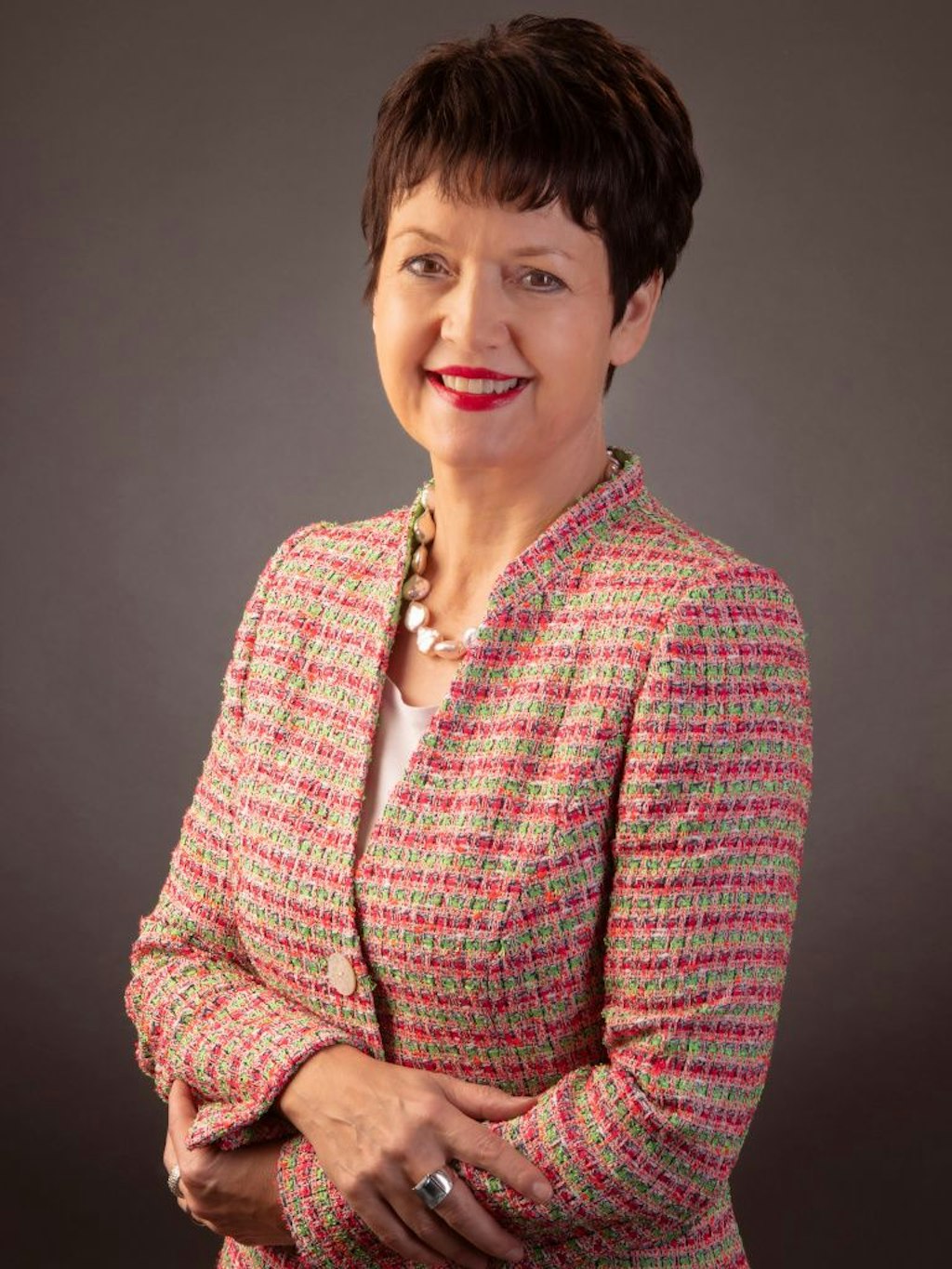
Switzerland and Slovenia enjoy excellent relations, with a strong focus on economic cooperation. However, these relations extend far beyond economics and trade. The planned meetings between Federal Councillor Cassis, the President of the Republic and the Minister for Foreign and European Affairs will provide an opportunity to discuss a range of important issues, including Europe, the current geopolitical situation and, of course, the protection of minority languages. Like Switzerland, Slovenia is committed to a strong multilateral system and respect for international law.
The meeting between Federal Councillor Cassis and the Minister for Cohesion and Regional Development will focus on implementing the Switzerland–Slovenia cooperation programme within the framework of Switzerland’s second contribution.
Switzerland and Slovenia are both committed to protecting and promoting minorities and multilingualism. What do these efforts involve in concrete terms?
Slovenia borders Italy, Austria, Hungary and Croatia. Its neighbours have had a strong cultural and linguistic influence on the country’s history. The official language is Slovenian, spoken by around 87% of the population. However, minority languages are also widely used. As in Switzerland, protecting and preserving cultural and linguistic identities and communities is an important priority in Slovenia. The constitution distinguishes between autochthonous minorities and other minorities or ethnic groups. The Italian and Hungarian minorities are recognised as autochthonous minorities under the Slovenian constitution, and the Roma community also enjoys constitutionally recognised status.
What are the effects of this recognition?
This constitutional recognition as an indigenous minority entails certain rights, such as access to education and training in one’s own language or the right to use that language as an official language in main settlement areas. The Italian and Hungarian minorities also have a guaranteed seat in parliament. Representatives of the Roma community have co-determination rights at municipal level in their traditional settlement areas. The rights of other minorities to preserve their culture, identity and language will be redefined and strengthened by a law passed in 2024. This mainly concerns immigrants from countries of the former Yugoslavia who speak Serbian, Croatian, Bosnian, Macedonian and Albanian.
What characterises relations between Switzerland and Slovenia? Are there particular similarities because both countries are Alpine states?
The Alps cover around 60% of Switzerland’s territory and more than 40% of Slovenia’s. In both countries, the Alps shape identity and influence culture and mentality. For example, both societies share a close connection to nature, a strong preservation of traditions, modesty, pragmatism and a strong work ethic. As Alpine countries, Switzerland and Slovenia face similar natural hazards, such as avalanches and landslides, which have been exacerbated by climate change. As transit countries, they also encounter comparable challenges, such as traffic bottlenecks when crossing the Alps. What the Gotthard is to Switzerland, the Karawanken are to Slovenia for international travel to and from the south. Both countries are signatories to the Alpine Convention and members of EUSALP (Macro-Regional Strategy for the Alpine Region), and they are committed to cross-border cooperation in environmental protection, transport and sustainable development in the Alpine region.
Why is Emna da la lingua rumantscha being celebrated in Slovenia, and at the Museum of Slovenian Languages and Books in Štanjel?
This is thanks to a fortunate coincidence dating back to 2024. During a visit to Štanjel, the mayor told me about the museum’s planned opening in 2025 and its ambition to become a place showcasing linguistic diversity. Slovenian is spoken by 2.5 million people worldwide, making it one of the smaller languages. Part of the exhibition space is therefore intended for temporary exhibitions on other small or minority languages. This led to the idea of starting with an exhibition on Romansh.
Why is there such a high level of awareness of minority languages in Štanjel?
Štanjel lies in the border region with Friuli-Venezia Giulia. Romansh, Ladin and Friulian (also known as Furlan) are related Romance languages. The region is therefore characterised by great linguistic diversity and close historical, cultural, geographical and linguistic ties between Friuli and Slovenia.
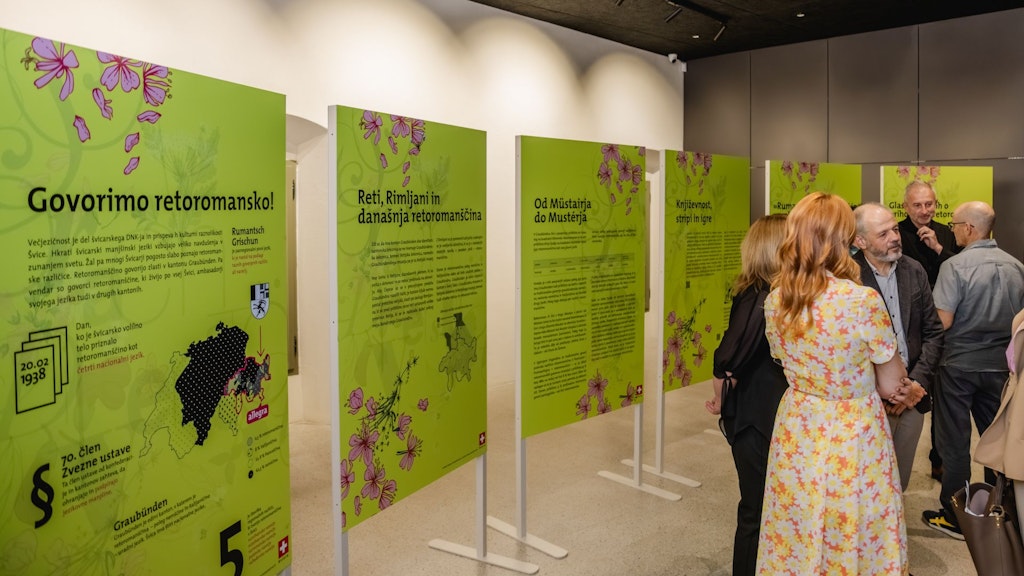
To mark the museum’s opening in June 2025, the Swiss Embassy presented the first temporary exhibition entitled “Let’s speak Romansh”. Alongside the exhibition, Aline Suter’s documentary film “Resuns” was screened in the courtyard of Štanjel Castle in the summer, and in September a panel discussion on minority languages and a concert by Romansh singer Martina Linn were organised. This has already led to fruitful cooperation with local organisations and the community. The highlight of this year dedicated to the Romansh language is, of course, the “Emna rumantscha”. I am very pleased that Federal Councillor Cassis has chosen Slovenia for the sixth edition.
Close bilateral relations between Switzerland and Slovenia
Switzerland and Slovenia enjoy excellent relations, with a strong focus on the economy. Switzerland has been Slovenia’s most important trading partner since 2022. In 2024, trade in goods reached a new record high of CHF 44 billion (+59.4%), rising to CHF 52 billion in 2025. Excluding gold trading, Slovenia is Switzerland’s third-largest trading partner. This dynamic development is largely driven by the Swiss pharmaceutical industry. Novartis is one of the largest foreign investors, and Sandoz/Lek is strongly committed to Slovenia as a business location, with significant investment projects. Switzerland also ranks third in terms of foreign direct investment.
Slovenia is one of the thirteen partner countries of Switzerland’s second contribution to selected EU member states. Within this framework, Switzerland is providing CHF 16 million to support a programme in energy efficiency and renewable energy. The programme aims to increase the share of renewable energy in Slovenia’s energy mix and modernise the sector. It includes the digitalisation of energy planning and the testing of innovative approaches. Implementation is currently under way and progressing well. One example is the first pilot project for an agricultural photovoltaic system, operational since July 2025, which is testing the dual use of agricultural production and electricity generation. The Swiss-Slovenian cooperation programme strengthens bilateral relations by promoting closer cooperation and facilitating the exchange of expertise and know-how.
Contact
General Secretariat GS-FDFA
Federal Palace West
3003 Bern