
Published on 28 October 2026
FAQ
Useful information on bullying, discrimination and sexual harassment.
There is no single, universally recognised definition of bullying. According to SECO (de, fr, it), experts often describe bullying as having the following characteristics:
- Harassing behaviour, refusal to communicate or conflict-laden communication, through which one or more individuals are attacked directly or indirectly.
- These actions are repeated, systematic and continue over a prolonged period. The nature of the attacks may change from time to time.
- The attacks originate from line managers and/or colleagues.
- The person concerned subjectively perceives the action as hostile. It is possible that this is not the case initially, but that the negative intent is only recognised in retrospect, over time.
- The aim of the behaviour may be to damage the victim’s reputation, to isolate them or to ostracise them.
- The person being targeted is placed in a disadvantaged position as a result of the bullying behaviour.
Bullying often begins with minor, everyday disagreements that initially seem innocuous but carry a subtly hostile, harassing or discriminatory undertone. Taken individually, these actions often seem relatively minor and are therefore difficult to categorise unequivocally. Taken as a whole, however, they can lead to significant psychological distress and, in extreme cases, result in the deliberate exclusion of the person concerned.
To recognise workplace bullying, it is therefore necessary to consider all related incidents in context and assess them as a whole.
According to the case law of the Federal Supreme Court, bullying is defined as “systematic, hostile behaviour persisting over a prolonged period, intended to isolate, marginalise or even remove a person from their workplace” (see Judgment 4A_441/2024 of the Federal Supreme Court of 24 March 2025 [de, fr, it]).
As explained on the website Arbeitsrecht Aktuell bullying is characterised by a specific intent and can only be established if a clear perpetrator-victim relationship is identifiable. This distinguishes it from a generally poor working atmosphere. A mutual escalation of conflict, where it is not possible to clearly identify a perpetrator and a victim, generally rules out the possibility of bullying.
Bullying therefore does not occur merely because of a general conflict in the employment relationship, nor because of personality clashes, a strained working atmosphere, or when a line manager does not always fully fulfil their duties.
Disagreements, outbursts of anger, occasional arguments, disputes and differences of opinion that can usually be resolved quickly are not classified as bullying. Examples: a line manager who, for work-related reasons, rejects a holiday request at a specific time; a line manager who values the physical presence of their team and therefore has to refuse a day’s remote working; or a performance review that is not as favourable as the employee would have expected.
Discrimination is defined as statements and actions directed against members of certain social groups with the intention of belittling or disadvantaging them.
The Federal Constitution establishes a prohibition on discrimination within the framework of equality before the law (Art. 8 para. 2 of the Federal Constitution):
“No person may be discriminated against, in particular on grounds of origin, race, gender, age, language, social position, way of life, religious, ideological, or political convictions, or because of a physical, mental or psychological disability.”
According to SECO, the principle of equal treatment is breached if a person is treated unequally compared with another person in a comparable situation on the basis of one of the characteristics listed above, and this leads to denigration and exclusion.
In employment law, this applies in particular to discrimination in recruitment, the allocation of tasks, the organisation of working conditions, pay, training or further education, promotion or dismissal (Art. 3 para. 2 of the Gender Equality Act).
First and foremost, it is crucial to let the person affected know that they are not alone. To do this, you should show them that you are paying attention to them, for example by sitting down next to them, greeting them and striking up a simple conversation, perhaps about everyday topics such as the weather or a film. A calm and empathetic attitude is key here.
You can also ask directly whether they would like support and whether it would be helpful if you intervened. Not everyone affected wants this. In such cases, it makes sense not to give the person behaving inappropriately any attention, whilst still keeping an eye on them. You maintain your focus on the person affected by keeping the contact going. Often, it is precisely the lack of reaction that causes the perpetrator to back down.
Intervening in cases of discriminatory behaviour has an impact beyond the specific situation. It signals that discrimination is not accepted and helps to bring such actions to public attention and condemn them. This is also significant even if no one directly affected is present at the time.
It is not essential to immediately and unequivocally classify the situation as discriminatory. Simply offering support is an important first step.
Sexual harassment has nothing to do with attraction or love. The main motivation for sexual harassment is to assert power and dominate the other person. Individuals who harass others sexually are overstepping the boundaries set by their victims and violating their integrity.
Sexual harassment...
- ...is not reciprocated
- ...is degrading and offensive
- ...is unwanted by the victim
- ...damages self-esteem
- ...creates a toxic working environment and oversteps the boundaries set
Unlike flirting, which...
- ...is mutual
- ...is validating and encouraging
- ...is welcomed by both parties
- ...boosts self-esteem
- ...respects the boundaries set
- If possible, react quickly and decisively
- Make it clear to the possible offender that their behaviour is not acceptable
- However, we know that it is not always easy to react immediately. Even if you are unable to do so right away, you can always take action later on, and seek help at any time.
- Contact an advisory service promptly
- Talk to the person concerned and listen to them
- Encourage them to demand that the possible offender stop their unwanted behaviour
- Mention their other options
- Without the agreement of the person concerned, it is better not to take any action. Ask if they would like you to accompany them when going to speak with the relevant service or office.
- Offer to be a witness
- Find out from FDFA information and advisory services what you can do if you witness bullying, discrimination or sexual harassment
Clarify the facts and record them:
- What exactly happened, when and where? Was there any background to the incident in question?
- Who was directly involved?
- Who witnessed the incident? Who can confirm the details of the incident?
- What action has already been taken? Which services and/or individuals are involved or need to be consulted?
Yes. Protection against bullying, discrimination and sexual harassment applies to all FDFA staff.
However, the local legal framework may influence the procedures and proceedings.
Managers have a commitment to
- protect the dignity and integrity of their staff
- ensure a respectful working environment
- take appropriate measures to prevent and stop bullying, discrimination and sexual harassment
- remind employees of the rules of conduct (Code of Conduct)
- intervene in cases of suspected bullying, discrimination or sexual harassment and to take the necessary measures
- immediately put a stop to any comments or jokes about the sexual characteristics, gender identity, sexual orientation or sexual behaviour of women and men, as well as any suggestive or ambiguous remarks about the appearance of colleagues
- ensure that no pornographic material is displayed
Yes. Unwanted behaviour at company events such as conferences, business trips, Christmas dinners or company outings is also considered to constitute bullying, discrimination or sexual harassment in the workplace. If the unwanted behaviour occurs during leisure time, it is deemed to be related to the workplace if it has an outcome that affects the employment relationship.
Accusations made without cause or against one’s better judgement may
- result in disciplinary action or
- lead to civil or criminal proceedings
28 October 2026
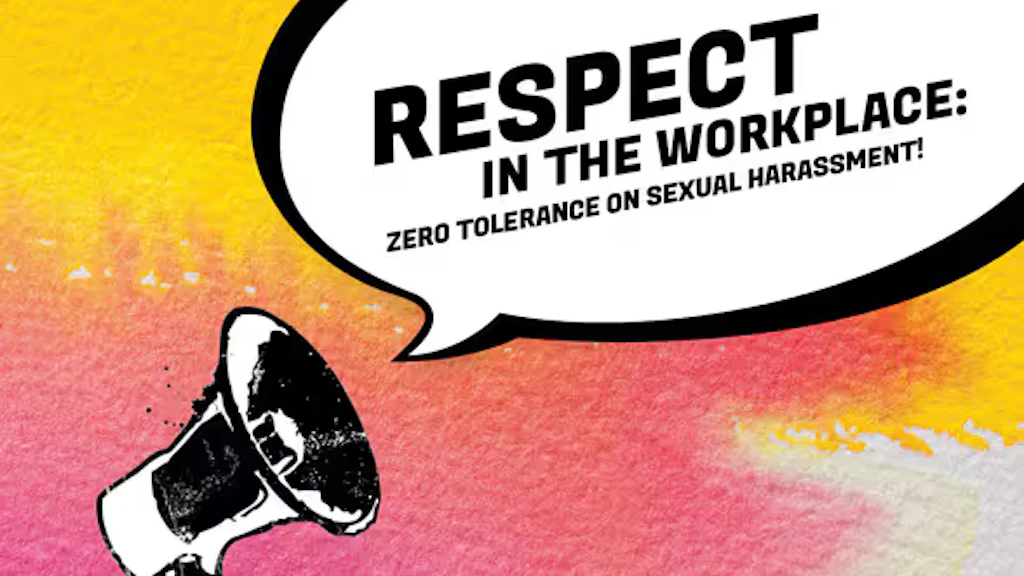
Respect in the workplace
The FDFA promotes respectful behaviour in the workplace. Bullying, discrimination and sexual harassment are not tolerated at the FDFA.

28 October 2026
Information and advisory services
An overview of the points of contact, their areas of focus, target groups and confidentiality policies within the FDFA, the Federal Administration and externally.

28 October 2026
Support and procedure
Procedure in the event of a potential incident of bullying, discrimination or sexual harassment: informal support, formal procedure, legal procedure.
28 October 2026
Legal basis and further information
Legal basis and further information on the topics of bullying, discrimination and sexual harassment.
Spanish version

28 October 2026
Preguntas frecuentes
Preguntas frecuentes sobre el respeto en el lugar de trabajo: mobbing, discriminación y acoso sexual.
Contact
FDFA, Directorate for corporate ressources DR
Eichenweg 5
3003 Bern