
La banca dati dei progetti fornisce informazioni sulle attività concrete della Direzione dello sviluppo e della cooperazione (DSC) e della Segreteria di Stato dell’economia (SECO). È possibile filtrare i progetti per tema, paese e responsabilità di progetto.
Progetti
Banca dati dei progetti
Seleziona
South Sudan, NP: Sobat Corridor
16.03.2016
- 30.04.2017
Due to continued fighting, civilians especially women and children in the Sobat Corridor are exposed to GBV and child protection concerns such as forced child recruitment and unaccompanied and separated minors (UASMs). NP’s intervention seeks to reduce these protection issues, enhance the communities’ protective capacity and provide peaceful and effective measures to mitigate violence and also facilitate aid delivery to the area.
Progetto concluso
Mali/OIM : Initiatives de stabilisation communautaire pour les populations affectées par le conflit au Nord du Mali
15.03.2016
- 14.03.2017
Après la signature de l’Accord pour la paix et la réconciliation au Mali le 15 mai 2015, les mouvements de retour croissant des personnes déplacés internes mettent en exergue la fragilité de leur condition de vie qui se caractérise par la faiblesse de leurs moyens financiers, limitant leurs accès aux services sociaux de base. Ce projet vise à améliorer leurs conditions de vie et favoriser leur retour et leur réintégration socio-économique.
Progetto concluso
UNCCD - Desertification Convention
15.03.2016
- 31.12.2017
Progetto concluso
Shomoshti– Prosperity for the Poor and Disadvantaged
15.03.2016
- 31.07.2017
200,000 poor and disadvantaged households will improve their well-being through increased income and the use of public and private social services. The households will benefit from using improved public and private agri-business services. Their voice and participation in public services, and their access to the emerging private and social entrepreneur services in education, nutrition, health and sanitation will be enhanced.
Progetto concluso
Ausstellung Flucht – Schutz – Integration: Öffentlichkeitsarbeit im Zusammenhang mit der Thematik Flucht
07.03.2016
- 31.12.2017
Laut den Vereinigten Nationen sind zur Zeit ca. 60 Millionen Menschen weltweit auf der Flucht. Das ist der höchste Stand seit dem Zeiten Weltkrig. Rund ein Fünftel der Flüchtenden sind Syrerinnen und Syiren (ungefähr 6,6 Millionen Binnenvertriebene und 4,6 Flüchtlinge). Die Auswirkungen der grossen Flüchtlingsbewegungen der Syrienkrise und anderer Konfliktkontexte sind auch in Europa spürbar. Die Hauptlast tragen weltweit jedoch die unmittelbaren Nachbarstaaten. Das Engagement der Schweiz und der DEZA tragen dazu bei, das Leiden der Menschen in diesen Regionen zu lindern sowie ihnen Schutz und eine Perspektive zu bieten. Mit einer Ausstellung im Landesmuseum von Ende Oktober 2016 für ca. 4 Monate (verlängerbar bis max. 6 Monate) erhält die DEZA eine einmalige Gelegenheit, die Bevölkerung über die Tätigkeit der Schweiz in der internationalen Zusammenarbeit im Allgemeinem sowie in der humanitären Hilfe im Speziellen zu diesem höchst aktuellen Thema zu informieren. Dies entspricht auch dem Auftrag gemäss Verordnung über die internationale Entwicklungszusammenarbeit und humanitäre Hilfe (Art. 27), die Schweizer Öffentlichkeit über diese Themen zu informieren.
Progetto concluso
Liberia Ministry of Agriculture MOA: Rehabilitation and Development of Integrated Lowland Rice Farming in Liberia
07.03.2016
- 31.10.2016
Until today, more than 280 ha of lowland have been rehabilitated and brought under rice cultivation in Lofa County in a joint project between the Ministry of Agriculture (MOA) and SOC. In phase 1 and phase 2 of this project, 35 ha of lowland were developed and rehabilitated under the lead of the MOA. In the positive dynamics of Liberia's aspiration for self-sufficient domestic rice production and successful pioneer activities in this field at all levels, the 3nl phase foresees the finalization of rehabilitation of part of the Fangoda lowland scheme, a scheme of national importance for Liberia's food security.
Progetto concluso
Children's Village Mbingu - Food Aid Swiss Dairy Products (Tanzania)
01.03.2016
- 31.07.2017
Through the usage of food aid in the form of Swiss dairy products, Swiss Humanitarian Aid contributes to the prevention and treatment of malnutrition, undernourishment, and disease. The SDC’s Humanitarian Aid administers the credit granted by parliament for a yearly amount of some CHF 20 million destined for the purchase of Swiss dairy products and their use for the benefit of the needy. Its task is to ensure a sustainable, targeted, and closely monitored food aid.
Progetto concluso
Stiftung "Karibu Kinderhilfe" - Food Aid Swiss Dairy Products (Tanzania)
01.03.2016
- 31.07.2017
Through the usage of food aid in the form of Swiss dairy products, Swiss Humanitarian Aid contributes to the prevention and treatment of malnutrition, undernourishment, and disease. The SDC’s Humanitarian Aid administers the credit granted by parliament for a yearly amount of some CHF 20 million destined for the purchase of Swiss dairy products and their use for the benefit of the needy. Its task is to ensure a sustainable, targeted, and closely monitored food aid.
Progetto concluso
Improved Resilience of Children with Disabilities through DRR
01.03.2016
- 28.02.2017
The project seeks to improve the resilience of Children with Disabilities living in the Pongsan School for the Deaf through the development of their DRR capacities and the improvement of their living environment. The activities are considered as an inception of a further project focused on six schools for children with sensory impairments and lays an emphasis on the introduction of a School-Based Disaster Risk Reduction (SBDRR) Plan, which aims to strengthening the capacities of the children, their teachers and caretakers, the surrounding community and the relevant provincial and national authorities while also improving their infrastructure.
Progetto concluso
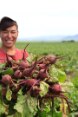
Inclusive and sustainable vegetable production and marketing (VEGI)
01.03.2016
- 31.07.2020
Built on the successful SDC support of the potato sector, the VEGI project intends to contribute to poverty alleviation through a growing vegetable sector in Mongolia. Supports for increased and diversified production, storage, processing, marketing, consumption and a conducive legal framework will contribute to improved livelihood of rural households and to a more diversified economy. In order to foster its poverty focus, the VEGI project promotes vegetable gardening and consumption by poor households in peri-urban areas as well.
Progetto concluso
Inclusive territorial economic development in the Muskitia region, department of Gracias a Dios

01.03.2016
- 31.08.2021
The economic development programme is carried out in the Honduran Muskitia, a fragile indigenous territory with great productive potential. The program empowers the territorial stakeholders in the cocoa and fishing value chains and the basic grains production chain located in the mid and lower watershed of the Patuca river. It promotes public-private alliances that respect indigenous rights in accordance to the convention 169 of the international labor organization. These public-private alliances generate 3000 new jobs and increase the income of 1500 indigenous families by 10-30%.
Progetto concluso
ACF Réponse intégrée MAS Bangui 2016-17
01.03.2016
- 31.03.2017
Par son appui financier au projet d’ACF de réponse intégrée préventive et curative face à la sous-nutrition aiguë sévère sur Bangui et sa périphérie en période post-crise, la DDC souhaite contribuer à la réduction de la mortalité infantile par un renforcement de la prise en charge de la malnutrition aiguë sévère dans la ville de Bangui et les districts sanitaires de Begoua et Bimbo, et pallier aux défaillances du système sanitaire.